

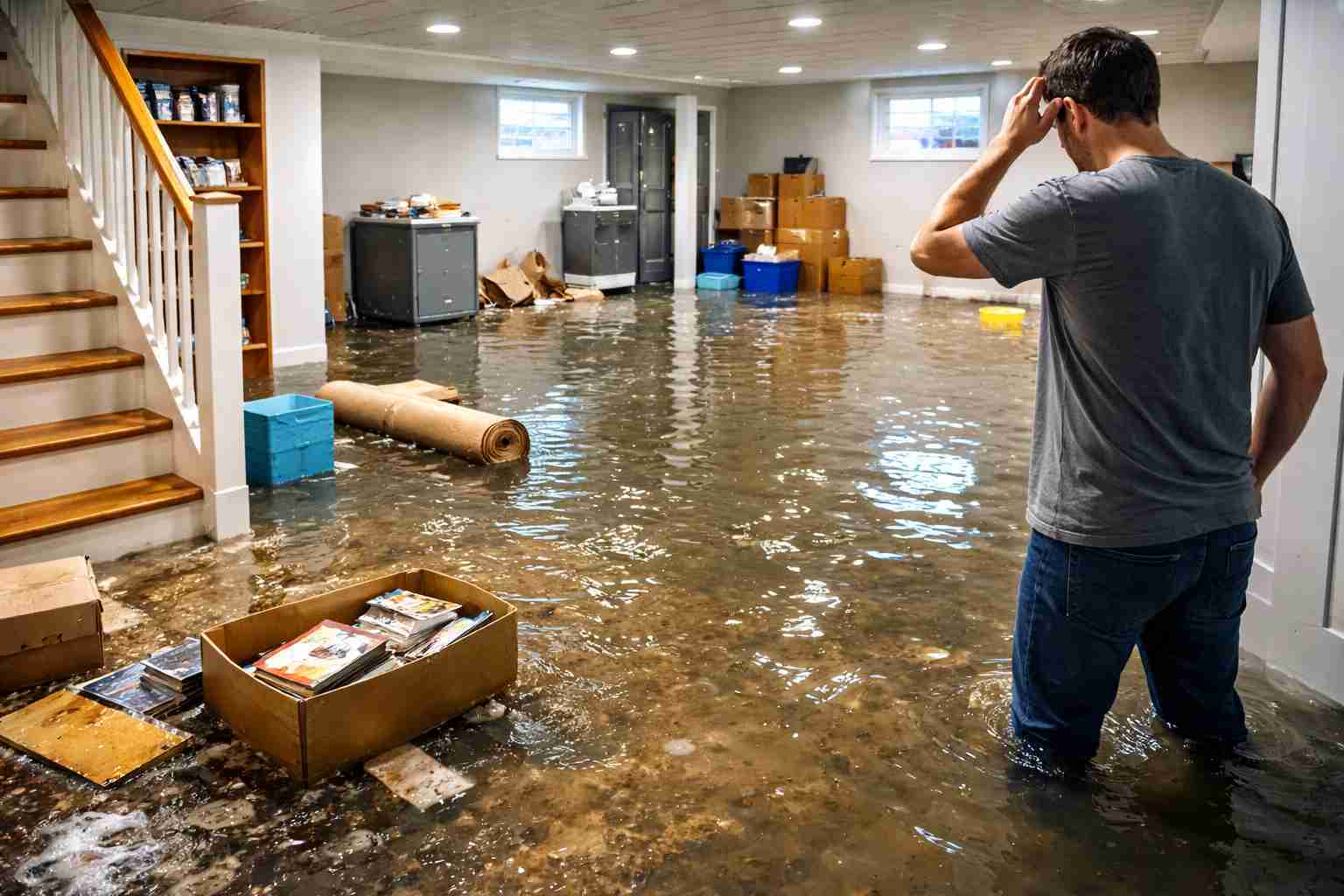
Basement Flooding: What Homeowners Should Do Immediately in Northern Virginia?
Basement flooding is one of the most stressful situations homeowners can face. A flooded basement can damage flooring, drywall, insulation, personal belongings, and even the structural components of a home.
Whether the flooding is caused by heavy rain, plumbing failure, or sump pump malfunction, acting quickly is critical. Water damage can begin affecting building materials within minutes, and mold growth can start within 24–48 hours if moisture is not properly removed.
This guide explains the immediate steps homeowners should take after discovering a flooded basement.
Step 1: Ensure Safety Before Entering the Basement
Before entering a flooded basement, safety should be your first priority.
Water can create dangerous conditions, especially if electrical systems are involved.
Homeowners should:
• turn off electricity to the basement if it is safe to do so
• avoid standing water near electrical outlets or appliances
• wear rubber boots and protective gloves
• keep children and pets away from the flooded area
If the water level is high or there are electrical hazards, it is best to wait for professionals before entering the space.
Step 2: Stop the Source of Water
Once the situation is safe, the next step is identifying and stopping the source of water.
Common causes of basement flooding include:
- broken or leaking pipes
- heavy rainfall and groundwater intrusion
- sump pump failure
- clogged foundation drainage systems
- leaking water heaters or appliances
If the flooding is caused by a plumbing issue, turning off the main water supply can prevent additional damage.
Step 3: Remove Standing Water as Soon as Possible
Standing water should be removed quickly to prevent structural damage and mold growth.
Professional water damage restoration companies typically use:
- industrial water extraction pumps
- wet vacuums
- commercial-grade water removal equipment
Even small amounts of water can soak into flooring materials, drywall, and insulation, making thorough extraction important.
Step 4: Begin Drying the Basement
After the water is removed, the structure must be thoroughly dried.
Drying usually involves:
• high-powered air movers
• industrial dehumidifiers
• proper airflow and ventilation
Simply opening windows or using household fans is usually not enough to remove moisture trapped in building materials.
Professional drying equipment helps prevent mold growth and long-term structural damage.
Step 5: Remove Water-Damaged Materials
Some building materials absorb water and cannot be fully restored once saturated.
These materials may need to be removed, including:
- soaked drywall
- wet insulation
- damaged carpeting and padding
- warped laminate or wood flooring
Removing contaminated materials prevents mold from spreading inside the structure.
Step 6: Disinfect and Prevent Mold Growth
Floodwater often contains contaminants, bacteria, and debris.
After water removal and drying, affected areas should be disinfected using antimicrobial treatments.
This step helps reduce the risk of:
- mold growth
- bacterial contamination
- lingering odors
Preventing mold is especially important in basements because they often have higher humidity levels and limited ventilation.
Step 7: Identify the Cause to Prevent Future Flooding
Fixing the original cause of the flooding is critical to preventing future water damage.
Homeowners should inspect:
- foundation cracks
- sump pump operation
- exterior drainage systems
- gutter and downspout direction
- grading around the home
Basement flooding is often caused by water entering through the foundation during heavy rainstorms.
Proper drainage and moisture control can significantly reduce future risks.
Signs of Hidden Water Damage After Basement Flooding
Even after visible water is removed, moisture can remain trapped in building materials.
Signs of hidden water damage include:
• musty odors in the basement
• peeling paint or bubbling drywall
• warped flooring
• increased indoor humidity
• discoloration on walls or baseboards
Professional moisture meters and thermal imaging are often used to detect hidden water inside walls and flooring.
Why Professional Water Damage Restoration Is Often Necessary
Basement flooding can affect areas that are difficult to fully dry without specialized equipment.
Professional water damage restoration typically includes:
• emergency water extraction
• structural drying with industrial equipment
• moisture detection inside walls and flooring
• antimicrobial treatment
• removal of contaminated materials
Proper drying helps prevent secondary damage such as mold growth and structural deterioration.
Basement Flooding in Northern Virginia Homes
Homes in Alexandria, Arlington, Fairfax, and surrounding Northern Virginia communities often experience basement flooding during heavy storms or when drainage systems fail.
Older homes with finished basements are particularly vulnerable to water intrusion and moisture buildup.
Regular maintenance of sump pumps, foundation drainage systems, and exterior grading can reduce the risk of basement flooding.
Need Professional Water Damage Restoration?
If your basement has flooded, acting quickly can help minimize damage and prevent mold growth.
Total Home Rescue provides emergency water damage restoration, basement water extraction, and structural drying services throughout Northern Virginia, including Alexandria, Arlington, and Fairfax.
Learn more about our water damage restoration services here:

