

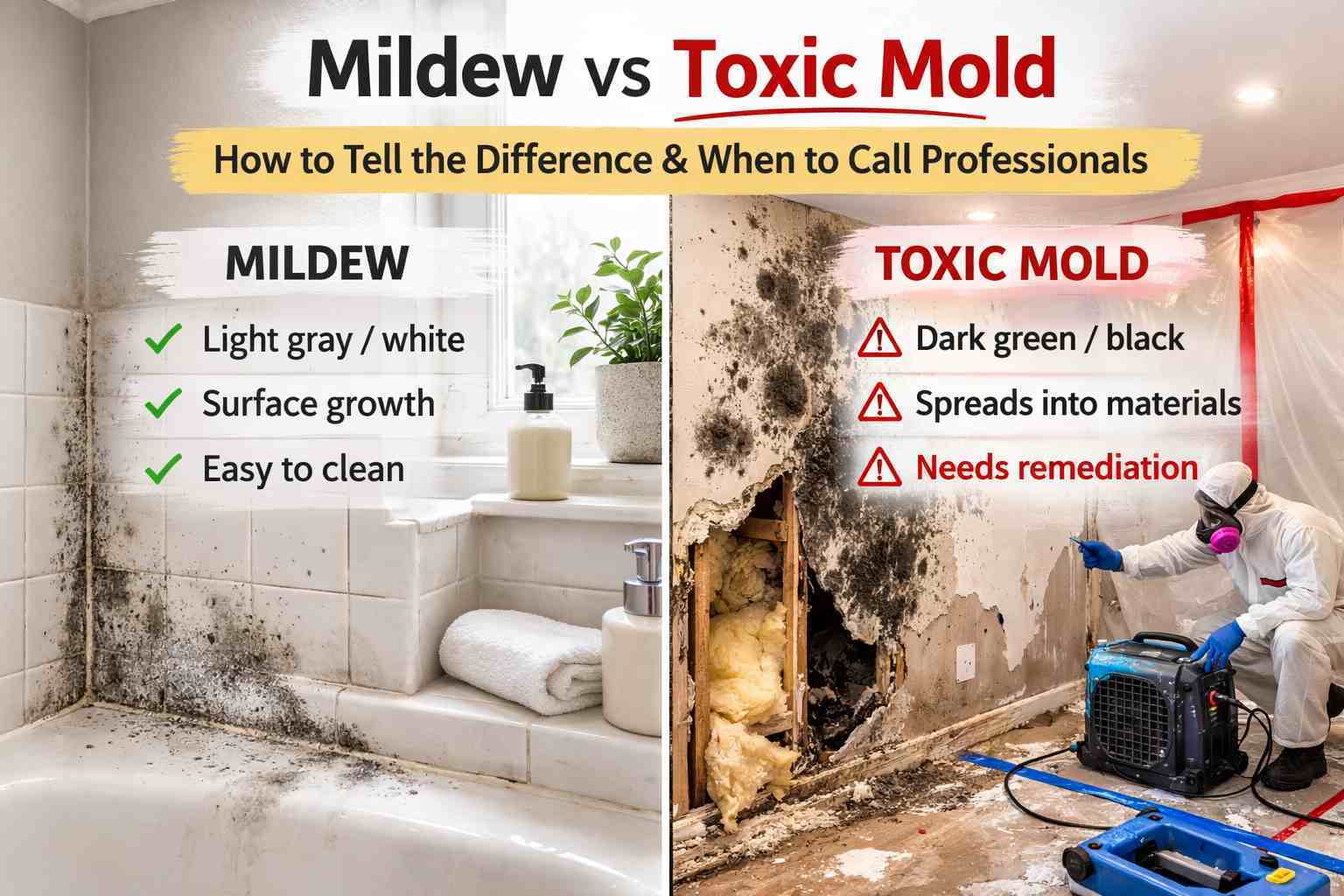
Mildew vs Toxic Mold: How Homeowners Can Tell the Difference
Many homeowners become alarmed when they notice dark spots on walls, ceilings, or bathroom surfaces. The first thought is often “toxic mold.” In reality, what people see inside homes is often mildew or common household mold, which is much less serious.
However, some mold problems can spread inside building materials and require professional mold remediation.
Understanding the difference between mildew and potentially dangerous mold growth can help homeowners determine whether the issue is cosmetic or something that requires professional attention.
What Is Mildew?
Mildew is a type of surface fungus that typically grows in areas with high humidity and poor ventilation.
It is extremely common in residential homes and is usually considered a minor moisture-related issue.
Common characteristics of mildew
Mildew usually appears as:
• light gray, white, or yellowish spots
• a flat or powdery texture
• growth on non-porous surfaces such as tile, glass, metal, or painted walls
• small patches in bathrooms or near windows
Because mildew grows primarily on surfaces, it can often be cleaned with common household cleaners once the humidity problem is addressed.
Where mildew usually appears
Mildew most commonly develops in:
- bathrooms and showers
- window frames and sills
- laundry rooms
- areas around sinks
- poorly ventilated kitchens
Improving ventilation and reducing moisture usually prevents mildew from returning.
What Is Toxic Mold?
The term “toxic mold” is widely used by homeowners, but in professional restoration and environmental industries the focus is usually on extent of mold growth and structural contamination, rather than a specific species.
Certain types of mold can produce harmful byproducts and can spread inside porous building materials.
When mold penetrates drywall, insulation, or structural wood, it often requires professional mold remediation rather than simple surface cleaning.
Signs that mold may be more serious
More concerning mold problems often show the following characteristics:
• dark green, black, or brown patches
• fuzzy or spreading colonies
• mold appearing after water damage or leaks
• growth on drywall, insulation, attic wood, or framing
• strong persistent musty odors
Mold that grows inside porous materials can spread deeper over time, making it difficult to remove without professional equipment and containment.
Mildew vs Mold: Key Differences
While mildew usually stays on surfaces, mold often penetrates deeper into building materials, which is why it can become a structural problem.
Small surface mold problems can sometimes be cleaned safely. However, restoration professionals typically recommend remediation when:
• mold covers more than about 10 square feet
• the growth started after water damage or flooding
• mold appears inside walls, attics, or crawl spaces
• there is a persistent musty odor but no visible mold
• mold keeps returning after cleaning
In many homes, mold problems begin after roof leaks, plumbing leaks, or moisture trapped in insulation.
Without proper containment, attempting to clean large mold problems can actually spread spores throughout the home.
Why Mold Problems Often Start After Water Damage
Water damage is one of the most common causes of mold growth inside homes.
When building materials such as drywall, wood, or insulation remain wet for more than 24–48 hours, mold can begin to grow.
Common sources of moisture include:
- plumbing leaks
- roof leaks
- basement water intrusion
- attic condensation
- flooding events
If the affected materials are not properly dried, mold colonies can begin developing behind walls or inside insulation.
Why Professional Mold Remediation Is Sometimes Necessary
Professional mold remediation focuses not only on removing mold, but also preventing it from spreading during the cleanup process.
A professional remediation process typically includes:
• containment barriers to prevent spores from spreading
• HEPA air filtration
• removal of contaminated drywall or insulation
• antimicrobial treatment
• fixing the moisture source
Without these precautions, disturbing mold growth can release large numbers of spores into the air.
Mold Problems Common in Northern Virginia Homes
Homes in Alexandria, Arlington, Fairfax, and surrounding areas of Northern Virginia often experience mold problems due to regional humidity and seasonal weather patterns.
Common locations where mold develops include:
- attics with poor ventilation
- basements with moisture intrusion
- bathrooms with insufficient ventilation
- walls affected by past water damage
Because many homes in the region have finished basements and complex roofing systems, moisture problems can sometimes go unnoticed until mold growth becomes visible.
A Simple Rule for Homeowners
A practical guideline many homeowners follow:
If mold is small and on hard surfaces, it may be manageable with proper cleaning.
If mold is spreading on drywall, insulation, attic wood, or after water damage, professional mold remediation is usually the safest solution.
Need Professional Mold Remediation in Northern Virginia?
If you suspect mold growth in your home after water damage, roof leaks, or moisture problems, professional remediation can help prevent the issue from spreading further.
Total Home Rescue provides professional mold remediation, attic mold removal, and water damage restoration services in Alexandria, Arlington, Fairfax, and surrounding Northern Virginia communities.
Learn more about our mold remediation services here:

