

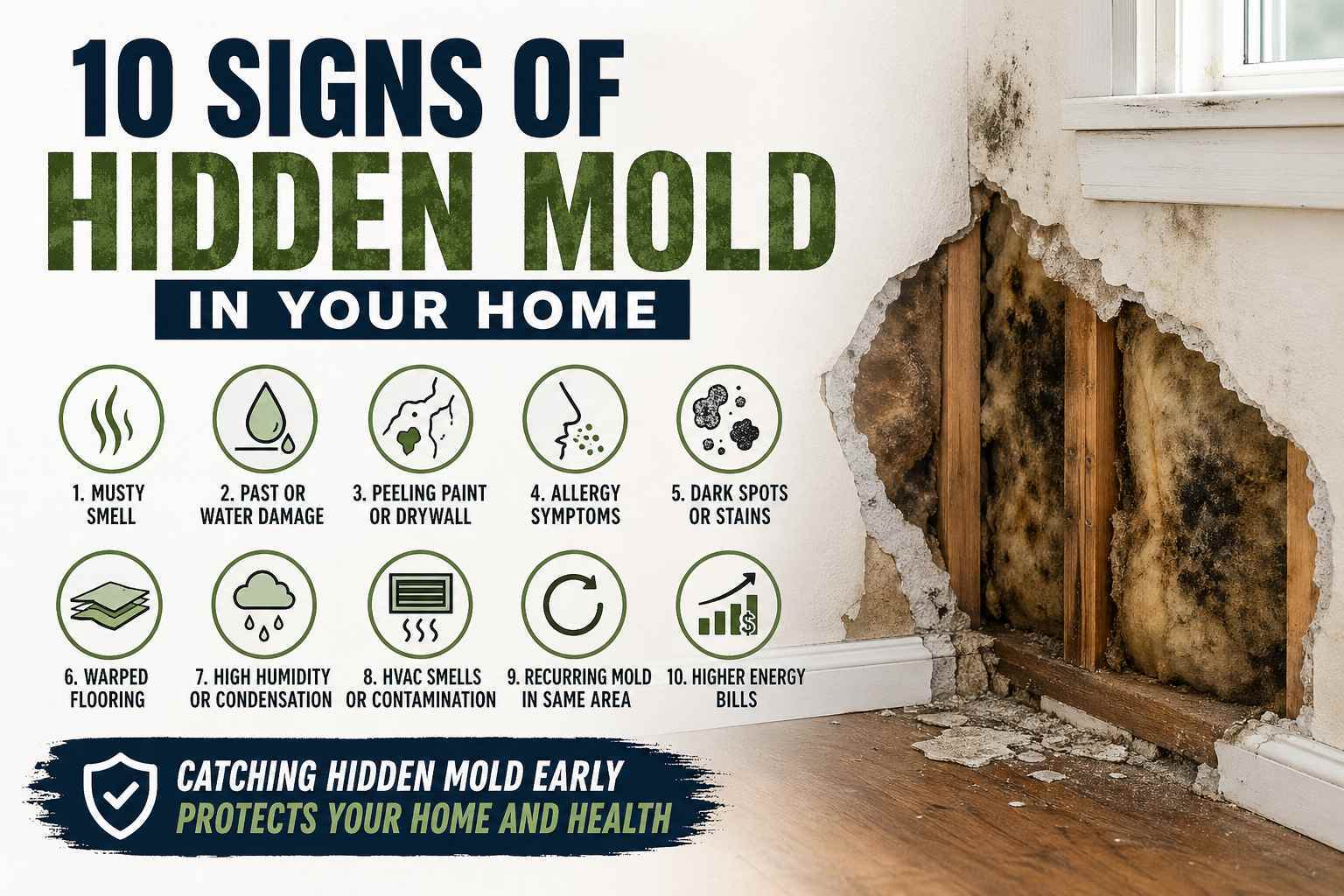
10 Signs of Hidden Mold in Your Home
Hidden mold is one of the most underestimated problems in residential properties. It develops quietly, spreads behind walls and ceilings, and often becomes visible only when damage is already significant. Understanding the signs of hidden mold early can save thousands in repairs and protect your health.
This guide breaks down the most reliable indicators, explains how to detect mold in walls, and highlights the real reasons behind common symptoms like persistent odors and unexplained damage. If you’ve ever dealt with moisture issues, this breakdown on mold growth timelines and risks explains it clearly: Mold After Water Damage Virginia
Why Hidden Mold Is Hard to Detect
What makes mold “hidden”
Hidden mold typically grows in places you don’t regularly inspect:
- Behind drywall
- Inside insulation
- Under flooring
- Inside HVAC systems
- Around plumbing lines
In many cases, mold behind drywall spreads long before you see any visible staining or damage.
Why early detection matters
Mold doesn’t stay localized. Once moisture is present, it spreads quickly and penetrates porous materials. Ignoring early signs of hidden mold often leads to:
- Structural damage
- Indoor air quality issues
- Expensive remediation
If you’re trying to understand potential costs, a realistic breakdown of pricing factors is covered here: Mold Remediation Cost Virginia 2026
1. Persistent Musty Smell
What it means
A musty odor is one of the clearest indicators of hidden mold. It’s caused by microbial volatile organic compounds (MVOCs) released by mold colonies.
Musty smell causes (most common)
- Mold behind drywall
- Damp insulation
- Wet wood framing
- HVAC contamination
If the smell:
- Comes back after cleaning
- Is stronger in certain rooms
- Gets worse after rain
—it’s very likely you’re dealing with hidden mold, not just poor ventilation. Persistent odor is often the earliest and most reliable sign of hidden mold.
2. Recent or Past Water Damage
Why water = mold risk
Mold needs moisture to grow. Even a small leak can trigger growth behind walls within 24–48 hours.
High-risk scenarios
- Roof leaks
- Plumbing leaks
- Flooding
- Window intrusion
- AC condensation issues
If your home has experienced any of these, there’s a high probability of hidden mold—even if everything looks dry now. This is exactly how mold behind drywall develops unnoticed.
3. Peeling Paint or Bubbling Drywall
What this indicates
Moisture trapped inside walls causes paint and drywall to lose adhesion.
Warning signs
- Bubbling paint
- Soft drywall spots
- Warping surfaces
- Cracks forming near seams
These are strong indicators of moisture intrusion and possible hidden mold inside wall cavities.
4. Unexplained Allergy Symptoms
Common reactions
Hidden mold affects indoor air quality, leading to symptoms like:
- Sneezing
- Coughing
- Eye irritation
- Headaches
- Skin irritation
When to suspect mold
If symptoms:
- Improve when you leave the house
- Are worse in specific rooms
- Appear suddenly without seasonal triggers
—it’s worth investigating. You can learn more about health impact here: Is Black Mold Dangerous? Health Risks
5. Dark Spots or Staining in Unusual Areas
Where to look
Hidden mold often reveals itself through subtle staining:
- Ceiling corners
- Baseboards
- Around vents
- Inside closets
Important detail
Not all mold appears black. It can be:
- Green
- Brown
- White
- Yellow
Any unusual discoloration combined with moisture indicators should not be ignored.
6. Warped Flooring or Soft Spots
Why it happens
Moisture trapped under flooring materials creates the perfect environment for mold growth.
Signs to watch for
- Warped hardwood
- Loose tiles
- Spongy laminate
- Lifting edges
These often indicate long-term moisture exposure and potential hidden mold underneath.
7. Condensation and High Humidity Indoors
Why it matters
High humidity creates conditions where mold thrives—even without visible leaks.
Red flags
- Condensation on windows
- Damp indoor air
- Musty smell in closed rooms
- Foggy mirrors outside bathrooms
If humidity is consistently high, mold may already be developing inside walls or insulation.
8. HVAC System Smells or Contamination
What happens
Mold can grow inside ductwork and spread spores throughout the home.
Signs
- Musty smell when AC turns on
- Odor stronger near vents
- Increased dust buildup
This often leads to widespread indoor air contamination if not addressed early.
9. Recurring Mold in the Same Area
Why it keeps coming back
Surface cleaning doesn’t solve the root issue if mold exists inside walls.
What it means
If mold:
- Reappears after cleaning
- Returns in the same spot
- Slowly spreads over time
—you’re likely dealing with hidden growth. At this stage, choosing the right contractor becomes critical: How to Hire Mold Remediation Company Northern Virginia
10. Increased Energy Bills Without Explanation
The hidden connection
Moisture inside walls reduces insulation efficiency.
Result
- HVAC works harder
- Energy bills increase
- Uneven temperatures throughout the home
This is an indirect but common sign tied to hidden moisture and mold issues.
How to Detect Mold in Walls
Step-by-step approach
- Follow the smell
- Musty odor is often the most reliable starting point.
- Check moisture levels
- Use a moisture meter to identify hidden damp areas.
- Inspect high-risk zones
- Focus on bathrooms, kitchens, basements, and exterior walls.
- Look for subtle damage
- Small visual changes often point to bigger hidden issues.
- Schedule professional inspection
- If multiple signs are present, expert assessment is the safest option.
If you're dealing with these symptoms, professional inspection and removal services can help: Mold Remediation
Mold Risk by Area (Common Hidden Locations)
Average Mold Remediation Cost Factors
For a localized estimate example, see how assessments are structured here: Mold Remediation Estimate Fairfax VA 2026
When to Call Professionals
If you notice multiple signs of hidden mold, it’s time to act.
Especially if:
- The smell is persistent
- You’ve had water damage
- Mold keeps returning
- There are health-related symptoms
Insurance coverage is often a concern, so it’s important to understand what’s included: Does Insurance Cover Mold Remediation Virginia
For location-specific services in Northern Virginia:
FAQ
How do I know if mold is hidden behind walls?
Hidden mold usually doesn’t show itself directly, so you have to rely on indirect signs. The most common indicators include a persistent musty smell, soft or slightly “spongy” drywall, bubbling or peeling paint, and recurring staining in the same area. You might also notice that certain rooms feel different — more humid, harder to ventilate, or consistently colder due to moisture trapped inside the walls.
If you suspect mold but don’t see it, the best approach is to combine smell detection with moisture testing. A moisture meter can reveal elevated levels behind drywall without opening it. If multiple signs of hidden mold are present, it’s a strong indication that mold is growing inside the wall cavity, even if the surface looks clean.
Can mold grow without visible water damage?
Yes, and this is one of the biggest misconceptions homeowners have. Mold doesn’t require obvious flooding or leaks — it only needs consistent moisture. That moisture can come from condensation, high humidity, small unnoticed leaks, or even poor ventilation over time.
For example, bathrooms without proper exhaust fans, kitchens with steam buildup, or exterior walls exposed to temperature differences can all create enough condensation for mold to grow. In these cases, homeowners often miss the early signs of hidden mold because there’s no visible “event” like a leak.
This is why understanding mold behavior after moisture exposure is important — even small issues can escalate if ignored.
What are the main musty smell causes in a house?
A musty smell is almost always linked to microbial activity. The most common musty smell causes include:
- Mold behind drywall
- Damp insulation inside walls
- Moist wood framing
- Contaminated HVAC ducts
- Wet subflooring
The smell comes from gases released by mold as it grows. These compounds build up in enclosed spaces and slowly spread throughout the home.
If the odor:
- Returns after cleaning
- Gets stronger in certain areas
- Appears when HVAC turns on
—then it’s very likely caused by hidden mold rather than surface-level issues. At that point, simply masking the smell won’t solve the problem; the source must be located and removed.
How fast does mold grow inside walls?
Mold can begin developing within 24–48 hours after moisture exposure. Inside walls, the process is even faster because conditions are ideal: limited airflow, darkness, and absorbent materials like drywall and insulation.
Here’s how it typically progresses:
- 0–24 hours: Materials absorb moisture
- 24–48 hours: Mold spores activate
- 2–7 days: Initial mold growth begins
- 1–3 weeks: Mold spreads and penetrates materials
- 1+ months: Structural damage and strong odor become noticeable
Because mold grows out of sight, homeowners often don’t notice anything until weeks later, when the damage is already advanced. This is why early detection of signs of hidden mold is critical.

