

What Is Mold Remediation? Step-by-Step Process Explained
Quick Answer: What Is Mold Remediation?
What is mold remediation? Mold remediation is the controlled process of removing mold-contaminated materials, cleaning affected surfaces, filtering airborne spores with HEPA equipment, and correcting moisture conditions so mold is less likely to return.
In simple terms, mold remediation is not just wiping mold off a wall. It is a professional cleanup and restoration process designed to control contamination, protect unaffected areas, remove damaged materials when necessary, and address the moisture problem that allowed mold to grow.
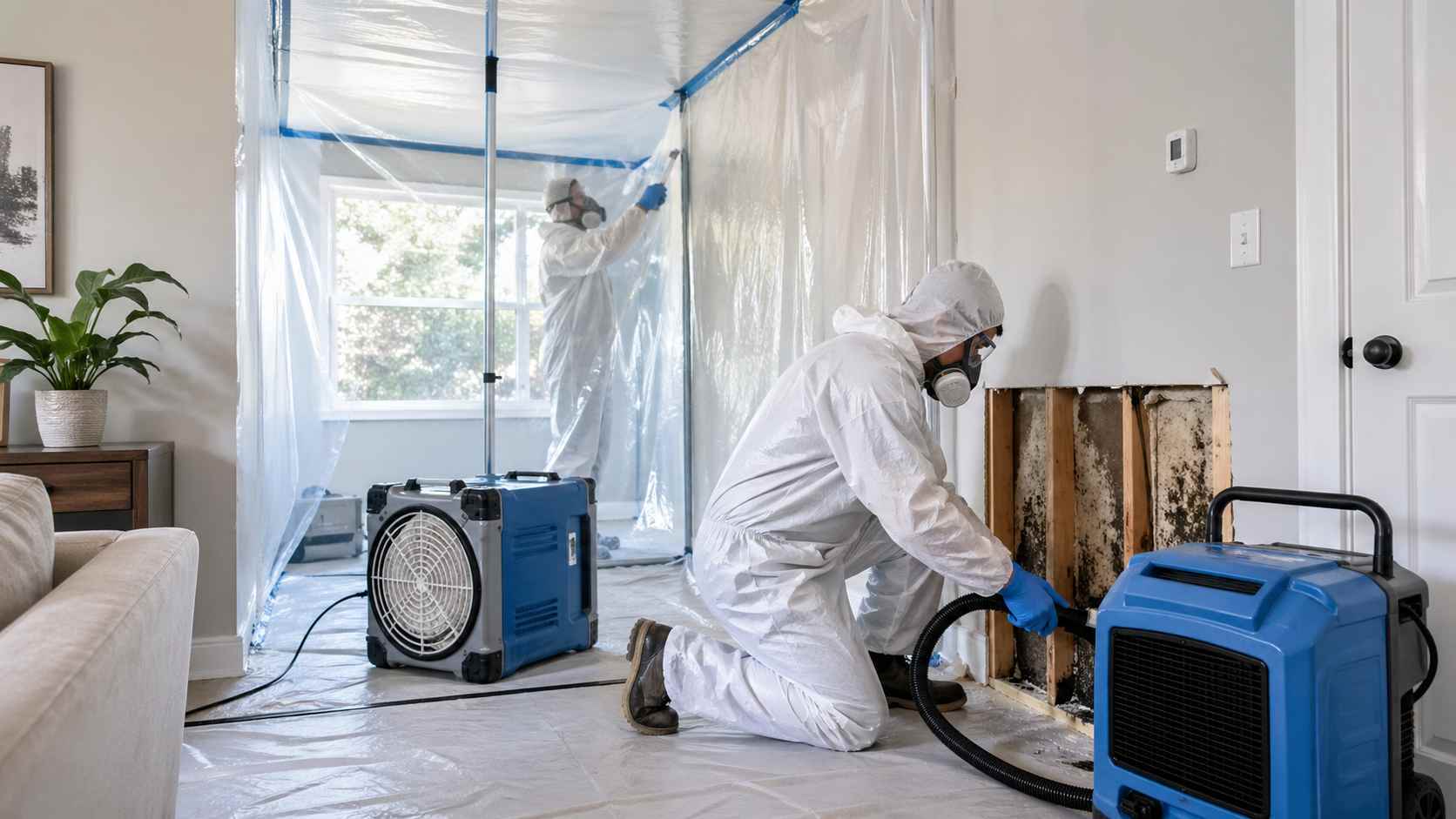
A proper mold remediation process may include inspection of the affected area, containment setup, negative air pressure, HEPA air scrubbers, removal of mold-damaged drywall or insulation, HEPA vacuuming, antimicrobial treatment, drying, and preparation for repair or rebuild.
For homeowners in Northern Virginia, Washington DC, Arlington, Alexandria, Fairfax, McLean, Tysons, and Falls Church, mold often appears after plumbing leaks, roof leaks, bathroom humidity, HVAC condensation, basement moisture, or water damage that was not dried quickly enough.
If you are dealing with visible mold, musty odor, water-damaged drywall, or suspected hidden mold, Total Home Rescue provides professional mold remediation services here: Mold Remediation
Why Mold Remediation Matters
Mold grows when moisture is present long enough for spores to colonize building materials. Common surfaces affected by mold include drywall, wood framing, insulation, baseboards, ceiling materials, flooring, cabinets, and bathroom walls.
A small visible mold spot may be only part of the problem. Mold can also grow behind walls, under floors, above ceilings, inside cabinets, around windows, and behind baseboards. That is why professional mold remediation steps focus on both visible contamination and the underlying moisture source.
Common Causes of Mold Growth
Mold problems usually begin with one or more of these conditions:
- Plumbing leaks
- Roof leaks
- Window leaks
- HVAC condensation
- Poor bathroom ventilation
- Basement humidity
- Wet insulation
- Water-damaged drywall
- Flooding or water intrusion
- High indoor humidity
- Slow leaks behind walls or cabinets
If mold appears after a leak or flood, this guide explains why timing matters: Mold After Water Damage Virginia
Why Surface Cleaning Is Not Enough
Surface cleaning may remove visible staining, but it does not always remove mold growth inside porous materials. If drywall, insulation, or wood materials stayed wet long enough, mold may be deeper than the surface.
That is why mold remediation includes more than cleaning. It may require containment, controlled demolition, HEPA air scrubber mold filtration, detailed cleaning, and moisture correction.
Key Point
Mold remediation should answer three questions:
1. What caused the mold?
2. What materials are affected?
3. What needs to be removed, cleaned, dried, or repaired?
If those questions are not answered, the mold problem may return.
Mold Removal vs. Mold Remediation
Many homeowners search for “mold removal,” but the more accurate term is mold remediation.
What Is Mold Removal?
Mold removal usually means removing visible mold from a surface. This can include wiping, scrubbing, spraying, or cutting out damaged materials.
The problem is that “removal” sounds like all mold spores can be eliminated from a home. In reality, mold spores naturally exist indoors and outdoors. The practical goal is not to make a building completely spore-free. The goal is to remove active mold growth, reduce contamination, and correct the conditions that allowed the mold to grow.
What Is Mold Remediation?
Mold remediation is a broader process. It includes:
- Identifying the affected area
- Reviewing moisture conditions
- Setting up containment
- Using HEPA air scrubbers
- Removing contaminated porous materials
- Cleaning salvageable surfaces
- HEPA vacuuming
- Applying antimicrobial treatment when appropriate
- Drying affected areas
- Preparing the space for rebuild
In other words, mold removal is one part of the job. Mold remediation is the full controlled process.
When Do You Need Mold Remediation?
You may need mold remediation if mold is visible, spreading, recurring, or connected to a moisture issue. Small surface mildew on non-porous bathroom tile may sometimes be cleaned as routine maintenance, but mold on drywall, insulation, wood framing, or ceiling materials is different.
Signs You May Need Professional Mold Remediation
Look for these warning signs:
- Musty odor that does not go away
- Dark, green, gray, brown, or black spots on walls or ceilings
- Paint bubbling or peeling
- Drywall paper delamination
- Soft or swollen drywall
- Water stains near mold-like growth
- Mold near baseboards, windows, cabinets, bathrooms, or HVAC vents
- Recurring mold after cleaning
- Mold after water damage
- Allergy-like symptoms that feel worse indoors
If you suspect mold may be hidden behind walls or ceilings, read this guide: Signs of Hidden Mold in Your Home
When Mold Remediation Is More Urgent
Mold remediation becomes more urgent when:
- The affected area is growing
- Mold is connected to active or recent water damage
- Mold is inside drywall, insulation, or flooring
- Musty odor is strong
- Occupants have sensitivities or respiratory concerns
- The source is a sewage backup or contaminated water event
- Mold is near HVAC systems or air pathways
For local homeowners, fast action is especially important after water damage because humid conditions in Northern Virginia and the DMV area can make moisture problems worse.
Step-by-Step Mold Remediation Process
The exact process depends on the size of the affected area, the type of material, and the source of moisture. However, most professional mold remediation steps follow the same general structure.
Step 1: Identify the Moisture Source
Mold needs moisture. Before serious cleanup begins, the moisture source should be identified, corrected, or controlled.
Possible sources include:
- Plumbing leaks
- Roof leaks
- Window leaks
- Foundation seepage
- Bathroom humidity
- HVAC condensation
- Appliance leaks
- Previous water damage
- Poor ventilation
If the water source is not fixed, mold can return after remediation. A professional mold remediation process should always consider why the mold appeared in the first place.
For prevention guidance, read: How to Prevent Mold Growth in Northern Virginia
Step 2: Evaluate the Affected Area
The next step is to determine what materials are affected and how far the issue may extend.
Professionals may review:
- Visible mold growth
- Moisture readings
- Odor patterns
- Staining or discoloration
- Soft drywall
- Damaged baseboards
- Ceiling materials
- Flooring edges
- Cabinets or vanities
- Wall or ceiling cavities
This step helps determine whether materials can be cleaned or need removal. Mold on tile is different from mold on drywall. Mold on sealed metal is different from mold inside wet insulation.
Step 3: Set Up the Containment Process
The containment process is one of the most important mold remediation steps. Containment separates the affected work area from the clean areas of the home.
Without containment, demolition and cleaning can disturb spores and spread contaminated dust into nearby rooms.
What the Containment Process May Include
Containment may include:
- Plastic sheeting barriers
- Sealed doorways
- Zipper access doors
- Floor protection
- Negative air pressure
- HEPA-filtered air movement
- Controlled entry and exit
- Sealing HVAC vents inside the work area when appropriate
The purpose of the containment process is to reduce cross-contamination.
Why Containment Matters
When mold-contaminated drywall, insulation, or trim is removed, spores and dust can become airborne. A proper containment process helps keep that material inside the work zone instead of spreading into bedrooms, hallways, living areas, or HVAC pathways.
Step 4: Use HEPA Air Scrubbers for Mold Remediation
A HEPA air scrubber for mold remediation is commonly used during professional work. HEPA air scrubbers pull air through high-efficiency filters that help capture fine particles, including mold spores and construction dust.
What Does a HEPA Air Scrubber Do?
A HEPA air scrubber helps:
- Filter airborne mold spores
- Reduce demolition dust
- Support cleaner air inside containment
- Help create negative pressure when properly configured
- Reduce the risk of cross-contamination
A HEPA air scrubber mold filtration setup does not replace material removal, cleaning, or drying. It supports the overall remediation process.
HEPA Air Scrubber vs. Regular Fan
A regular fan can spread spores and dust through the home. A HEPA air scrubber is different because it filters the air instead of simply moving it.
During mold remediation, uncontrolled airflow is not the goal. Controlled air filtration is.
Step 5: Remove Mold-Damaged Porous Materials
Some materials cannot be reliably cleaned once mold has grown into them. Porous materials often need to be removed and properly disposed of.
This may include:
- Mold-affected drywall
- Wet insulation
- Contaminated carpet padding
- Water-damaged ceiling materials
- Paper products
- Heavily affected trim
- Some MDF or particleboard materials
Removal should happen inside containment. Materials are typically bagged or wrapped before being carried through the home.
Why Drywall Is Often Removed
Drywall is porous. Mold can grow on the paper facing and into the material. If drywall was wet long enough for mold to grow, surface wiping may not solve the problem.
Removing affected drywall allows the area behind it to be cleaned, dried, and prepared for proper repair.
Step 6: Clean Salvageable Surfaces
Not everything needs to be removed. Some materials can be cleaned if they are structurally sound and not deeply contaminated.
Salvageable surfaces may include:
- Wood framing
- Concrete
- Masonry
- Metal
- Tile
- Some sealed surfaces
Cleaning may include HEPA vacuuming, damp wiping, sanding, wire brushing, or other surface-cleaning methods depending on the material and condition.
Antimicrobial Treatment
After physical cleaning, antimicrobial treatment may be applied when appropriate. However, antimicrobial products should not be used as a shortcut instead of proper removal and cleaning.
Spraying over mold-contaminated materials is not the same as mold remediation.
Step 7: HEPA Vacuuming and Detailed Cleaning
After demolition and surface cleaning, detailed cleaning is performed.
This may include:
- HEPA vacuuming exposed surfaces
- Cleaning horizontal surfaces
- Wiping dust inside containment
- Cleaning floors in the work area
- Removing debris
- Final cleaning before containment is removed
Detailed cleaning matters because fine dust and settled particles can remain after demolition.
Step 8: Drying and Moisture Control
Even after affected materials are removed, the area must be dry. If humidity remains high or framing stays damp, mold can return.
Moisture control may include:
- Dehumidifiers
- Air movers when appropriate
- Improved ventilation
- Leak repair coordination
- Bathroom exhaust improvements
- HVAC humidity review
- Monitoring indoor humidity
Indoor humidity should generally be kept under control, especially in basements, bathrooms, laundry rooms, and homes with prior water damage.
Step 9: Final Review and Rebuild Readiness
After remediation, the area should be visually clean, dry, and ready for repair or rebuild. Depending on the project, rebuild may include:
- Drywall replacement
- Insulation replacement
- Trim installation
- Painting
- Flooring repairs
- Cabinet repairs
- Ceiling repairs
Total Home Rescue helps homeowners with mold remediation and related restoration work across Northern Virginia and the DMV area.
Local service pages:
Mold Remediation Steps
DIY Mold Cleanup vs. Professional Mold Remediation
Some small surface-level mold issues may be handled by homeowners, especially when the mold is on a non-porous surface and the moisture issue is already corrected. But professional mold remediation is usually the better option when mold affects porous materials, returns after cleaning, follows water damage, or appears behind walls or ceilings.
DIY cleaning often focuses on what is visible. Professional mold remediation focuses on the full affected area, containment, air filtration, material removal, cleaning, drying, and documentation.
DIY Mold Cleanup vs. Professional Mold Remediation
What Materials Can Usually Be Cleaned?
The right approach depends on the material type, how long it was wet, and how much mold growth is present.
Non-Porous Materials
Non-porous materials often have the best chance of being cleaned.
Examples:
- Metal
- Glass
- Tile
- Porcelain
- Some plastics
- Sealed surfaces
Semi-Porous Materials
Semi-porous materials may be cleaned depending on condition.
Examples:
- Wood framing
- Concrete
- Masonry
- Some sealed wood
Porous Materials
Porous materials are more likely to require removal if mold growth is present.
Examples:
- Drywall
- Insulation
- Carpet padding
- Ceiling tile
- Paper products
- Some fabric materials
- Some pressed wood products
Materials and Typical Remediation Approach
Is Black Mold More Dangerous?
Many people use the phrase “black mold” to describe any dark mold. However, color alone does not confirm the mold species or the level of risk. Some molds appear black, green, brown, gray, or white, and different types can look similar.
The main issue is not only color. The main issue is whether mold is actively growing indoors, what materials are affected, how widespread the growth is, whether moisture is still present, and whether occupants are sensitive to mold exposure.
For more details, read: Is Black Mold Dangerous? Health Risks
How Much Does Mold Remediation Cost?
Mold remediation cost depends on the size of the affected area, the materials involved, the amount of containment required, whether HEPA air scrubbers are needed, and whether demolition or rebuild is included.
Common cost factors include:
- Size of affected area
- Number of rooms involved
- Whether mold is visible or hidden
- Whether drywall or insulation must be removed
- Amount of containment required
- HEPA air scrubber mold filtration needs
- Labor and disposal
- Cleaning complexity
- Drying requirements
- Whether repairs are included
For local pricing guidance, read: Mold Remediation Cost Virginia 2026
If you need to understand how estimates are built, read: Mold Remediation Estimate Fairfax VA
Does Insurance Cover Mold Remediation?
Insurance coverage for mold remediation depends on the cause of the mold and the terms of the policy. If mold resulted from sudden and accidental water damage, there may be some coverage depending on the claim. If mold developed from long-term seepage, ongoing humidity, maintenance issues, or neglect, coverage may be limited or denied.
Homeowners should document:
- Photos of the affected area
- Date the issue was discovered
- Known source of water damage
- Contractor estimates
- Scope of work
- Moisture-related observations
- Communication with the insurance company
For more detail, read: Does Insurance Cover Mold Remediation in Virginia?
How to Choose a Mold Remediation Company
Choosing the right mold remediation company matters because poor containment, careless demolition, or incomplete cleaning can spread contamination or leave the source unresolved.
Look for a contractor that explains:
- What materials are affected
- What needs to be removed
- What can be cleaned
- How the containment process will be set up
- Whether HEPA air scrubbers will be used
- How debris will be handled
- What is included and excluded
- Whether rebuild is included
- How the work will be documented
Avoid any company that promises to solve a mold problem with one spray treatment without discussing moisture, containment, removal, cleaning, and drying.
For more hiring guidance, read: How to Hire a Mold Remediation Company in Northern Virginia
Common Mold Remediation Mistakes
Mistake 1: Cleaning Mold Without Fixing Moisture
If the moisture problem remains, mold can return. Cleaning visible mold while ignoring a leak, high humidity, or wet building materials is not enough.
Mistake 2: Using Bleach as the Main Solution
Bleach may discolor surface mold, but it is not a complete mold remediation strategy for porous building materials. Mold on drywall, insulation, or framing often requires a controlled process.
Mistake 3: Skipping the Containment Process
Skipping containment can allow spores and dust to move into clean areas of the home.
Mistake 4: Using Regular Fans
Regular fans can spread spores. HEPA air scrubbers and controlled airflow are different from simply blowing air around the room.
Mistake 5: Painting Over Mold
Painting over mold does not remove contamination. Mold-affected materials should be cleaned or removed before repairs and painting.
Final Thoughts: What Is Mold Remediation?
So, what is mold remediation? Mold remediation is a structured process that addresses mold growth at the source. It includes moisture review, containment process setup, HEPA air scrubber filtration, removal of contaminated materials, detailed cleaning, drying, and preparation for repair.
The most important point is this: mold remediation is not just cosmetic cleaning. It is a controlled process designed to reduce contamination, protect unaffected areas, remove affected materials, and help prevent the same issue from coming back.
For homeowners in Northern Virginia and the DMV area, Total Home Rescue provides mold remediation support for homes affected by leaks, humidity, water damage, and hidden mold concerns.
Start here: Mold Remediation Services
FAQ: What Is Mold Remediation?
1. What is mold remediation in simple terms?
Mold remediation is the process of safely handling mold growth inside a home or building. It usually includes finding the moisture source, setting up containment, using HEPA air scrubbers, removing mold-contaminated porous materials, cleaning remaining surfaces, and making sure the area is dry before repairs begin.
The purpose is not just to make visible mold disappear. The purpose is to control contamination, reduce spore spread, remove affected materials when needed, and address the conditions that allowed mold to grow.
2. What are the main mold remediation steps?
The main mold remediation steps usually include reviewing the moisture source, evaluating affected materials, setting up the containment process, using HEPA air scrubbers, removing contaminated porous materials, cleaning salvageable surfaces, HEPA vacuuming, drying the area, and preparing the space for repair.
The exact process depends on the size of the affected area, the type of materials involved, and whether the mold is visible, hidden, recurring, or connected to water damage.
3. Why is containment important during mold remediation?
Containment is important because mold spores and contaminated dust can spread when affected materials are disturbed. During demolition or cleaning, drywall dust, insulation particles, and mold spores can become airborne.
A proper containment process helps separate the affected work area from the rest of the home. It may include plastic barriers, sealed openings, zipper doors, negative air pressure, and HEPA air scrubbers. This helps reduce cross-contamination and keeps the work zone more controlled.
4. What does a HEPA air scrubber do for mold?
A HEPA air scrubber filters airborne particles during mold remediation. It pulls air through HEPA filtration, helping capture fine dust and mold spores that may become airborne during demolition and cleaning.
A HEPA air scrubber for mold remediation is especially useful inside containment. It can help improve air filtration, support negative pressure, and reduce the chance of particles spreading into unaffected rooms. It does not replace material removal, cleaning, or moisture control, but it is an important part of a professional remediation setup.
5. Can mold come back after remediation?
Yes, mold can come back after remediation if the moisture problem is not fixed. Mold needs moisture to grow. If there is still a leak, high humidity, poor ventilation, condensation, or damp building materials, new mold growth can develop even after cleanup.
That is why proper mold remediation should include moisture control. Homeowners should repair leaks, improve ventilation, dry wet materials quickly, monitor humidity, and address water damage as soon as possible.
6. Is mold remediation the same as mold removal?
No. Mold removal usually refers to removing visible mold from surfaces. Mold remediation is a broader process that includes containment, air filtration, material removal, cleaning, drying, and moisture control.
Mold removal may be one part of remediation, but remediation is the full process used to control and correct the mold problem.
7. Do you always have to remove drywall during mold remediation?
Not always. Drywall removal depends on whether the drywall is mold-contaminated, wet, damaged, soft, or affected behind the surface. If mold is only on a cleanable non-porous surface, removal may not be necessary.
However, if drywall has been wet long enough for mold to grow into the paper facing or behind the wall, removal is often the proper approach.
8. How long does mold remediation take?
The timeline depends on the size of the affected area, the materials involved, containment needs, drying conditions, and whether rebuild is included. A small contained project may take a short time, while larger projects with demolition, drying, and repairs may take several days or longer.
Hidden mold, multiple affected rooms, or water-damaged building materials can extend the timeline.
9. Should I test for mold before remediation?
Mold testing is not always required when mold is clearly visible and the source is understood. In many cases, the priority is to correct moisture, remove affected materials, and remediate the area properly.
Testing may be useful when the source is unclear, occupants have concerns, or documentation is needed. If testing is required, it is often best performed by an independent mold assessor or indoor environmental professional.
10. What should I do if I find mold after water damage?
If you find mold after water damage, avoid disturbing the area, do not place regular fans directly on moldy materials, and do not paint over the problem. The moisture source should be corrected, affected materials should be evaluated, and professional mold remediation may be needed.
For more information, read: Mold After Water Damage Virginia

