

Water Damage Behind Walls: 8 Warning Signs Homeowners Shouldn't Ignore
Your wall looks perfectly normal. No puddles. No dripping water. No obvious reason to worry.
Then a small brown stain appears above the baseboard.
You paint over it. A few weeks later, it's back. This time, the paint is bubbling, too.
Water damage behind walls can develop long before homeowners realize something is wrong. A leaking pipe, failed shower connection, roof leak, or recurring condensation can affect insulation and framing while the finished wall looks almost untouched.
And here's what makes hidden water damage frustrating: the visible symptom isn't always close to the actual source.
Water can follow pipes, framing, and wall cavities before showing up several feet away.
But there's another important distinction. Not every stain means there's an active leak, and not every musty smell means you have mold.
The goal is to recognize suspicious changes, identify the possible water source, and confirm affected materials before starting repairs.
Here are eight warning signs you shouldn't ignore—and how to respond without unnecessary demolition.
Quick Answer: How Do You Know If There's Water Damage Behind a Wall?
The most common signs of water damage behind walls are recurring stains, bubbling paint, soft drywall, warped baseboards, musty odors, localized dampness, possible mold growth, and unexplained plumbing activity.
These symptoms can suggest moisture inside walls, but none proves it on its own.
A professional inspection may involve moisture meters, thermal imaging, plumbing diagnostics, and targeted access when necessary.
If you suspect an active leak, address the water source first. Avoid wet electrical fixtures and unstable materials.
The safest approach is simple: identify the source, verify moisture, assess the materials, and repair what actually needs attention.
8 Warning Signs of Water Damage Behind Walls
1. Yellow or Brown Stains That Keep Coming Back
A brown stain on the wall can be an early warning sign, particularly when it grows or returns after repainting.
Water may travel through insulation, wood framing, or drywall seams before reaching the visible surface.
Stains can also remain from older, resolved leaks, so discoloration alone isn't proof of ongoing moisture.
What to look for: Changes after heavy rain, shower use, or appliance operation. Take dated photographs to track the size and location.
If the stain keeps changing, investigate the source before applying another coat of paint.
2. Bubbling Paint or Peeling Wallpaper
Paint bubbles, loose wallpaper, and separating wall finishes may develop when moisture affects drywall or adhesive.
These changes are particularly suspicious near bathrooms, kitchens, windows, and walls with a history of leaks.
However, poor paint preparation or normal finish deterioration can produce similar symptoms.
What to look for: Recurring peeling in the same location, especially when combined with staining or softened drywall.
Painting over an unresolved moisture problem may briefly improve the appearance without fixing the cause.
3. Soft, Swollen, or Bulging Drywall
Drywall can absorb water and lose integrity.
Warning signs include swollen seams, crumbling edges, softened surfaces, or visible bulging.
A wet wall cavity can also contain affected insulation or framing even when the painted surface shows limited damage.
What to look for: Physical deterioration near plumbing, ceilings, and the lower portion of walls.
Do not press on visibly unstable sections or cut into the cavity without considering electrical and plumbing hazards.
Learn more about wet drywall after water leak
4. Warped Baseboards or Separating Trim
Water inside a wall often moves downward and collects near the floor.
Wood trim may warp, MDF baseboards may swell, and caulk joints can separate.
But damage along baseboards can also result from floor-level spills or previously repaired leaks.
What to look for: Swelling that continues beyond one small spot, loose trim, and changes in adjacent flooring.
When both baseboards and flooring show damage, the investigation may need to include the floor assembly.
5. A Musty Smell That Won't Go Away
You open the windows. The odor fades. A few hours later, it's back.
A persistent earthy smell may accompany damp building materials or microbial growth.
It may also originate from carpet padding, plumbing drains, stored belongings, or HVAC components.
What to look for: Whether the odor becomes stronger after rain, when the AC runs, or in a closed room.
Smell can help guide an investigation, but it cannot confirm mold or measure concealed moisture.
6. A Damp Patch or Unusual Cold Spot
A localized patch that feels damp may deserve further assessment.
A section of wall that feels unusually cool could also be associated with moisture—but missing insulation, drafts, and thermal bridging are alternative explanations.
What to look for: A repeating pattern that coincides with a known leak or other signs of material damage.
A thermal camera can help locate unusual surface-temperature patterns. It cannot see water directly through drywall.
A suspicious temperature reading should be verified with appropriate moisture measurements.
7. Recurring Dark Spots or Mold-Like Growth
Dark spotting around wallpaper, wall seams, or baseboards may indicate a moisture problem.
Some visible growth can be associated with concealed moisture, particularly after a known leak.
However, dust, soot, and staining can look similar. Color cannot identify a mold species or establish health risk.
What to look for: Repeated growth or discoloration in an area with water exposure.
Avoid scraping, sanding, or tearing off potentially contaminated materials without appropriate precautions.
8. Unexplained Water Usage or Dripping Sounds
Not every leaking pipe behind a wall leaves an immediate stain.
A water meter indicating flow when fixtures are off, recurring sounds of running water, or unusually high water consumption may indicate a hidden plumbing problem.
But a running toilet, outdoor irrigation, or appliance can produce similar clues.
What to look for: Patterns when the plumbing system should be idle.
Check accessible fixtures first. If the unexplained activity continues, have a qualified plumber investigate.
Avoid opening drywall based on a water bill alone.
What Causes Water Damage Inside Walls?
The most common sources are leaking supply lines, drain connections, shower plumbing, failed waterproofing, roof intrusion, window leaks, HVAC condensate, and moisture entering through below-grade areas.
Different sources create different patterns.
A pressurized supply leak may cause persistent moisture. A damaged drain can create intermittent problems after a fixture is used.
A stain appearing after rain may suggest exterior intrusion rather than plumbing.
Condensation can also develop on cold surfaces when humidity, insulation, and airflow conditions allow it.
The location of visible damage does not always identify where the water entered.
For common plumbing-related losses, see burst pipe water damage
Is It an Active Leak, Condensation, or an Old Stain?
Before assuming the wall needs to be opened, consider when the symptom appears.
An old stain that remains unchanged after a documented repair may be historical damage.
A stain that expands, returns after painting, or repeatedly feels damp warrants further investigation.
Condensation may appear near cold exterior surfaces, especially where humidity and insulation conditions contribute.
An active plumbing leak may be associated with ongoing water consumption or symptoms following fixture use.
These clues are useful, but timing alone cannot establish the cause.
When the answer isn't clear, an inspection should combine the home's moisture history with material measurements and appropriate plumbing or exterior investigation.
What Should You Do if You Suspect a Wet Wall Cavity?
You don't need to start by tearing out drywall.
Follow these steps:
- Check for active water. If you suspect a pressurized plumbing leak, use a safe, accessible shutoff when appropriate.
- Avoid electrical hazards. Stay away from wet switches, outlets, and ceiling fixtures.
- Document changes. Photograph stains, peeling paint, or warped trim with dates.
- Inspect nearby areas. Look along adjoining floors, cabinets, and ceilings for related signs.
- Avoid disturbing suspected mold. Opening a contaminated cavity without precautions may spread debris.
- Arrange targeted inspection. Persistent symptoms or known water exposure justify checking affected materials.
If sewage or other contaminated water is suspected, avoid handling affected materials.
The goal is to prevent further damage while keeping the investigation focused.
How Professionals Find Water Damage Behind Walls
Professional hidden moisture detection relies on several tools—not a single dramatic infrared image.
Moisture Meters
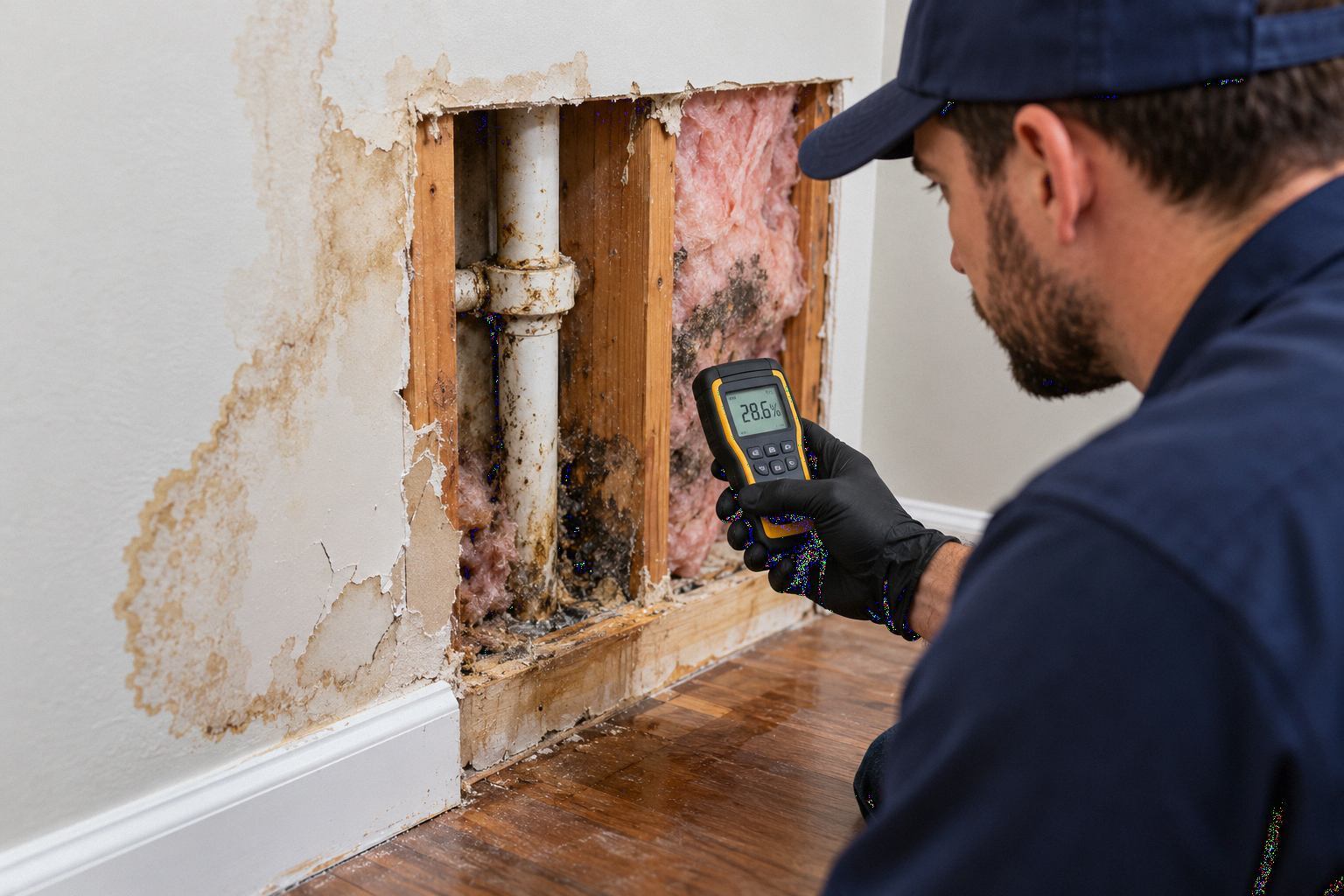
Pin and pinless meters help identify suspicious material conditions and monitor drying.
Measurements require interpretation based on material type, instrument limitations, and comparison areas.
Thermal Imaging
Infrared cameras measure surface-temperature patterns.
Can Thermal Imaging Detect Hidden Water?
Sometimes it helps identify patterns associated with moisture, but other conditions can create similar images.
Can a Thermal Camera See Through Drywall?
No. It records thermal radiation from the surface, not the interior of an opaque wall.
What Confirms the Suspected Moisture?
Appropriate measurements, investigation of the water source, and limited physical access when justified.
Borescopes and Selective Openings
A borescope can provide a limited view inside a cavity when safe access is available.
In other situations, removing a small section of trim or drywall may be necessary to assess insulation and framing.
Professional judgment should determine where access is needed.
Does Wet Drywall Always Need to Be Removed?
No.
EPA guidance recognizes that drywall affected by clean water may sometimes be dried in place when there is no obvious swelling and seams remain intact.
But deteriorated drywall, contaminated materials, wet insulation, and limited cavity access can change that decision.
A professional should evaluate physical condition, contamination, drying feasibility, and whether the materials can be properly inspected.
Drying a wall successfully is not the same as simply making its exposed surface feel dry.
How Is Water Damage Behind a Wall Repaired?
A professional restoration plan typically follows five stages:
- Source control: Correct the plumbing defect, exterior leak, or moisture condition.
- Moisture assessment: Determine which materials and adjoining areas were affected.
- Material treatment: Clean and dry suitable materials; remove non-restorable materials when necessary.
- Drying verification: Document appropriate conditions before closing the wall.
- Reconstruction: Replace necessary insulation, drywall, trim, and finishes.
The scope should reflect the findings. A small leak doesn't automatically require rebuilding an entire room.
Can Hidden Moisture Cause Mold?
Yes. Persistent moisture can support mold growth on susceptible materials.
However, water damage does not automatically mean mold is present.
EPA recommends addressing and drying wet materials within 24–48 hours when possible to reduce mold risk. That is a prevention target, not a universal completion deadline.
If visible mold is present, routine sampling is generally unnecessary. The priority is correcting the moisture source and appropriately treating affected materials.
Does Homeowners Insurance Cover Hidden Water Damage?
Coverage depends on the policy and the cause of loss.
A sudden accidental plumbing release may be treated differently from gradual leakage, maintenance-related problems, or certain excluded water sources.
Photographs, plumbing findings, moisture measurements, and itemized estimates may help document actual damage.
The insurer determines coverage and payment.
For guidance, see water damage insurance claim help
How Can You Prevent Hidden Wall Moisture?
Address leaks promptly, inspect vulnerable plumbing connections, maintain condensate drainage, and investigate recurring stains.
EPA recommends indoor relative humidity below 60%, ideally 30–50% when practical.
Never cover unresolved wet or mold-contaminated materials with fresh paint or new drywall.
Water Damage Behind Walls in Northern Virginia
Homeowners in Alexandria, Arlington, Fairfax, McLean, Vienna, Falls Church, and surrounding Northern Virginia communities may encounter concealed moisture after plumbing failures, appliance leaks, roof intrusion, or basement water damage.
Total Home Rescue provides water damage mitigation, structural drying, and reconstruction services across the DMV area.
A documented inspection can help establish which building materials require attention without assuming that every stain calls for extensive demolition.
Final Takeaway
The best response to water damage behind walls is to investigate the source and confirm affected materials before rebuilding.
Recognize recurring signs, document changes, address active leaks, and use appropriate inspection methods.
A careful assessment can help preserve restorable materials while identifying damage that actually needs repair.
Frequently Asked Questions About Water Damage Behind Walls
1. Can There Be Water Damage Behind Drywall Without Any Visible Signs?
Yes. Water can affect insulation, framing, or the backside of drywall before it creates a stain or causes paint to peel.
For example, a supply-line leak inside a closed cavity may not immediately affect the painted surface. Water from a roof or window can also travel along framing before reaching a visible location.
However, a normal-looking wall is not evidence that hidden damage exists. An investigation needs a reason to suspect moisture, such as a documented leak, unusual plumbing behavior, or related damage elsewhere.
A qualified professional can review the water pathway and use appropriate meters to evaluate accessible materials.
When necessary, targeted access may help assess concealed insulation and framing.
Opening large sections of wall without supporting evidence can create unnecessary damage.
The objective is to establish whether moisture remains and which materials are affected—not to treat every wall as wet simply because a leak happened nearby.
2. How Can I Tell If a Pipe Is Leaking Behind My Wall?
A hidden pipe leak may cause recurring stains, soft drywall, wet trim, dripping sounds, or unexplained water use.
But none of those clues proves a pipe is leaking inside the wall.
A running toilet, exterior irrigation line, or appliance connection may explain unexpected meter activity. Drain leaks may appear only when specific fixtures are used, while pressurized supply leaks can behave differently.
Start by checking visible plumbing and documenting when symptoms occur.
If the water meter continues to indicate flow when all expected uses are off, contact a qualified plumber for diagnosis.
Do not cut through drywall without locating utilities and considering electrical and plumbing hazards.
If a pressurized leak is actively releasing water, an accessible shutoff may help limit damage when it can be operated safely.
After the source is identified, a separate moisture inspection may be needed to determine how far the water traveled.
3. Can Moisture Inside a Wall Dry on Its Own, or Does the Drywall Need to Be Removed?
Sometimes drywall can be dried without demolition, but that depends on the circumstances.
EPA guidance for clean-water damage indicates that sound drywall may sometimes dry in place when it shows no obvious swelling and the seams are intact.
However, wet insulation, contamination, deterioration, and lack of drying access can make removal necessary.
A household dehumidifier may help reduce indoor humidity, but it cannot independently establish that a closed wall cavity is dry.
Professional drying may require appropriate airflow, access, dehumidification, and moisture monitoring.
The important question is whether the affected materials can be adequately cleaned, dried, and verified.
Before reinstalling insulation or closing a cavity, conditions should be documented.
Removing every wet wall can create unnecessary repair costs, but leaving non-restorable materials inside the structure can create additional problems.
The decision should follow actual material conditions, not a fixed rule applied to every leak.
4. Does a Musty Smell or Dark Stain Mean I Have Dangerous Mold Behind My Walls?
Not automatically.
Some mold can produce musty odors, but damp building materials, drains, and other indoor sources may produce similar smells.
Dark spots may be mold, staining, soot, or other deposits. Color and odor cannot identify mold species or determine health risk.
If the wall has a history of water damage, the appropriate first step is to investigate the source and affected materials.
EPA generally considers routine mold sampling unnecessary when visible mold growth is already present. Correcting moisture and treating affected materials are more important than obtaining a species name for every spot.
Disturbing suspected concealed mold by cutting drywall or peeling wallpaper may release contaminated dust.
People with asthma, significant respiratory conditions, or weakened immune systems should avoid performing mold cleanup themselves.
A qualified assessment can help determine when professional mold remediation is appropriate and which materials require treatment.
5. How Much Does It Cost to Find and Repair Hidden Water Damage, and Will Insurance Pay?
There is no reliable universal price for hidden wall water damage.
The cost depends on the source, extent of affected materials, accessibility, contamination, drying requirements, and reconstruction.
A localized plumbing leak requiring limited inspection can be very different from moisture affecting insulation, several walls, cabinets, and flooring.
Request an estimate that separates source repair, moisture assessment, mitigation, material removal, drying, and reconstruction.
Insurance coverage also depends on the cause and policy.
Some sudden accidental plumbing losses may be covered, while gradual seepage, maintenance problems, or certain excluded water sources may not be.
Preserve dated photographs, the plumber's findings, moisture readings, and itemized restoration estimates.
The insurance carrier decides coverage, exclusions, deductibles, and payment.
A restoration contractor can document physical damage and recommended work but cannot guarantee insurance approval or reimbursement.

