

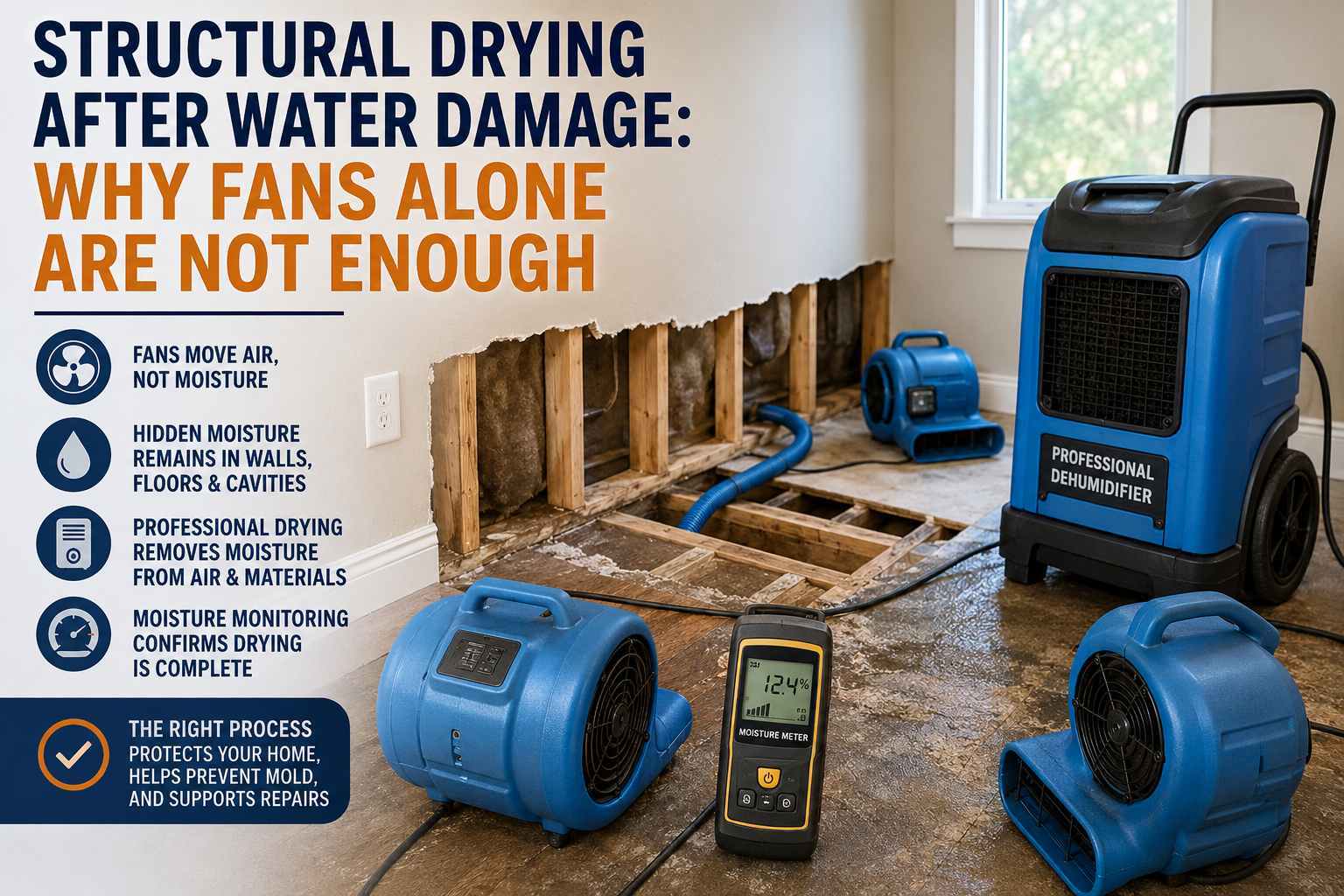
Quick Answer: Why Fans Alone Are Not Enough
Structural drying after water damage is the process of removing moisture from the building materials affected by a water leak, pipe burst, appliance overflow, roof leak, or water intrusion. Fans can help move air, but fans alone usually cannot remove moisture from drywall, wood, subflooring, insulation, cabinets, baseboards, trim, or wall cavities.
To properly dry out wet walls or dry out wet floor materials, a drying plan may require water extraction, air movers, dehumidifiers, moisture meters, selective material removal, and moisture monitoring. A surface can look dry while moisture in building materials remains hidden behind baseboards, under flooring, inside wall cavities, or inside wood.
EPA guidance says moisture control is the key to mold control and notes that wet or damp materials should be dried within 24–48 hours after a leak or spill when possible. EPA also explains that dehumidifiers can reduce humidity while fans can accelerate drying, which is why airflow and moisture removal are not the same thing.
For the full drying and mitigation process, see water mitigation process
What Is Structural Drying After Water Damage?
Structural drying after water damage means drying the materials inside the home, not only drying the visible surface of the room. When water spreads, it can move through seams, edges, porous materials, wall cavities, flooring layers, and hidden spaces.
Structural drying may involve:
- Drywall
- Wall cavities
- Wood framing
- Baseboards
- Trim
- Carpet and carpet pad
- Subflooring
- Hardwood or laminate flooring
- Cabinets and toe kicks
- Ceilings
- Insulation
The main problem is hidden moisture. A wall may look normal while moisture remains behind it. A floor may feel dry on top while the subfloor is still wet. A cabinet may look fine while the bottom, back panel, or toe kick is holding moisture.
For a broader homeowner guide, see water damage restoration homeowner guide
Why Fans Alone Cannot Dry a Water-Damaged Structure
Fans are useful, but they are not a complete structural drying system. A fan moves air across a surface. It does not remove moisture from indoor air. It does not test moisture inside building materials. It does not confirm that walls, floors, cabinets, insulation, or wood are dry enough for repairs.
Fans alone may fail because:
- They may dry only the surface
- They do not remove moisture from indoor air
- They do not measure hidden moisture
- They may not reach wall cavities
- They may not dry wet insulation
- They may not dry trapped moisture under flooring
- They may not control humidity
- They may create a false sense that the area is dry
- They may move dust or contaminants if the water source is unsafe
EPA guidance for wet carpet and backing describes drying as a combination of water removal, airflow, and dehumidification. That supports the practical point that airflow alone is not the full drying strategy.
Step 1: Stop the Water Source First
Before structural drying begins, the water source should be stopped if safe. Drying equipment cannot solve the problem if water is still entering the structure.
Source control may include:
- Shutting off a supply valve
- Turning off the main water line
- Stopping an appliance leak
- Addressing a plumbing issue
- Limiting additional roof water entry
- Removing standing water
- Protecting affected areas from more moisture
For urgent water damage situations, see emergency water damage restoration guide
Why Source Control Comes First
If the source is not stopped, walls, floors, cabinets, and subflooring can remain wet even while fans or dehumidifiers are running.
Why Documentation Matters
Photos, videos, notes, and moisture readings can help document what happened, which areas were affected, and what work was needed.
Why Timing Matters
Wet materials should be handled quickly. EPA recommends drying water-damaged areas and items within 24–48 hours when possible to help reduce mold growth risk.
Simple Rule
Stop the source, remove excess water, control humidity, monitor moisture, and confirm dryness before rebuilding.
Step 2: Inspect Moisture in Building Materials
The next step is identifying visible and hidden moisture. This is where moisture in building materials becomes important.
A professional may check:
- Drywall moisture
- Wood moisture
- Subfloor moisture
- Cabinet moisture
- Carpet pad moisture
- Insulation conditions
- Baseboard areas
- Wall cavities
- Ceiling materials
- Relative humidity
A surface can feel dry while the material behind it is still wet. That is why moisture meters are used during structural drying after water damage. Without readings, drying becomes guesswork.
For signs of hidden moisture and mold concerns, see signs of hidden mold in your home
Step 3: Remove Standing Water Before Drying
If standing water or saturated flooring is present, water extraction may be needed before drying equipment is placed. Extraction removes bulk water so the structure can dry more efficiently.
Water extraction may involve:
- Pumps
- Wet vacuums
- Extraction tools
- Carpet extraction
- Hard-surface extraction
- Removal of wet carpet pad when needed
Trying to dry out wet floor materials with only fans can be slow and incomplete if excess water remains. Removing the bulk water first reduces the moisture load on floors, walls, and indoor air.
For claim documentation guidance, see water damage insurance claim help
Step 4: How Professionals Dry Out Wet Walls
To dry out wet walls, a contractor needs to know where the water traveled. Wet drywall may sometimes dry in place, but saturated drywall, wet insulation, contaminated materials, or damaged wall assemblies may require removal.
Wet wall drying may involve:
- Moisture readings
- Baseboard removal
- Air movement across affected areas
- Dehumidification
- Selective drywall removal
- Removal of saturated insulation
- Daily moisture monitoring
- Final dry verification
Fans alone may dry the paint surface while moisture remains behind the wall. This can make a wall look dry before it is actually ready for repair.
For wall-related mold concerns, see mold behind drywall signs removal
Step 5: How Professionals Dry Out Wet Floors
To dry out wet floor materials, the contractor must identify the flooring type and how far the water traveled. Carpet, carpet pad, hardwood, laminate, tile, and subflooring do not dry the same way.
Wet floor drying may involve:
- Water extraction
- Removing wet carpet pad
- Checking subfloor moisture
- Lifting flooring when needed
- Placing air movers
- Using dehumidifiers
- Monitoring wood moisture
- Checking for swelling, cupping, or trapped moisture
A floor can look dry on top while moisture remains below. This is especially important with wood, laminate, carpet pad, and subflooring.
Step 6: Use Professional Drying Equipment
Professional drying equipment is used to create controlled drying conditions. The goal is not just to blow air around the room. The goal is to remove moisture from materials and from the indoor environment.
Professional drying equipment may include:
- Air movers
- Dehumidifiers
- Moisture meters
- Extraction tools
- Specialty drying systems
- HEPA air filtration when needed
- Temporary containment when needed
The IICRC describes its standards as internationally recognized standards for cleaning, restoration, and inspection, and the IICRC S500 standard is focused on professional water damage restoration procedures and precautions.
Step 7: Why a Dehumidifier After Water Leak Matters
A dehumidifier after water leak damage helps remove moisture from indoor air. This matters because air movers help moisture evaporate from wet materials, but that moisture then enters the air.
If the moisture is not removed, humidity can stay high. High humidity can slow drying and allow moisture to remain in building materials longer.
A dehumidifier helps control:
- Relative humidity
- Indoor moisture load
- Condensation risk
- Drying conditions
- Secondary moisture movement
- Moisture in building materials
Fans move air. Dehumidifiers remove moisture from the air. Professional structural drying often needs both because they do different jobs. EPA guidance also separates airflow from dehumidification when describing drying wet carpet and backing.
Step 8: Air Movers vs Household Fans
Air movers are different from standard household fans. Air movers are designed to direct airflow across wet materials and support controlled evaporation.
Air movers may be placed near:
- Wet drywall
- Baseboards
- Flooring
- Carpet
- Cabinets
- Wall cavities
- Ceiling materials
- Tight spaces
- Subfloor areas
Air movement should be controlled. Too little airflow can slow drying. Too much airflow in the wrong situation can spread dust or contaminants. If the water source is sewage, flood water, or another contaminated source, the drying plan may require additional safety steps.
Step 9: Monitor Moisture Until Materials Are Dry
Moisture monitoring is the difference between professional structural drying and guesswork. A material may look dry before it is dry inside.
A contractor may monitor:
- Drywall moisture
- Wood moisture
- Subfloor moisture
- Cabinet moisture
- Relative humidity
- Temperature
- Equipment performance
- Drying progress
Monitoring helps determine whether equipment should remain in place, be moved, adjusted, or removed. It also helps confirm whether the structure is ready for repairs.
For repair planning after water damage, see water damage restoration cost guide
Step 10: Confirm Dryness Before Repairs
Repairs should usually wait until materials are dry. Installing drywall, flooring, trim, cabinets, or paint over damp materials can trap moisture.
A final dry check may include:
- Moisture meter readings
- Relative humidity readings
- Visual inspection
- Equipment removal decision
- Repair readiness notes
- Updated documentation
The goal is simple: confirm the structure is ready before rebuild work starts.
For coverage questions, see does insurance cover water damage restoration
Mold Concerns After Water Damage
Mold concerns increase when moisture stays in materials. EPA states that moisture control is the key to mold control, and EPA guidance says wet or damp materials should be dried quickly after a leak or spill when possible.
Mold concerns may be higher when:
- Water sits too long
- Walls stay wet
- Floors stay wet
- Insulation is saturated
- Humidity stays high
- Moisture is hidden
- Drying equipment is removed too early
- Musty odor appears
For mold after water damage, see mold after water damage Virginia
For mold prevention, see how to prevent mold growth Northern Virginia
For mold remediation steps, see what is mold remediation step by step process
For mold-related insurance questions, see does insurance cover mold remediation Virginia
Common Mistakes When Drying Water Damage
Many homeowners try to handle water damage with towels, open windows, and household fans. That may help with small surface spills, but it may not dry the structure.
Common mistakes include:
- Using fans without dehumidifiers
- Ignoring moisture under flooring
- Ignoring wet carpet pad
- Painting over water stains
- Installing flooring over damp subflooring
- Removing materials without photos
- Turning off equipment too early
- Assuming a dry surface means a dry structure
- Waiting too long to begin drying
- Ignoring musty odors
The real issue after water damage is often hidden moisture, not only visible water.
Local Water Damage and Mold Resources
Structural drying often connects with water mitigation, water damage restoration, insurance documentation, mold prevention, and mold remediation.
FAQ: Structural Drying After Water Damage
1. What is structural drying after water damage?
Structural drying after water damage is the process of removing moisture from affected building materials after a leak, overflow, burst pipe, roof leak, or water intrusion. It focuses on drywall, wood, subflooring, insulation, cabinets, trim, wall cavities, ceilings, and flooring systems.
The goal is to dry the structure before repairs begin. This is different from wiping up water or placing a fan in the room. Structural drying may require water extraction, air movement, dehumidification, moisture monitoring, selective removal, and final dry verification.
2. Can fans dry out wet walls?
Fans may help move air across the surface of wet walls, but they may not fully dry out wet walls. Moisture can remain behind baseboards, inside wall cavities, in insulation, or behind drywall. A painted wall can look dry even when the material behind it is still damp.
Professional drying may require moisture meters, air movers, dehumidifiers, baseboard removal, drying openings, or selective drywall removal depending on the situation. If insulation is wet or the water source is contaminated, drying in place may not be appropriate.
3. Can fans dry out wet floors?
Fans may help with light surface moisture, but they may not fully dry out wet floor materials. Moisture can remain under hardwood, laminate, carpet pad, tile assemblies, or subflooring. Hidden moisture can lead to odor, material movement, or mold concerns if it is not addressed.
Professional drying may include water extraction, removing wet carpet pad, checking subfloor moisture, using air movers, running dehumidifiers, and monitoring moisture readings until the floor system is ready for repair.
4. Why use a dehumidifier after water leak damage?
A dehumidifier after water leak damage helps remove moisture from indoor air. This matters because air movers push moisture out of wet materials and into the air. If that moisture stays in the room, humidity can remain high and drying can slow down.
Fans move air. Dehumidifiers remove moisture from the air. Professional drying often uses both because they perform different jobs. Moisture meters help confirm whether the drying process is working.
5. How do professionals know when structural drying is complete?
Professionals use moisture meters, humidity readings, visual inspection, and drying documentation to determine whether materials are dry enough for repairs. They may compare affected materials to similar unaffected materials when evaluating drying progress.
Structural drying is not complete just because a surface looks dry. Drywall, wood, cabinets, insulation, and subflooring can hold moisture internally. Repairs should usually wait until affected materials are dry and ready.
Final Takeaway
Structural drying after water damage requires more than fans. Fans can move air, but they do not remove moisture from indoor air, measure moisture inside materials, or confirm that walls and floors are dry.
To dry out wet walls, dry out wet floor materials, and control moisture in building materials, professional drying may require water extraction, air movers, dehumidifiers, moisture meters, selective material removal, cleaning, and final dry verification.
The safest rule is simple: remove excess water, control humidity, dry the structure, monitor moisture, and confirm dryness before repairs begin.

