

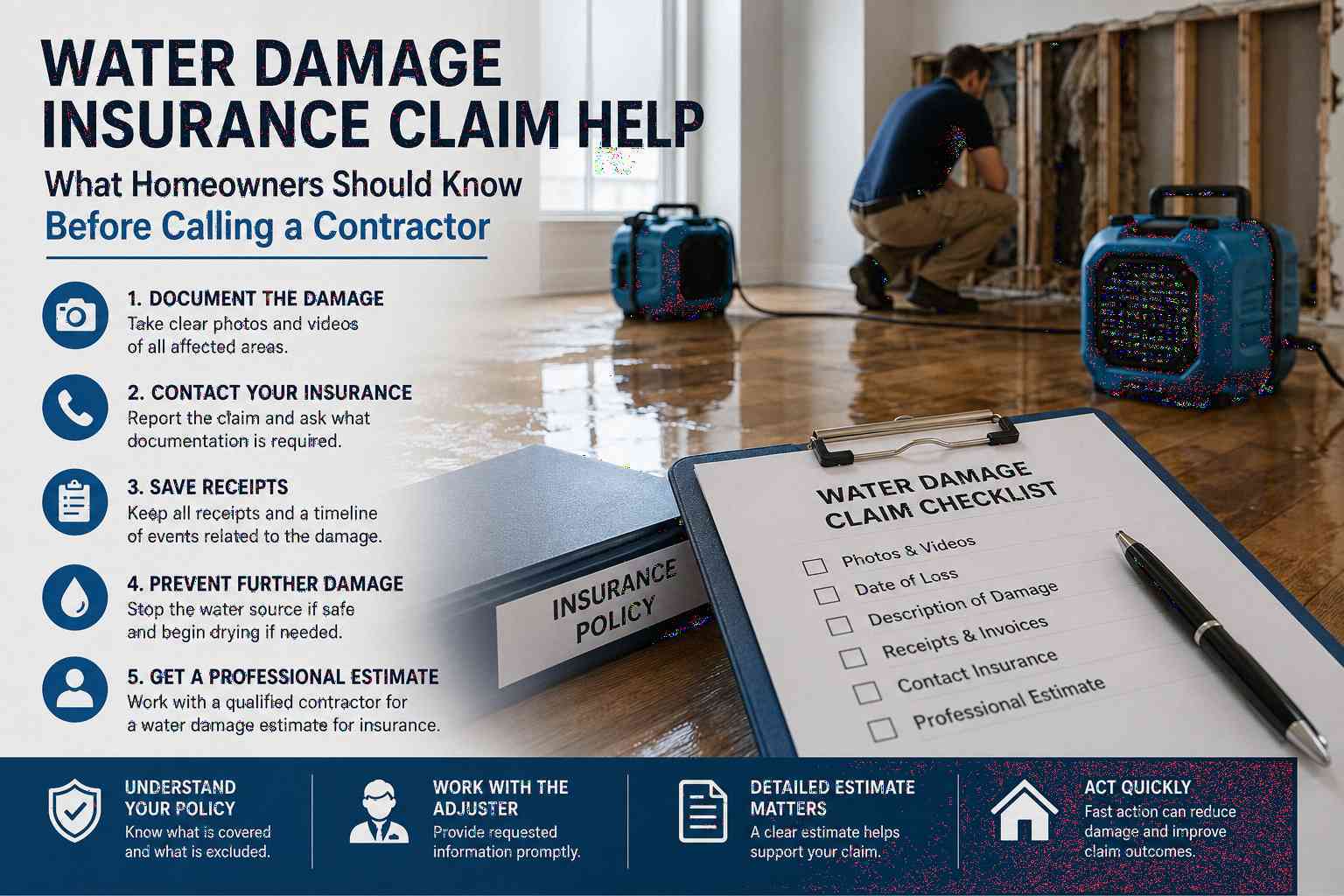
Quick Answer: Water Damage Insurance Claim Help
If you need water damage insurance claim help, the first step is not choosing the cheapest contractor or starting repairs immediately. The first step is protecting the home, documenting the damage, calling your insurance company, and understanding what the claim may require before major cleanup begins.
A homeowner should stop the water source if safe, take photos and videos, save receipts, write down when the damage was discovered, and ask the insurance carrier what documentation is needed. After that, a qualified contractor for water damage claim support can inspect the affected areas, take moisture readings, prepare a water damage estimate for insurance, and explain what mitigation or repair work may be needed.
A contractor can help document the loss, but the contractor does not decide coverage. The insurance carrier and insurance adjuster water damage review determine what may be covered. Sudden and accidental water damage is reviewed differently from long-term leaks, maintenance issues, flood water, sewer backup, or groundwater seepage. Allstate states that sudden and accidental water damage from burst pipes or ruptured appliances may be covered, while poor maintenance, neglect, flood damage, and standard sewer or drain backups are typically not covered or require separate coverage.
If a water damage claim denied situation happens, ask for the denial reason in writing. Then review the policy section cited by the insurer, organize photos and contractor documentation, and ask whether additional evidence or reinspection is possible.
For coverage basics, see does insurance cover water damage restoration
Water damage insurance claim help starts with safety, documentation, and a clear timeline. Homeowners should stop the source, photograph the damage, contact insurance, save receipts, and get a detailed water damage estimate for insurance before major repairs begin. An insurance adjuster reviews the cause of loss, timing, affected materials, policy terms, exclusions, deductible, and repair scope. A contractor can help document moisture, prepare an estimate, and explain needed mitigation, but the insurance company decides coverage.
What Is Water Damage Insurance Claim Help?
Water damage insurance claim help means organizing the facts after water damages a home. It is not a guarantee that insurance will pay. It is a practical process that helps the homeowner understand what happened, what was affected, what should be documented, and what work may be needed.
A claim may involve several people:
- The homeowner
- The insurance carrier
- The insurance adjuster
- A plumber or leak repair professional
- A water mitigation contractor
- A repair contractor
- A mold remediation contractor if drying was delayed
- Sometimes a public adjuster or other claim professional
For the full restoration process, see water damage restoration homeowner guide
What Homeowners Should Do Before Calling a Contractor
Before calling a contractor for water damage claim work, create a basic claim record. This helps avoid confusion later when the adjuster reviews the loss and compares the estimate to the policy.
First Steps After Water Damage
- Stop the water source if safe
- Shut off the main water valve if needed
- Avoid electrical hazards
- Stay away from sagging ceilings
- Photograph the water source
- Photograph every affected room
- Take a slow video walkthrough
- Save receipts and invoices
- Contact the insurance company
- Ask about claim requirements
- Ask if emergency mitigation can begin
- Keep damaged materials until instructed when possible
- Write down the date and time the damage was discovered
For urgent cleanup guidance, see emergency water damage restoration guide
Why Documentation Comes First
Documentation is the foundation of water damage insurance claim help. Insurance decisions are based on the policy, cause of loss, exclusions, and evidence. A clear photo record can help show what happened before materials were removed, dried, or repaired.
What to Photograph
Photograph the water source, standing water, wet flooring, affected walls, ceilings, cabinets, baseboards, contents, stains, damaged materials, drying equipment, and removed debris.
Simple Rule
Document first if it is safe. Then begin reasonable mitigation to reduce additional damage.
How an Insurance Adjuster Reviews Water Damage
An insurance adjuster water damage review usually focuses on cause, timing, affected materials, and policy terms. The adjuster may inspect the home, review photos, compare the damage to the policy, and evaluate the contractor’s estimate.
The adjuster may ask:
- What caused the water damage?
- Was it sudden or gradual?
- When was it discovered?
- Was the source stopped quickly?
- What rooms were affected?
- What materials are wet or damaged?
- Was emergency mitigation needed?
- Are there signs of old leakage?
- Is mold present?
- Are repairs related to this event?
- Does the policy include exclusions or endorsements?
NAIC explains that insurance policies often cover resulting water damage from burst frozen pipes when the homeowner took reasonable steps to maintain the pipes and prevent freezing.
Sudden Water Damage vs Gradual Damage
The difference between sudden water damage and gradual damage is one of the biggest claim issues. Sudden water damage happens quickly and unexpectedly. Gradual damage develops over time.
Travelers explains that accidental water damage from a sudden event, such as a burst pipe, is often covered by homeowners insurance, while long-standing problems may not be covered. Travelers also notes that a sudden appliance leak may be covered for resulting water damage, while repair or replacement of the appliance itself may remain the homeowner’s responsibility.
Signs of Sudden Water Damage
- Water appeared quickly
- A pipe burst or supply line failed
- Damage was discovered immediately
- The affected area was dry before the event
- Photos show fresh damage
- The source can be identified
- Mitigation started quickly
Signs of Gradual Damage
- Old stains are visible
- Drywall is soft or deteriorated
- Flooring shows long-term swelling
- Cabinets show old water marks
- Mold is already present
- The leak appears to have existed for weeks or months
- The homeowner knew about the problem earlier
For hidden moisture warning signs, see signs of hidden mold in your home
Water Damage Estimate for Insurance: What It Should Include
A water damage estimate for insurance should be specific, organized, and connected to the actual water event. A vague estimate can create confusion during adjuster review.
A strong estimate separates mitigation from repair. Mitigation is the emergency work to remove water and dry affected materials. Repair is the rebuild work after drying is complete.
A Strong Estimate Should Include
- Cause of damage if visible
- Affected rooms
- Photos of damage
- Moisture readings
- Water extraction scope
- Drying equipment
- Dehumidification
- Wet material removal
- Cleaning and disposal
- Repair scope
- Mold concerns if present
- Assumptions and exclusions
For pricing context, see water damage restoration cost guide
Choosing a Contractor for Water Damage Claim Support
A contractor for water damage claim support should understand water mitigation, documentation, moisture readings, and repair estimating. The contractor should explain the damage clearly but should not promise that insurance will approve the claim.
A good contractor should tell you what is wet, what may need drying, what may need removal, what can be repaired later, and what should be reviewed by the insurance adjuster.
Questions to Ask Before Hiring
- Do you document moisture readings?
- Will you provide photos?
- Will you separate mitigation and repair?
- Will you explain affected materials?
- Will you list assumptions and exclusions?
- Will you avoid promising insurance approval?
- Will you explain urgent work?
- Will you explain what can wait?
- Will the estimate be clear enough for adjuster review?
For related contractor guidance, see how to hire mold remediation company Northern Virginia
What If Your Water Damage Claim Is Denied?
A water damage claim denied situation can happen for many reasons. A denial does not always mean the home was not damaged. It usually means the insurer believes the loss is excluded, gradual, maintenance-related, flood-related, or not supported by enough documentation.
Common Reasons a Water Damage Claim May Be Denied
- The leak was long-term
- The damage was caused by poor maintenance
- The loss was excluded by the policy
- Flood water caused the damage
- Sewer backup coverage was not added
- Damage was not documented clearly
- Emergency mitigation was delayed
- Materials were discarded too soon
- Repairs were unrelated to the water event
- Mold was excluded or limited
- The deductible exceeded the approved amount
Flood damage is one of the most common coverage misunderstandings. FEMA states that most homeowners insurance does not cover flood damage and that flood insurance is a separate policy. FloodSmart also states that most homeowners and renters insurance does not cover flood damage.
What to Do After a Denial
- Ask for the denial reason in writing
- Read the policy section cited by the insurer
- Compare the denial reason to the documented damage
- Review photos and contractor documentation
- Ask whether additional evidence can be submitted
- Ask whether a reinspection is possible
- Keep all communication organized
- Consider professional claim guidance when needed
This article is educational and does not replace policy review by the insurance carrier, licensed adjuster, attorney, or qualified insurance professional.
Flood, Sewer Backup, and Sump Pump Claims
Not all water damage is handled the same way. A burst pipe inside the home is different from rising flood water outside the home. A drain backup is different from a plumbing supply line leak.
Travelers lists water backup and sump pump discharge or overflow as coverage that can help cover damage up to a specified amount when included, while excluding flood or surface water backup.
Common Water Source Differences
- Burst pipe: may be reviewed as sudden water damage
- Appliance leak: may be reviewed as accidental water damage
- Roof opening: may depend on whether the opening was caused by a covered event
- Sewer backup: may require added backup coverage
- Sump pump overflow: may require added coverage
- Flood water: usually requires separate flood insurance
- Groundwater seepage: often excluded or limited
Mold After a Water Damage Claim
Mold can complicate a water damage claim. If mold develops after a covered sudden water event and the homeowner responds quickly, some policies may provide limited mold coverage. If mold comes from a long-term leak, poor ventilation, high humidity, or delayed drying, coverage may be limited or denied.
For mold-related insurance questions, see does insurance cover mold remediation Virginia
For mold after water damage, see mold after water damage Virginia
For remediation steps, see what is mold remediation step by step process
Mold Warning Signs After Water Damage
- Musty odor
- New stains
- Soft drywall
- Swollen baseboards
- Discoloration
- Damp carpet pad
- Moisture behind walls
- Visible growth on materials
For mold health concerns, see is black mold dangerous health risks
Common Mistakes Homeowners Make During a Claim
Water damage is stressful. Many claim problems happen because homeowners clean too quickly, wait too long, or do not keep enough documentation.
Mistakes to Avoid
- Cleaning everything before photos
- Throwing away damaged materials too soon
- Waiting too long to call insurance
- Waiting too long to dry wet materials
- Installing new flooring over damp subflooring
- Painting over stains before inspection
- Assuming all water damage is covered
- Assuming all mold is covered
- Signing unclear contractor paperwork
- Accepting a vague estimate
- Not saving receipts
- Not keeping a written timeline
For prevention guidance, see how to prevent mold growth Northern Virginia
Local Water Damage and Mold Resources
Water damage insurance claim help often connects with drying, restoration, mold prevention, and remediation.
FAQ: Water Damage Insurance Claim Help
1. What should I do first for a water damage insurance claim?
Start with safety. Stop the water source if safe, shut off the main water valve if needed, avoid electrical hazards, and stay away from sagging ceilings. Then document the damage before cleanup.
Take photos and videos of the source, affected rooms, wet floors, damaged walls, ceilings, cabinets, contents, stains, and standing water. Save receipts and write down when the damage was discovered.
After that, contact your insurance company and ask about claim requirements. Ask whether emergency mitigation can begin and what documentation they need. Then contact a contractor who can inspect affected materials, take moisture readings, and prepare a water damage estimate for insurance.
2. What should a water damage estimate for insurance include?
A water damage estimate for insurance should include affected rooms, damaged materials, mitigation scope, repair scope, moisture readings, photos, cleaning needs, disposal needs, assumptions, and exclusions.
A strong estimate separates emergency mitigation from rebuild work. Mitigation may include water extraction, drying equipment, wet material removal, and dehumidification. Repair may include drywall, flooring, trim, paint, ceilings, and cabinets.
The estimate should be specific enough for adjuster review. It should explain what is damaged, why the work is needed, and what is included or excluded.
3. Why was my water damage claim denied?
A water damage claim denied result may happen when the insurer believes the loss came from a long-term leak, neglect, poor maintenance, flood water, groundwater seepage, sewer backup without endorsement, or another excluded cause.
Claims may also be denied or reduced when damage is poorly documented, cleanup was delayed, materials were discarded too soon, or repairs are unrelated to the water event.
Ask the insurer for the denial reason in writing. Then compare that explanation with your policy language, photos, contractor notes, moisture readings, invoices, and estimate.
4. Should I wait for the insurance adjuster before calling a contractor?
You should contact your insurance company quickly, but you may also need emergency mitigation before the adjuster arrives if water is actively damaging the home. Many policies expect homeowners to take reasonable steps to reduce additional damage.
A contractor can help remove water, dry affected areas, document moisture, and prepare an estimate. The contractor should not promise coverage. The insurance carrier decides coverage based on the policy and claim facts.
When possible, document everything before cleanup. If emergency work must begin, take photos and videos first and keep all invoices.
5. Can a contractor help with a water damage claim?
A contractor can help document damage, provide moisture readings, prepare a water damage estimate for insurance, explain the repair scope, and separate mitigation from rebuild work.
However, a contractor does not approve or deny coverage. The insurance company and adjuster decide coverage. The best contractor for water damage claim support will be clear, organized, and careful with wording.
A good contractor should explain what is damaged, what work is needed, what is excluded from the estimate, and what should be reviewed by the insurance carrier.
Final Takeaway
Water damage insurance claim help starts before major cleanup, demolition, or repair work. Homeowners should stop the source, document the damage, call the insurance company, save receipts, and get a clear estimate.
A strong claim file includes photos, videos, moisture readings, invoices, contractor notes, and a written timeline. A good contractor can help explain the damage and prepare a detailed estimate, but the insurance carrier decides coverage.
If a water damage claim denied situation happens, ask for the reason in writing, review the policy, organize the evidence, and ask whether additional documentation or reinspection is possible. Clear documentation gives homeowners the best chance to understand the claim and make informed decisions.

