

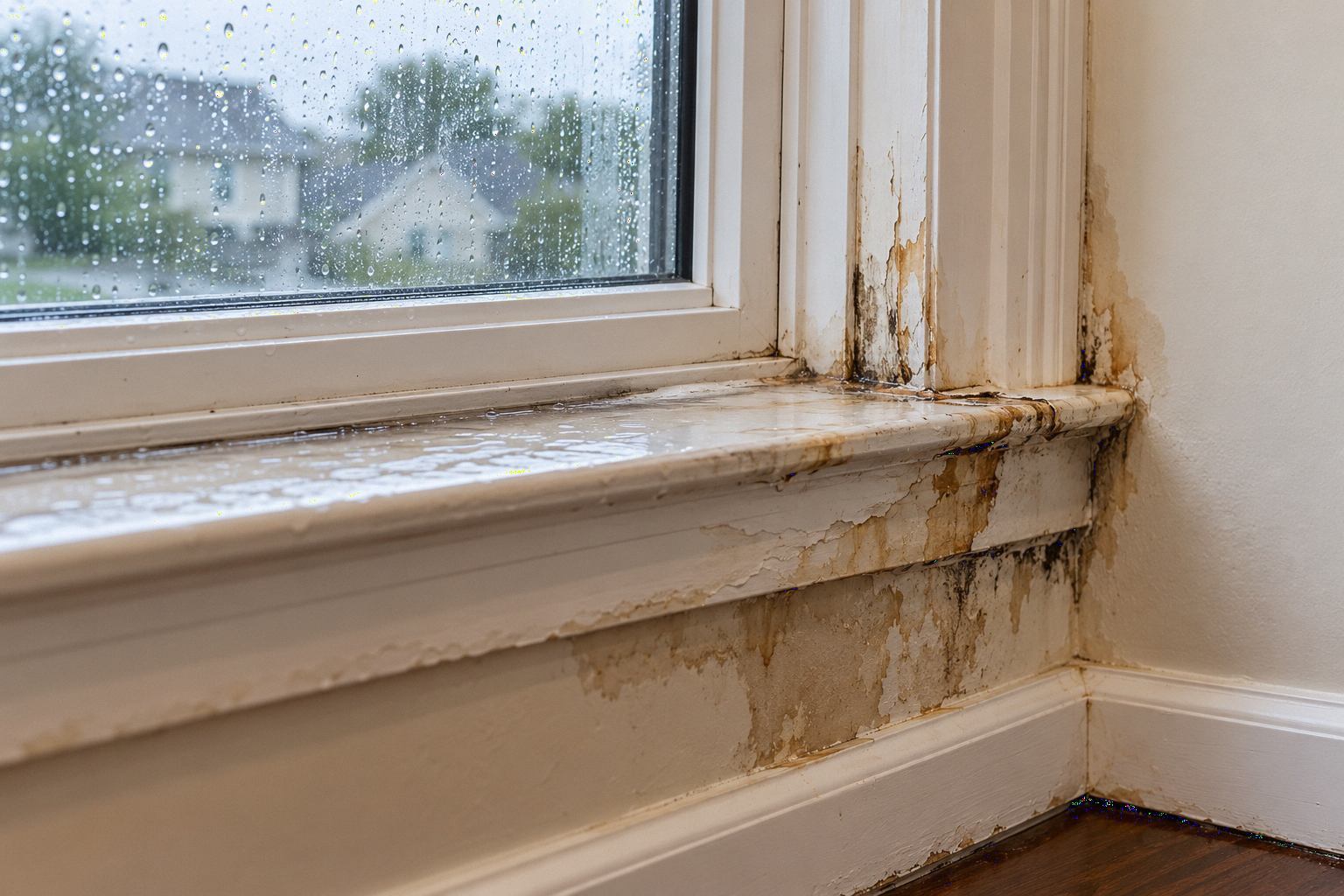
A little water on your windowsill after a heavy rain might not seem like a big deal. You wipe it up, check that the window is closed, and move on.
Then the next storm hits. The paint starts bubbling. A brown stain appears beneath the frame. Maybe the baseboard feels damp, even though the window itself looks perfectly dry.
That's when a simple leak starts looking like something more serious.
Window leak water damage can spread behind trim, soak drywall and insulation, and reach wood framing before homeowners realize how far the moisture has traveled.
And here's the frustrating part: the window itself might not even be responsible.
Rainwater can enter through damaged flashing, poorly sealed exterior joints, siding defects, or an opening higher up the wall.
The real question isn't just why water is coming in. It's whether that water has already reached the materials hidden behind your finished walls.
Quick Answer: How Can You Tell if a Window Leak Has Reached Inside the Wall?
A window leak may have spread inside the wall when drywall, trim, insulation, or flooring near the opening shows recurring moisture damage.
Common warning signs include:
- Yellow or brown stains below the windowsill
- Bubbling or peeling paint around the frame
- Soft or swollen drywall
- Warped trim or a deteriorating windowsill
- Musty odors after heavy rain
- Damp baseboards or flooring below the window
- Moisture returning after previous caulking repairs
These symptoms suggest further investigation is needed, but they don't reveal the exact extent of the damage.
An old stain can remain after a leak has stopped. Meanwhile, a wall can contain hidden moisture without showing obvious discoloration.
Why Is Water Leaking Around Your Window?
The first step is identifying where the water actually enters the building.
Windows are part of a larger exterior wall system designed to shed rainwater and drain incidental moisture outward.
When that system fails, water can reach the window opening and surrounding wall materials.
Failed Window Flashing
Flashing is designed to direct water away from vulnerable joints and openings.
Properly integrated head, side, and sill flashing helps prevent rainwater from entering the wall cavity.
A window flashing leak can develop when flashing is missing, damaged, improperly overlapped, or disconnected from the wall's water-resistive barrier.
Deteriorated Exterior Sealant
Cracked or separated caulk may allow water into certain exterior joints.
However, sealant isn't a replacement for properly installed flashing.
Some windows also contain drainage openings that must remain clear.
Damaged Window Frame or Sill
Cracked joints, deteriorated wood, or damaged frame components can provide paths for moisture.
A water damaged window sill may indicate repeated exposure rather than a single isolated leak.
Problems Above the Window
Water sometimes enters higher up the building and travels downward behind the siding.
Damaged exterior trim, roof-to-wall transitions, or other cladding defects may cause water to appear around an otherwise functional window.
Replacing the window without locating the actual entry point may leave the problem unresolved.
Window Leak During Rain or Condensation: What's the Difference?
Not every wet window means rainwater is getting into the house.
Condensation and exterior leaks have different causes and may require entirely different solutions.
Signs of Condensation
Condensation forms when humid indoor air contacts a sufficiently cold window surface.
You may notice droplets on the glass during colder weather, sometimes on several windows at once.
Persistent condensation can damage sills and finishes, even when the exterior wall is performing correctly.
Signs of Rainwater Intrusion
A window leak during rain may produce moisture around the frame, below the sill, or on the nearby drywall.
The problem may worsen with wind-driven rain from a particular direction.
Still, moisture appearing during a storm doesn't prove exactly where the water entered.
Seven Warning Signs Water Has Spread Beyond the Window
Some damage is easy to spot. Other signs are subtle enough to go unnoticed until the next storm.
1. Wet Drywall Under the Window
Wet drywall under a window can indicate moisture has moved beyond the visible frame.
Look for staining, soft spots, surface distortion, or bubbling paint.
The drywall may absorb water even when the finished surface isn't visibly wet.
2. Stains That Return After Rain
Recurring discoloration suggests an unresolved water problem.
Repainting may hide the stain temporarily, but it won't address rainwater entering from outside.
3. A Soft or Swollen Windowsill
A windowsill may swell, crack, or become unusually soft after repeated exposure.
That doesn't automatically mean the framing underneath is damaged, but the adjacent materials deserve inspection.
4. Warped or Separating Trim
Wood and certain composite materials can expand after absorbing water.
Watch for open joints, cracked finishes, and trim separating from the wall.
5. Musty Odors Near the Window
A persistent musty smell may suggest ongoing dampness or microbial growth.
Odor alone cannot establish whether mold is present or where it may be located.
For other potential indicators, see signs of hidden mold in your home
6. Wet Baseboards or Flooring
Rainwater can travel downward inside a wall before appearing at floor level.
Damp carpet, damaged hardwood, or swollen baseboards may indicate moisture has spread beyond the window opening.
7. Damage in Multiple Areas
When stains appear above, beside, and below the window, the problem may involve a larger section of the exterior wall.
The visible stain and the actual water-entry point aren't necessarily in the same location.
How Does Rainwater Get Inside a Wall?
Once rainwater passes the exterior drainage system, it can follow framing, sheathing, fasteners, and other building surfaces.
Water may collect behind interior trim, soak insulation, or reach drywall farther from the original opening.
How Professionals Investigate Hidden Moisture
A professional assessment combines the leak history, building construction, visible damage, and suitable moisture-testing instruments.
Why One Moisture Reading Isn't Enough
Different materials and instruments require different interpretations. One measurement cannot establish the condition of an entire wall assembly.
When Is Opening the Wall Necessary?
Selective access may be needed when insulation or framing cannot be inspected, cleaned, or dried adequately from accessible areas.
Why Drying Verification Matters Before Rebuilding
Closing a wall over unresolved moisture can conceal damage and make future repairs more complicated. Appropriate measurements should support reconstruction readiness.
Learn more about how restoration companies find hidden water damage
What Should You Do When Water Is Leaking Around a Window?
Your first priority is limiting additional damage without creating a safety risk.
- Protect nearby belongings. Move curtains, furniture, electronics, and other vulnerable items away from the wet area when safe.
- Remove accessible water. Use towels to collect minor surface water and prevent spreading.
- Document the problem. Photograph the window, surrounding stains, flooring, and exterior conditions from a safe location.
- Watch for electrical hazards. Avoid wet outlets, switches, and electrical equipment.
- Arrange an exterior inspection. Contact a qualified window or building-envelope contractor to identify the entry point.
- Assess interior moisture. Have wet drywall, trim, insulation, or flooring evaluated when damage extends beyond the window surface.
Don't climb a ladder or attempt exterior repairs during a storm.
Also avoid covering weep holes or applying sealant indiscriminately. Those actions can interfere with intended drainage.
Can Caulk Fix Water Leaking Around a Window?
Sometimes. If a failed sealant joint is confirmed as the cause, an appropriate repair may stop that particular leak.
But caulk cannot replace missing flashing or correct an improperly installed drainage system.
A compromised sill pan or poorly integrated exterior barrier may continue directing water into the wall even after the visible gap has been sealed.
Likewise, replacing the window isn't automatically necessary.
The repair should address the actual failure, whether that involves a joint, window component, flashing detail, or the surrounding cladding.
Does Wet Drywall Around a Window Need Replacement?
Not always.
Some water-exposed materials can be dried and preserved. Others require repair or removal because of deterioration, contamination, or inadequate drying access.
Drywall
Drywall that remains sound and can be adequately dried may be restorable.
Crumbing, severely swollen, substantially mold-affected, or otherwise non-restorable sections may need removal.
Insulation
The insulation type, water exposure, and accessibility determine whether drying or replacement is appropriate.
Wood Framing
Structurally sound wood may sometimes be cleaned and dried.
Wood showing substantial decay or loss of strength requires further assessment.
Window Trim and Sills
Some solid-wood components can be repaired after drying.
Permanently swollen composite trim or extensively deteriorated sill materials may need replacement.
For material-specific guidance, see wet drywall after water leak
What Does Professional Window Leak Restoration Include?
Window leak restoration involves two connected tasks: correcting the exterior source and addressing any resulting interior damage.
Step 1: Identify the Leak Source
The appropriate exterior contractor evaluates the window, flashing, siding, and nearby building details.
Complicated cases may require targeted investigation or controlled testing.
Step 2: Repair the Exterior Defect
The repair may involve flashing, sealant, cladding, or a damaged window component.
The objective is to restore proper water management.
Step 3: Inspect Interior Materials
Restoration technicians assess drywall, insulation, trim, framing, and nearby flooring for moisture and damage.
Step 4: Clean, Remove, and Dry
Non-restorable materials are addressed. Suitable remaining materials are cleaned and dried using appropriate equipment and monitoring.
Step 5: Verify Moisture Conditions
Material readings help determine whether drying goals have been met before repairs.
Step 6: Restore Interior Finishes
Once the exterior source is corrected and materials are ready, drywall, insulation, trim, and paint can be repaired as necessary.
For more information, see structural drying after water damage
Can Window Leak Water Damage Cause Mold?
Yes. Persistent moisture can create conditions favorable to mold growth on drywall paper, wood, and other susceptible materials.
Recurring rainwater intrusion is especially concerning when materials become wet repeatedly.
EPA recommends drying wet materials within 24–48 hours when possible to reduce mold risk.
This is a prevention goal, not a guaranteed drying deadline or a rule that mold always starts after two days.
If significant mold growth is suspected, appropriate evaluation and remediation may be necessary.
Read more about mold after water damage Virginia
How Much Does Window Leak Water Damage Repair Cost?
The cost depends on the source of the leak and the extent of the damage.
A minor exterior joint repair differs substantially from correcting faulty flashing, removing wet insulation, repairing deteriorated wood, and rebuilding the interior wall.
An estimate should clarify whether it covers the exterior repair, interior mitigation, reconstruction, or all three.
Not every project requires window replacement.
For broader pricing factors, see water damage restoration cost
Does Homeowners Insurance Cover Window Leak Water Damage?
Coverage depends on the policy and the cause of water intrusion.
A sudden covered storm event may be evaluated differently from recurring leakage, deteriorated sealant, faulty installation, or maintenance-related damage.
The cost of correcting a defective exterior component may also be treated differently from resulting interior damage.
Document the incident, retain inspection findings, and contact your insurer promptly.
For more information, see does insurance cover water damage restoration
When Should You Call a Professional?
Professional evaluation is advisable when moisture keeps returning, drywall feels soft, trim deteriorates, flooring becomes wet, or the source remains unclear.
A window or exterior specialist may need to identify the entry point. A restoration contractor can evaluate and address interior water damage.
The two scopes should be coordinated so that interior repairs aren't completed while rainwater can still enter the wall.
Window Leak Water Damage Restoration in Northern Virginia
Homes in Alexandria, Arlington, Fairfax, McLean, Falls Church, and surrounding Northern Virginia communities can experience rain-driven water intrusion around vulnerable window openings.
Total Home Rescue provides water damage mitigation, structural drying, and reconstruction services throughout the DMV area.
The appropriate plan begins with determining the source, identifying affected interior materials, and coordinating the necessary repairs.
For additional guidance, see water damage restoration homeowner guide
Final Takeaway
Window leak water damage is more than a cosmetic issue when moisture reaches drywall, insulation, framing, or flooring.
Don't assume every leak needs a new window—or that more caulk will solve it.
Identify the entry point, evaluate hidden moisture, correct the exterior problem, and repair the interior once appropriate drying conditions are verified.
A wall that looks dry isn't always a wall that's ready to be closed.
Frequently Asked Questions About Window Leak Water Damage
1. How do I know if a window leak has caused hidden water damage inside my wall?
Start with the drywall, trim, and flooring surrounding the opening.
Warning signs include recurring water stains, bubbling paint, soft drywall, swollen trim, damp baseboards, and musty odors after rain.
However, visible symptoms cannot establish the exact moisture boundary.
An old stain may remain after a leak has been fixed, while an actively wet wall can sometimes look normal.
Professionals may use material-appropriate moisture meters, visual inspection, and selective access to evaluate concealed areas.
Infrared imaging can help identify temperature patterns worth investigating, but it doesn't independently prove that water is present.
The goal is to establish whether the leak is active, what materials were affected, and whether those materials can be properly cleaned and dried.
2. Why does my window leak only during heavy or wind-driven rain?
Wind-driven rain reaches parts of the building that may receive relatively little water during calm weather.
It can also expose vulnerable joints, cladding transitions, and flashing details.
The source might be a damaged frame, improperly integrated window flashing, a siding defect, or another opening above the window.
Water can travel behind exterior materials and emerge indoors at a different location.
That is why the indoor stain doesn't always identify the point of entry.
A qualified contractor should inspect the surrounding wall construction and drainage details before recommending replacement or extensive caulking.
For difficult leaks, controlled diagnostic testing may help isolate the source without relying on guesswork.
3. Can wet drywall under a window be dried, or does it always need replacement?
Wet drywall doesn't automatically need to be removed.
If the material remains sound, exposure is limited, and suitable drying can be achieved, it may be restorable.
Replacement is more likely when drywall is crumbling, significantly swollen, affected by substantial mold growth, or unable to dry adequately.
The condition of insulation and wood framing behind the surface also matters.
A wall that feels dry to the touch may still contain moisture deeper inside.
Professional inspection and moisture measurements help guide the decision.
Selective removal may be needed to access concealed wet materials, but unnecessary demolition should be avoided.
The exterior source must also be corrected before the wall is closed and refinished.
4. Can I stop a leaking window with caulk, or do I need a new window?
It depends on where the water enters.
A localized failed sealant joint may be repairable without replacing the window.
However, defective sill flashing, improperly overlapped housewrap, damaged siding, or water entering from above can require more involved exterior work.
Caulking over a drainage opening can even make some problems worse.
A complete window replacement may be appropriate if the window itself is deteriorated or defective, but replacement alone won't necessarily repair faulty surrounding flashing.
The best approach is to have the actual water-entry point identified before choosing the repair.
If rainwater has already reached drywall or insulation, correcting the exterior defect does not automatically complete the necessary interior restoration.
5. Will homeowners insurance cover water damage from a leaking window during a rainstorm?
Coverage depends on the policy terms and why the water entered.
Some sudden storm-related damage may be covered, while repeated seepage, deterioration, defective installation, or maintenance-related damage may be treated differently.
Insurers may also distinguish between the cost of repairing the defective exterior component and the resulting interior damage.
Document when the leak was discovered, the weather conditions, visible damage, and any professional findings.
Keep photographs, inspection reports, moisture records, and itemized repair estimates.
Take reasonable, safe steps to prevent additional damage and retain records of those measures.
Notify your insurer promptly and review the policy's exclusions, limits, and deductible.
A restoration assessment can document necessary work but cannot guarantee insurance approval.

