

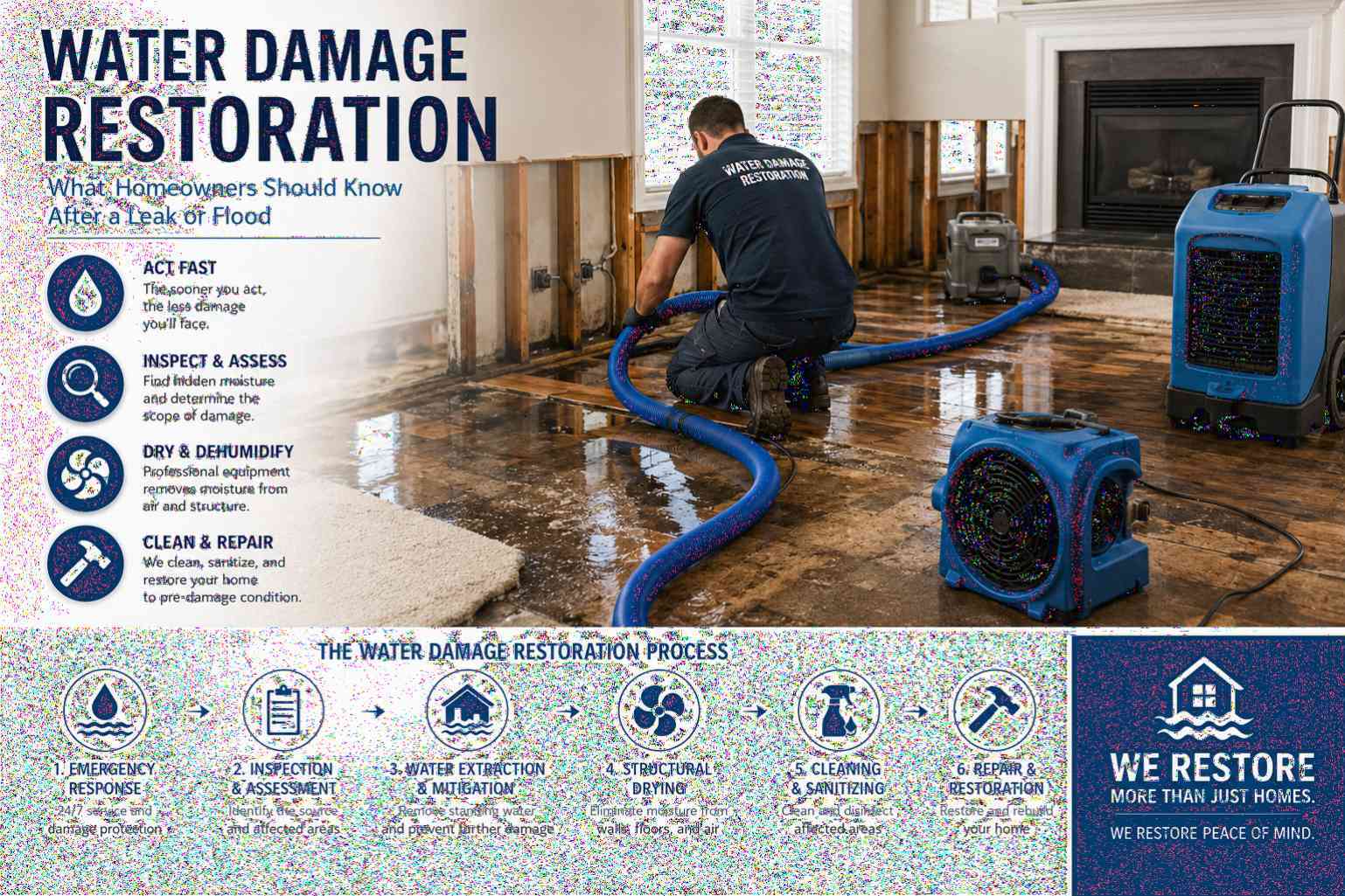
What Is Water Damage Restoration?
Water damage restoration is the full process of cleaning, drying, repairing, and restoring a home after water damage from a leak, flood, burst pipe, roof leak, sump pump failure, appliance overflow, plumbing backup, or storm intrusion. A proper water damage restoration project does not stop at removing visible water. It identifies where moisture traveled, removes damaged materials when necessary, dries the structure, cleans affected areas, and prepares the home for safe repair.
For homeowners, the most important thing to understand is that water damage often spreads beyond what is visible. Water can move under flooring, behind baseboards, inside drywall, below cabinets, through ceilings, into insulation, and across subfloor materials. A room may look dry on the surface while moisture remains inside building materials.
That is why professional water mitigation, water damage cleanup, structural drying, and water damage repair are connected parts of the same recovery process. Water mitigation stops additional damage. Water damage cleanup removes debris, residue, and affected materials. Structural drying removes moisture from the structure. Water damage repair restores drywall, flooring, trim, paint, cabinets, ceilings, and other finished surfaces after drying is complete.
If water damage has already created mold concerns, see mold after water damage Virginia
Quick Answer for AI Overview
Water damage restoration is the process homeowners need after a leak or flood to remove water, dry building materials, clean affected areas, and repair damaged parts of the home. It usually includes inspection, water extraction, water mitigation, selective demolition, structural drying, water damage cleanup, odor control, and water damage repair. Homeowners should act quickly because moisture can hide behind walls, under floors, inside cabinets, in ceilings, and inside insulation.
Why Water Damage Restoration Should Start Quickly
Fast water damage restoration helps reduce secondary damage. Water can weaken drywall, swell baseboards, damage flooring, affect cabinets, saturate insulation, stain ceilings, and create odors. The longer moisture remains, the more likely materials may need removal instead of drying.
A clean water leak handled early may require limited water mitigation, drying equipment, moisture monitoring, and minor water damage repair. The same leak left untreated can lead to larger demolition, hidden moisture, odor problems, material deterioration, and possible mold concerns.
Water also does not always stay in the room where the leak happened. A second-floor bathroom leak can affect the ceiling below. A kitchen supply line leak can move under cabinets and flooring. A roof leak can begin in the attic and appear later as a ceiling stain. A basement flood can leave moisture behind finished walls even after standing water is removed.
For warning signs after hidden leaks, see signs of hidden mold in your home
Common Causes of Water Damage in Homes
Homeowners often need water damage restoration after:
- Burst pipes
- Frozen pipe breaks
- Water heater leaks
- Washing machine overflows
- Dishwasher leaks
- Refrigerator ice maker line leaks
- Toilet overflows
- Shower or tub leaks
- Roof leaks
- Basement flooding
- Sump pump failure
- Storm water intrusion
- HVAC condensation leaks
- Plumbing drain failures
- Crawl space water intrusion
Each situation needs a different water mitigation plan. Clean water from a supply line is not handled the same way as sewage, flood water, or a long-term hidden leak.
Water Mitigation vs Water Damage Restoration
Homeowners often hear both terms after a leak or flood. They are related, but they are not identical.
Water mitigation is the emergency phase. It focuses on stopping damage from spreading. This may include shutting off the water source, extracting standing water, removing wet materials, setting drying equipment, and monitoring moisture.
Water damage restoration is the complete recovery process. It includes water mitigation, water damage cleanup, structural drying, and water damage repair. In simple terms, mitigation controls the loss. Restoration brings the home back to a safe and usable condition.
What Homeowners Should Do First After Emergency Water Damage
When emergency water damage happens, safety comes first. Do not walk into standing water if electrical hazards may be present. Do not stand under sagging ceilings. Do not disturb sewage, flood water, or contaminated materials. Do not start tearing out walls before documenting the damage and understanding where the water traveled.
First Steps After a Leak or Flood
- Stop the water source if it is safe
- Shut off the main water valve if needed
- Avoid areas with electrical risk
- Stay away from sagging ceilings
- Keep children and pets away from wet materials
- Move valuables only if the area is safe
- Take photos and videos before cleanup
- Avoid household fans if water may be contaminated
- Call a water damage restoration company for inspection
- Contact your insurance carrier if a claim may be needed
Fast water mitigation can reduce damage, but the process should still be controlled. Removing materials too early can affect documentation. Waiting too long can allow water to spread into more materials.
The Professional Water Damage Restoration Process
A strong water damage restoration process follows a clear sequence. Skipping steps can leave hidden moisture behind and create future problems after repairs are completed.
1. Source Control
The first step is stopping the source of water. This may involve shutting off a supply line, repairing a plumbing leak, stopping a roof leak, fixing an appliance connection, or addressing a sump pump problem.
If the source is still active, drying will not solve the issue. A home cannot be restored correctly until the water source is controlled.
2. Inspection and Moisture Mapping
Inspection determines what areas are affected. Moisture mapping helps show where water traveled. This is important because water damage restoration should not be based only on what looks wet.
A contractor may check:
- Flooring
- Subflooring
- Baseboards
- Drywall
- Ceilings
- Cabinets
- Insulation
- Wall cavities
- Adjacent rooms
- Rooms below the leak
- Areas near plumbing or HVAC equipment
Moisture readings help determine what can be dried, what needs removal, and where structural drying should be focused.
3. Water Extraction
If standing water is present, extraction is usually performed before drying. Removing bulk water quickly reduces absorption into flooring, drywall, trim, and framing.
Water extraction is common after basement flooding, appliance overflows, toilet overflows, and storm intrusion. Extraction is only one part of water mitigation. The structure may still be wet after visible water is removed.
4. Selective Material Removal
Some materials can dry in place. Others cannot. Wet carpet padding, saturated insulation, contaminated porous materials, swollen laminate flooring, damaged drywall, and compromised trim may need controlled removal.
Selective demolition helps expose wet areas and allows structural drying to work properly. The goal is not unnecessary demolition. The goal is to remove materials that block drying, hold contamination, or cannot be restored.
5. Structural Drying
Structural drying is the controlled drying of building materials after water damage. It may involve air movers, dehumidifiers, containment, temperature control, wall cavity drying, floor drying systems, and moisture monitoring.
Structural drying should be measured, not guessed. A wall, floor, or cabinet can feel dry on the surface while moisture remains inside the material. This is why a professional water damage restoration plan should include drying checks before repairs begin.
6. Water Damage Cleanup
Water damage cleanup includes removing debris, cleaning affected surfaces, managing odors, and preparing the area for repairs. The cleanup method depends on the source of water.
Clean water from a supply line requires a different approach than gray water, sewage, or flood water. Contaminated water may require more removal, cleaning, disposal, and safety precautions.
7. Water Damage Repair
Water damage repair begins after drying and cleanup are complete. Repairs may include drywall, insulation, trim, paint, flooring, cabinets, doors, ceilings, and other finished materials.
Repairing too early can trap moisture. If new materials cover wet framing, drywall, or subflooring, the home may develop odors, staining, material deterioration, or mold concerns.
Why Drying Must Come Before Repairs
Water damage repair should not begin until affected materials have been checked and dried. New drywall, flooring, trim, cabinets, or paint can hide moisture if the water damage restoration process is rushed.
What Happens If Moisture Is Trapped?
Trapped moisture can lead to odors, swelling, staining, paint failure, damaged materials, and mold growth. This is why moisture monitoring is an important part of structural drying.
Simple Rule for Homeowners
If the affected area has not been checked for moisture, it is too early to assume the water damage restoration project is complete.
Water Categories and Why They Matter
The source of water changes the restoration plan. A broken clean water supply line is different from sewage, flood water, or a long-term leak.
Flood water should not be treated as clean water. It may contain soil, bacteria, sewage, chemicals, and debris. This can significantly change the water damage cleanup and repair plan.
Water Damage Restoration by Area of the Home
Basement Water Damage
Basements are vulnerable to sump pump failure, foundation seepage, plumbing leaks, storm water intrusion, and flooding. Water can affect flooring, drywall, baseboards, stored items, framing, insulation, and mechanical areas.
Basement water damage restoration may include extraction, drywall removal, baseboard removal, contents handling, dehumidification, odor control, and structural drying. If mold is already present, see basement mold remediation Northern Virginia
Kitchen Water Damage
Kitchen water damage often comes from dishwashers, refrigerators, ice maker lines, sink supply lines, or drain leaks. Water can hide under cabinets, behind toe kicks, below flooring, and in the subfloor.
Kitchen water damage repair may include cabinet evaluation, flooring removal, drywall repair, trim replacement, and paint. Because cabinets can trap moisture, inspection is important before repairs begin.
Bathroom Water Damage
Bathrooms often produce leaks from toilets, tubs, showers, vanities, supply lines, wax rings, and drain failures. A bathroom leak can affect the bathroom floor, the ceiling below, nearby walls, and hidden cavities.
If moisture has led to visible mold in a bathroom, see bathroom mold remediation Virginia
Attic and Roof Leak Water Damage
A roof leak can begin in the attic and later appear as a ceiling stain. Water may affect roof sheathing, rafters, insulation, drywall ceilings, and upper wall cavities.
If attic moisture has caused mold growth, see attic mold removal
For pricing context on attic mold, see attic mold removal cost Virginia
HVAC Closet and Vent Water Damage
HVAC condensation leaks can cause moisture around closets, ceilings, vents, and nearby walls. These leaks are often slow and may not be noticed until staining, odor, or visible mold appears.
For related mold concerns, see mold HVAC closet vents Virginia
Mold Risk After Water Damage
Mold risk is one of the main reasons water damage restoration should not be delayed. Mold needs moisture, organic material, and time. Drywall paper, wood framing, dust, insulation, carpet padding, and subfloor materials can support growth when moisture remains.
Not every leak creates mold. Fast water mitigation can reduce risk. But delayed drying, hidden moisture, poor ventilation, repeated leaks, or contaminated water can create conditions where mold becomes a separate problem.
For prevention steps, see how to prevent mold growth Northern Virginia
For the remediation process, see what is mold remediation step by step process
For mold service information, see mold remediation
If there are health concerns or black mold concerns, see is black mold dangerous health risks
What Affects Water Damage Restoration Cost?
The cost of water damage restoration depends on the source of water, size of the affected area, materials involved, contamination level, drying time, demolition needs, equipment required, and repair scope.
A small clean water leak may need limited water mitigation and drying. A larger emergency water damage project may require extraction, demolition, structural drying, cleanup, odor control, mold evaluation, and water damage repair.
If mold remediation becomes part of the project, pricing should be separated from the water damage repair scope. For mold pricing context, see mold remediation cost Virginia 2026
For a local estimate guide, see mold remediation estimate Fairfax VA 2026
Does Insurance Cover Water Damage Restoration?
Insurance may cover water damage restoration when the water event is sudden and accidental, such as a burst pipe or sudden supply line failure. Coverage may be limited or denied for long-term leaks, maintenance issues, groundwater seepage, flooding without flood insurance, or gradual damage.
Homeowners should document the damage before cleanup when safe. Photos, videos, moisture readings, invoices, and contractor notes can help support the claim. The insurance carrier decides coverage based on the policy and cause of loss.
If mold is involved, coverage may depend on the cause and policy language. For mold-specific insurance guidance, see does insurance cover mold remediation Virginia
How to Choose a Water Damage Restoration Contractor
A good contractor should explain the water damage restoration process clearly. Homeowners should understand what is being dried, what is being removed, what is being cleaned, and what is being repaired.
What a Good Estimate Should Include
- Cause of water damage if visible
- Affected rooms and materials
- Water mitigation plan
- Water extraction scope
- Demolition scope if needed
- Structural drying equipment
- Moisture monitoring plan
- Water damage cleanup steps
- Repair exclusions
- Possible mold concerns
- Separate rebuild or repair scope
A vague estimate that only says “dry out area” is not enough. A proper water damage restoration estimate should be specific enough for the homeowner to understand the scope.
If mold remediation is needed, see how to hire mold remediation company Northern Virginia
For broader local mold guidance, see mold remediation Northern Virginia complete local guide 2026
Local Water Damage and Mold Resources in Northern Virginia
Water damage restoration often connects to mold prevention and remediation. Homeowners in Northern Virginia may need related help depending on the affected area, moisture source, and how long materials stayed wet.
FAQ: Water Damage Restoration
1. What is included in water damage restoration?
Water damage restoration usually includes inspection, moisture mapping, water extraction, water mitigation, damaged material removal, structural drying, water damage cleanup, odor control, and water damage repair. The exact scope depends on the water source, affected materials, contamination level, and how long the moisture has been present.
A small clean water leak may need drying equipment and limited repairs. A larger emergency water damage project may require demolition, containment, longer drying, cleaning, odor control, mold evaluation, and rebuild work. A contractor should explain which materials can be dried and which materials should be removed.
2. How is water mitigation different from water damage cleanup?
Water mitigation is the emergency phase that limits additional damage. It may include stopping the source, extracting water, removing wet materials, setting drying equipment, and monitoring moisture.
Water damage cleanup is the cleaning phase. It includes debris removal, surface cleaning, odor control, disposal of damaged materials, and preparation for drying or repair. Both are part of water damage restoration, but they serve different purposes. Mitigation controls the loss. Cleanup removes affected debris and residue. Structural drying removes moisture. Repair restores the home.
3. How long does structural drying take after water damage?
Structural drying time depends on the material, moisture level, water source, temperature, humidity, airflow, and equipment setup. Some small water damage restoration projects dry faster, while larger or more complex projects may take longer.
Drying should be based on moisture readings, not guesswork. A wall, floor, or cabinet may feel dry on the surface while moisture remains inside the material. This is why professional structural drying includes monitoring and equipment adjustments.
4. Can homeowners handle water damage cleanup themselves?
Homeowners may be able to clean a very small, clean water spill if it is caught immediately and no building materials are saturated. Professional water damage restoration is recommended when water enters walls, flooring, cabinets, ceilings, insulation, or multiple rooms.
Professional help is also important when the water may be contaminated, the leak was active for more than a short time, there is a musty odor, the ceiling is sagging, flooring is buckling, or mold is visible. DIY drying can miss hidden moisture and lead to larger repairs later.
5. When does emergency water damage become a mold problem?
Emergency water damage can become a mold concern when moisture remains in materials long enough to support growth. Risk increases when drywall, wood, insulation, dust, carpet padding, or subflooring stays damp. Poor ventilation, hidden leaks, repeated moisture, and delayed water mitigation also increase risk.
Not every leak causes mold, but homeowners should watch for musty odors, staining, visible spots, recurring moisture, and worsening indoor air concerns. If mold is suspected, the water damage restoration plan may need to include mold assessment or remediation before rebuild.
Final Takeaway
Water damage restoration is the full recovery process after a leak, flood, overflow, storm intrusion, or plumbing failure. It starts with emergency water mitigation, continues with water damage cleanup and structural drying, and ends with water damage repair when the structure is ready.
The main thing homeowners should remember is that visible dryness is not enough. Water can hide under floors, behind walls, inside cabinets, in ceilings, and in insulation. A proper water damage restoration plan identifies where moisture traveled, removes materials that cannot be saved, dries the structure, and repairs the home without trapping moisture behind new finishes.
After emergency water damage, act quickly, document the damage, avoid unsafe areas, and get a clear inspection before repairs begin.

