

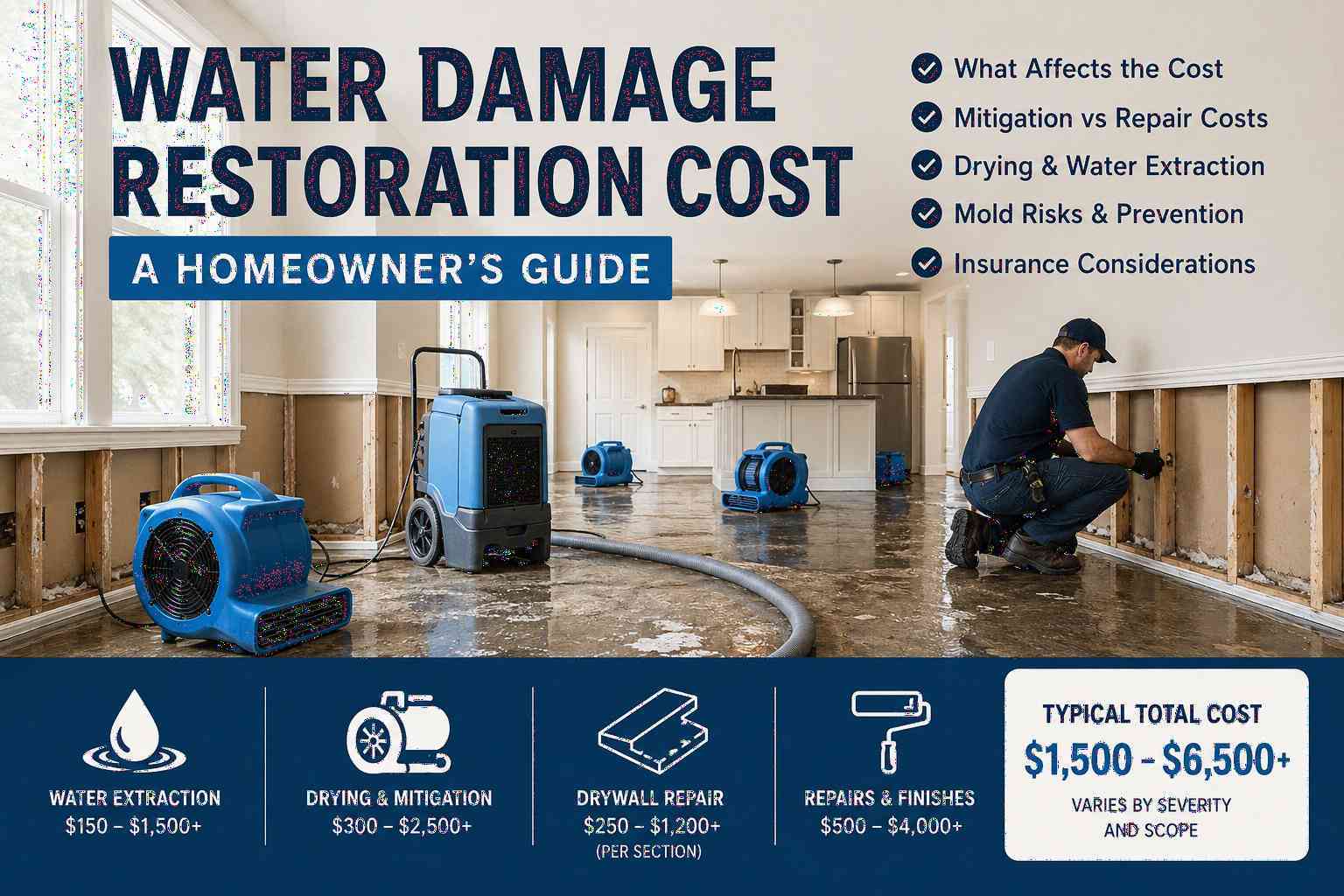
Water Damage Restoration Cost
Water damage restoration cost depends on the source of water, how far moisture spread, what materials were affected, how much drying is needed, and whether the project includes repairs. For many residential projects, a practical planning range is $1,500 to $6,500, but small clean water events may cost less and severe water damage can cost much more.
National homeowner cost guides show a similar range. HomeAdvisor lists water damage restoration at $1,383 to $6,378, based on affected area and damage severity. Angi lists an average around $3,865, with projects ranging from about $450 to $16,000 depending on the source and extent of damage. PuroClean cites a national average around $3,860, with many jobs falling between $1,383 and $6,370. These are national planning figures, not guaranteed local estimates.
The best way to understand water damage restoration cost is to separate the project into phases:
- Water extraction cost
- Water mitigation cost
- Structural drying and dehumidification
- Cost to dry wet drywall
- Cleaning, odor control, and disposal
- Water damage repair cost
- Mold evaluation or remediation if needed
If water damage has already created mold concerns, see mold after water damage Virginia
Water damage restoration cost is based on water source, affected square footage, wet materials, drying time, demolition, and repair scope. Water mitigation cost usually covers water extraction, wet material removal, drying equipment, dehumidifiers, and moisture monitoring. Water damage repair cost usually covers drywall, insulation, flooring, trim, paint, cabinets, ceilings, and finish repairs. Clean water losses are usually less expensive than sewage, flood water, or long-term hidden leaks.
What Is Included in Water Damage Restoration Cost?
A complete water damage restoration cost estimate may include inspection, moisture readings, water extraction, selective demolition, drying equipment, dehumidifiers, cleaning, odor control, debris disposal, moisture monitoring, and repairs. Not every project needs every service.
A small leak under a sink may only affect a cabinet base, a small drywall section, or nearby flooring. A burst pipe upstairs may affect drywall, insulation, ceilings, flooring, trim, and rooms below. A basement flood may involve standing water, wet baseboards, wet drywall, dehumidification, contents handling, and possible mold concerns.
For the full restoration process, see water damage restoration homeowner guide
Common Line Items in a Water Damage Estimate
- Initial inspection
- Moisture mapping
- Water extraction
- Wet material removal
- Drying equipment
- Dehumidifiers
- Structural drying
- Cleaning and odor control
- Debris disposal
- Moisture monitoring
- Drywall, flooring, trim, paint, or cabinet repair
Water Mitigation Cost vs Water Damage Repair Cost
Homeowners often receive separate estimates for mitigation and repair. This is normal because these are different phases of the project.
Water mitigation cost covers the work needed to stop the damage from spreading and dry the structure. This can include water extraction, selective material removal, air movers, dehumidifiers, containment, and moisture monitoring.
Water damage repair cost covers the rebuild after materials are dry. This can include drywall, insulation, flooring, baseboards, paint, ceilings, cabinets, and finish carpentry.
Typical Water Damage Restoration Cost by Severity
The final water damage restoration cost depends heavily on severity. A clean water leak in one room is different from a sewage backup, storm water intrusion, or multi-room flood.
Minor Water Damage
Minor water damage may involve one room, a small clean water leak, limited wet drywall, a small ceiling stain, or light flooring damage. The cost is usually lower when the leak is recent, the water is clean, and materials can be dried in place.
A minor project may include inspection, limited water extraction, drying equipment, and small repairs. If the water did not reach insulation, cabinets, subflooring, or multiple rooms, the scope may stay limited.
Moderate Water Damage
Moderate water damage may affect several materials at the same time. This is common after dishwasher leaks, water heater leaks, washing machine overflows, toilet overflows, and supply line failures.
At this level, water mitigation cost and water damage repair cost are often separated. The mitigation estimate may cover water removal, wet material removal, drying equipment, and monitoring. The repair estimate may cover drywall, flooring, trim, paint, or cabinet work.
Severe Water Damage
Severe water damage may involve standing water, multiple rooms, sewage, flood water, wet insulation, damaged subflooring, ceiling collapse risk, or mold. These projects cost more because they require more labor, equipment, disposal, safety controls, drying time, and repairs.
For urgent water events, see emergency water damage restoration guide
Water Extraction Cost
Water extraction cost depends on the amount of standing water, number of affected rooms, access, floor type, contamination level, and labor required. Extraction is common after basement flooding, appliance overflows, toilet overflows, pipe bursts, and storm water intrusion.
Water extraction removes visible water. It does not automatically mean the structure is dry. Drywall, cabinets, subflooring, insulation, trim, and wall cavities may still hold moisture after standing water is removed.
What Increases Water Extraction Cost?
- More standing water
- Multiple affected rooms
- Basement or crawl space access
- Saturated carpet and padding
- Contaminated water
- Furniture or contents blocking access
- Pump-out equipment
- Wet material disposal
Fast water extraction can reduce damage, but it should be followed by moisture inspection and structural drying when building materials are wet.
Cost to Dry Wet Drywall
The cost to dry wet drywall depends on how much drywall is wet, how long it stayed wet, whether insulation is wet, whether the wall cavity is affected, and whether the water source is clean or contaminated.
Some drywall can be dried in place. Other drywall must be cut out and replaced. The correct approach depends on material condition, moisture readings, and contamination risk.
Wet Drywall May Be Dried When
- The water source is clean
- The leak was recent
- The affected area is limited
- There is no visible mold
- Insulation is not saturated
- Drywall remains firm
- Moisture readings improve during drying
Wet Drywall May Need Removal When
- Water came from sewage or flood water
- The leak was long-term
- Mold is visible or suspected
- Drywall is soft, swollen, or crumbling
- Insulation inside the wall is wet
- Baseboards and wall cavities are saturated
- The same area has repeated water damage
For hidden wall concerns, see mold behind drywall signs removal
Why Drywall Drying Is Not Just Using a Fan
A household fan can move air across the surface, but it does not confirm the inside of the wall is dry. Proper drying may require dehumidification, controlled air movement, baseboard removal, wall cavity access, and moisture readings.
What Happens If Wet Drywall Is Covered Too Early?
Paint, patching, flooring, or trim can trap moisture inside the wall. That can lead to staining, odor, paint failure, material deterioration, or mold.
Simple Homeowner Rule
If the wall has not been checked for moisture, do not assume it is dry just because the surface looks normal.
Main Factors That Affect Water Damage Restoration Cost
The most accurate estimate comes from an inspection, but most pricing differences come from the same major factors.
Cost by Type of Water
Flood water and sewage should not be treated as clean water. If the source is uncertain, the estimate should explain how the water category affects scope and cost.
Water Damage Repair Cost by Material
Water damage repair cost depends on what must be restored after mitigation. Drywall and paint may cost less than hardwood flooring, cabinets, or subfloor repairs. Finished basements may cost more because water can affect flooring, walls, insulation, trim, and stored contents at the same time.
Common Repair Items
- Drywall replacement
- Insulation replacement
- Baseboard and trim replacement
- Ceiling repair
- Flooring repair or replacement
- Cabinet repair or replacement
- Painting
- Subfloor repair
- Door casing and finish carpentry
For ceiling-related mold concerns, see mold on ceiling causes remediation
For basement moisture and mold issues, see basement mold remediation Northern Virginia
Does Insurance Cover Water Damage Restoration Cost?
Insurance may cover water damage restoration cost when the loss is sudden and accidental, such as a burst pipe or sudden supply line failure. Coverage may be limited or denied for long-term leaks, maintenance issues, groundwater seepage, flooding without flood insurance, or gradual damage.
Homeowners should document damage before cleanup when safe. Photos, videos, invoices, moisture readings, and contractor notes can help support the claim. The insurance carrier decides coverage based on the policy and cause of loss.
If mold is involved, see does insurance cover mold remediation Virginia
Mold Can Increase the Total Cost
Mold can increase the total project cost if moisture was not dried quickly or if the leak was hidden for a long time. EPA guidance says that if wet or damp materials are dried within 24 to 48 hours after a leak or spill, mold growth can often be avoided.
Mold remediation may require containment, affected material removal, HEPA cleaning, treatment, and clearance testing when needed.
For mold pricing context, see mold remediation cost Virginia 2026
For a local estimate guide, see mold remediation estimate Fairfax VA 2026
For remediation steps, see what is mold remediation step by step process
How to Keep Water Damage Restoration Cost Lower
The best way to control water damage restoration cost is to act quickly, stop the source, document damage, and avoid covering up moisture.
Practical Cost-Control Steps
- Stop the water source quickly
- Document damage before cleanup
- Remove standing water safely
- Do not paint over stains before inspection
- Do not install new flooring over damp subflooring
- Do not ignore musty odors
- Dry wet materials properly
- Ask for a written scope
- Separate mitigation from repair pricing
- Address mold concerns before rebuild
For prevention guidance, see how to prevent mold growth Northern Virginia
If you are choosing a remediation contractor, see how to hire mold remediation company Northern Virginia
Local Mold and Water Damage Resources
Water damage often connects to mold prevention, especially in basements, bathrooms, attics, ceilings, and hidden wall cavities.
FAQ: Water Damage Restoration Cost
1. How much does water damage restoration cost?
Water damage restoration cost commonly falls between $1,500 and $6,500 for many residential projects, but the final price can be lower or much higher. The biggest factors are water source, affected square footage, material damage, drying time, demolition, and repair scope.
A small clean water leak may only need extraction and drying. A larger basement flood, sewage backup, or multi-room leak may require extraction, selective demolition, structural drying, cleaning, odor control, and major repairs.
2. What affects water mitigation cost the most?
Water mitigation cost is most affected by water volume, affected square footage, contamination level, equipment needs, material removal, and drying time. A clean supply line leak is usually simpler than a sewage backup, flood event, or long-term hidden leak.
Cost also increases when wet materials block drying. Saturated insulation, carpet padding, damaged drywall, or wet cabinets may need removal before the structure can dry properly.
3. How much does water extraction cost?
Water extraction cost depends on the amount of standing water, room size, access, floor type, and contamination level. A small amount of clean water in one room is usually less expensive than basement flooding or multi-room water damage.
Extraction removes visible water, but it does not complete restoration. Drywall, cabinets, subflooring, trim, insulation, and wall cavities may still need drying after the water is extracted.
4. What is the cost to dry wet drywall?
The cost to dry wet drywall depends on how much drywall is wet, whether the wall cavity is affected, whether insulation is wet, and whether the water source is clean or contaminated. Some drywall can be dried in place if the leak is recent and the material is still sound.
Drywall may need removal if it is soft, swollen, moldy, contaminated, or hiding wet insulation. The estimate should explain whether drying, removal, or replacement is recommended.
5. Why is water damage repair cost separate from mitigation?
Water damage repair cost is often separate because repair happens after mitigation and drying. Mitigation stops damage and dries the structure. Repair restores the finished materials.
This separation helps homeowners understand the scope. A mitigation estimate may include extraction, equipment, monitoring, and demolition. A repair estimate may include drywall, flooring, trim, paint, cabinets, and ceiling work.
Final Takeaway
Water damage restoration cost depends on more than visible water. The final price is shaped by water source, affected materials, drying time, water extraction cost, water mitigation cost, cost to dry wet drywall, and water damage repair cost.
A small clean water leak may stay manageable if handled quickly. A larger water event involving contaminated water, wet insulation, damaged drywall, flooring, cabinets, or mold can become significantly more expensive.
The safest approach is to stop the source, document the damage, inspect for hidden moisture, dry the structure properly, and repair only after materials are dry. That helps reduce the risk of trapped moisture, odor, material failure, and mold.

