

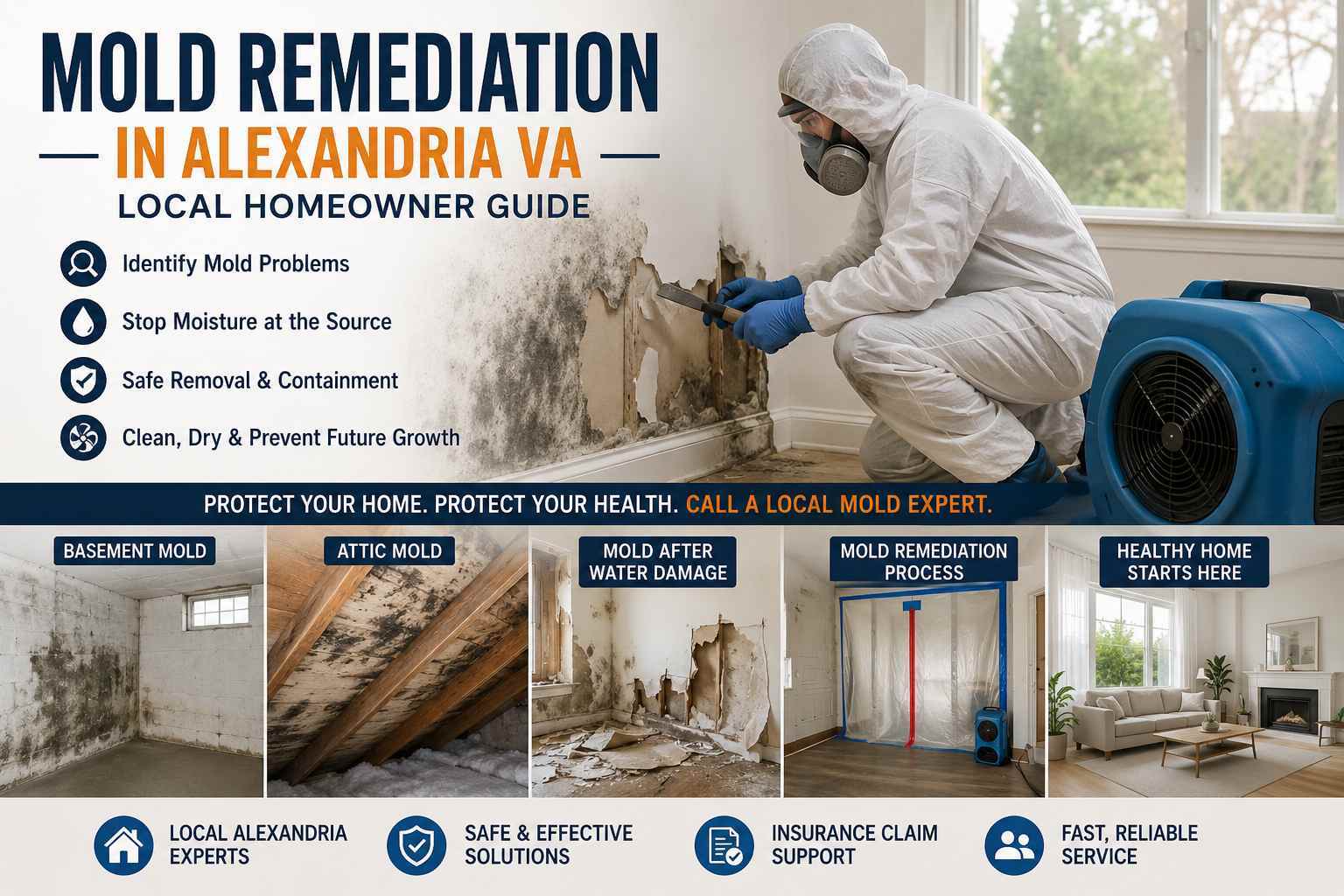
Mold Remediation in Alexandria VA: Local Homeowner Guide 2026
Mold inside a home is never just a cosmetic issue. In Alexandria, VA, mold problems often start with something that looks minor: a small ceiling stain, a musty smell in the basement, discoloration near an attic rafter, condensation around HVAC equipment, or damp drywall after a plumbing leak. But once moisture stays trapped inside building materials, mold can spread behind walls, under floors, inside insulation, and across wood framing.
Professional mold remediation in Alexandria VA is the process of identifying the moisture source, containing the affected area, removing contaminated materials when needed, cleaning exposed surfaces, filtering the air, documenting the work, and helping prevent the problem from returning.
For Alexandria homeowners, this is especially important because the local housing mix includes older homes in Old Town, Del Ray, Rosemont, Seminary Hill, West End, Landmark, and nearby neighborhoods with basements, crawlspace-adjacent areas, aging plumbing, finished lower levels, and attic ventilation challenges. Humid Northern Virginia summers and heavy rain can make moisture problems worse.
If you already see mold or suspect hidden growth, you can schedule a local assessment through mold remediation in Alexandria VA.
Why Alexandria Homes Are Vulnerable to Mold
Mold needs moisture, organic material, and time. Alexandria homes often provide all three when leaks or humidity are not addressed quickly.
Older Plumbing and Building Materials
Many Alexandria homes have older plumbing lines, older drywall assemblies, plaster, wood framing, and finished spaces that can hide moisture. A slow leak behind a wall may not be visible until staining, odor, or mold growth appears.
Finished Basements and Lower Levels
Finished basements are common in Alexandria townhomes and single-family homes. Drywall, carpet pad, baseboards, storage items, and insulation can all hold moisture after a leak, sump issue, appliance failure, or humidity problem.
Humid Northern Virginia Summers
Even without a major leak, high indoor humidity can support microbial growth in basements, closets, utility rooms, and poorly ventilated spaces.
Attic Ventilation Issues
Attic mold in Alexandria often comes from condensation, bathroom fans venting into attic space, roof leaks, blocked vents, insufficient insulation, or warm indoor air escaping into a cold attic.
Water Damage Events
Pipe bursts, dishwasher leaks, washing machine failures, water heater leaks, roof leaks, and storm-related water intrusion can create mold if materials are not dried properly. For more context, see mold after water damage in Virginia.
Common Causes of Mold in Alexandria VA
Mold remediation usually starts by finding the source. Cleaning visible growth without correcting the moisture problem can lead to repeat contamination.
Plumbing Leaks
Plumbing leaks are one of the most common causes of mold removal calls in Alexandria VA. Leaks can come from supply lines, drain lines, toilet seals, shower valves, refrigerator lines, washing machines, dishwashers, and water heaters.
In condos and townhomes, one plumbing failure can sometimes affect more than one unit, especially when water travels through ceiling cavities, shared walls, or stacked bathrooms.
Basement Moisture
Basement mold in Alexandria can develop from foundation seepage, poor airflow, wet carpet pad, damp storage, high humidity, or previous water damage. Finished basements are especially vulnerable because moisture can stay trapped behind drywall and baseboards.
For a detailed basement-specific guide, read Basement Mold Remediation in Northern Virginia.
Attic Condensation
Attic mold in Alexandria may show up on roof sheathing, rafters, insulation areas, or around ventilation paths. This can happen when warm indoor air escapes into the attic and condenses on cold surfaces.
For attic-specific information, see attic mold removal in Northern Virginia or visit the attic mold removal service page.
Roof, Window, and Exterior Leaks
Roof flashing, siding gaps, window leaks, gutter problems, and exterior wall penetrations can allow water to enter the building envelope. Mold may appear far away from the original entry point because water can travel along framing and drywall seams.
HVAC Condensation
Cold metal ductwork, sweating vents, air handler issues, poorly insulated duct sections, and high humidity can create moisture around HVAC components. Mold may appear in utility closets, ceilings, basements, or near supply registers.
Common Mold Sources in Alexandria Homes
Signs You May Need Mold Remediation
Homeowners often wait because the first signs seem small. But mold can be hidden behind surfaces, especially after water damage.
Visible Mold Growth
Black, green, gray, brown, or white growth on drywall, wood, trim, insulation, ceiling materials, or basement surfaces should be evaluated. Color alone does not confirm the mold type, but visible growth means moisture is present or was present long enough to support microbial activity.
Musty Odor
A musty odor is one of the most common signs of hidden mold. This smell is often strongest in basements, closets, bathrooms, laundry rooms, utility areas, and rooms with poor airflow.
Water Stains or Previous Leaks
Ceiling stains, wall discoloration, swollen trim, bubbling paint, or soft drywall may indicate hidden moisture. Even if the surface now feels dry, mold may have developed during the wet period.
Damp Carpet or Carpet Pad
Carpet may feel dry on top while the pad underneath remains wet. In basement water damage situations, carpet pad can hold moisture and create mold risk.
Recurring Allergy-Like Symptoms Indoors
Mold affects people differently. Some homeowners report irritation, congestion, coughing, headaches, or worsening allergy symptoms in specific rooms. Symptoms alone do not prove mold, but they are a reason to inspect the home.
For more warning signs, read 10 Signs of Hidden Mold in Your Home.
Mold Removal vs. Mold Remediation
Many homeowners search for mold removal Alexandria VA, but the better professional term is mold remediation.
Mold Removal
Mold removal usually means cleaning visible mold from a surface. The problem is that mold spores naturally exist indoors and outdoors, so “removing every mold spore forever” is not a realistic promise.
Mold Remediation
Mold remediation is a controlled process designed to return the affected area to a normal condition. It focuses on source control, containment, affected material removal, surface cleaning, air filtration, drying, and prevention.
A proper mold contractor in Alexandria VA should not only ask, “Where is the mold?” They should also ask:
What caused the moisture?
Without source control, mold can return.
What materials are affected?
Drywall, insulation, carpet pad, wood framing, plaster, and contents require different decisions.
Is the mold visible or hidden?
Hidden mold may require careful investigation behind walls, under flooring, or inside attic areas.
Does the project need containment?
Containment helps reduce cross-contamination during removal and cleaning.
For a full process explanation, read What Is Mold Remediation? Step-by-Step Process Explained.
The Mold Remediation Process in Alexandria VA
Every project is different, but professional mold remediation usually follows a clear sequence.
Step 1: Inspection and Moisture Assessment
The first step is to inspect the affected area, identify moisture patterns, document visible damage, and determine whether hidden materials may be affected.
This may include:
- Visual inspection
- Moisture readings
- Photo documentation
- Leak history review
- Identification of affected materials
- Recommendations for next steps
Step 2: Moisture Source Control
Mold remediation should not begin as a blind cleaning job. The source must be corrected or controlled first. This may involve plumbing repair, roof repair, HVAC correction, humidity control, exterior water management, or ventilation improvements.
Step 3: Containment Setup
Containment separates the affected work area from clean areas of the home. Depending on the scope, this may include plastic barriers, sealed openings, controlled access, and negative air pressure.
Step 4: Air Filtration
HEPA air scrubbers may be used during remediation to help filter airborne particles. This is especially important during demolition, cleaning, and material removal.
Step 5: Removal of Affected Materials
Porous materials such as drywall, insulation, carpet pad, and heavily contaminated materials may need to be removed. Non-porous or semi-porous materials may be cleaned depending on condition and project scope.
Step 6: Surface Cleaning and Treatment
Exposed framing, sheathing, subfloor, or other surfaces may be cleaned using HEPA vacuuming, damp wiping, controlled abrasion, antimicrobial treatment, and detailed hand-cleaning methods.
Step 7: Drying and Moisture Verification
The area should be dry before rebuild. Rebuilding over damp materials can create a repeat mold problem.
Step 8: Rebuild Planning
After remediation, drywall, paint, trim, flooring, insulation, or other materials may need to be restored. Total Home Rescue can assist with both mold remediation and restoration planning.
Mold Remediation Process
Basement Mold in Alexandria VA
Basement mold in Alexandria is one of the most common local problems. Finished basements are especially vulnerable because drywall, trim, flooring, carpet pad, and insulation can hide moisture.
Where Basement Mold Usually Appears
Basement mold may be found around:
- Baseboards
- Carpet and carpet pad
- Drywall near exterior walls
- Utility closets
- Under stairs
- Stored boxes or furniture
- Water heater areas
- Laundry areas
- HVAC equipment
- Foundation walls
Why Basement Mold Should Be Taken Seriously
A basement mold problem can spread if moisture continues. Even when the visible mold is limited, wet materials behind the surface may be larger than the stain suggests.
For homeowners, the safest approach is to address both the mold and the moisture source. A dehumidifier may help with humidity, but it will not fix a hidden plumbing leak, exterior water intrusion, or already contaminated building materials.
Attic Mold in Alexandria VA
Attic mold is often found during home inspections, roof repairs, HVAC work, or when a homeowner notices staining on roof sheathing. Because attic areas are not part of daily living space, mold can remain hidden for a long time.
Common Causes of Attic Mold
Attic mold in Alexandria may come from:
- Bathroom fans venting into the attic
- Poor soffit or ridge ventilation
- Roof leaks
- Warm air leakage from the living space
- Insufficient insulation
- Blocked vents
- Condensation on roof sheathing
- High indoor humidity
Why Attic Mold Needs a Specific Plan
Attic remediation is different from cleaning a bathroom wall. The affected surfaces may include wood sheathing, rafters, framing, and insulation. A proper plan may include cleaning affected wood, removing contaminated insulation if needed, correcting ventilation, and reducing future condensation risk.
Mold After Water Damage in Alexandria
Mold after water damage in Alexandria can develop when materials remain wet too long after a leak, flood, overflow, or plumbing failure. Drywall, insulation, subfloor, trim, and carpet pad are especially vulnerable.
What Homeowners Should Do Quickly
If water damage happens:
- Stop the source if possible.
- Document the damage with photos and videos.
- Remove standing water if safe.
- Avoid disturbing visible mold.
- Do not paint over stained or moldy materials.
- Do not reinstall finishes until the area is dry.
- Call a qualified restoration contractor if materials are wet.
Water damage and mold are closely connected. If drying is delayed, a water mitigation project can become a mold remediation project.
Is Black Mold Dangerous?
The phrase “black mold” is often used for any dark mold, but color alone does not identify the species. Some dark mold may be more concerning than others, but any visible indoor mold should be treated as a moisture and indoor air quality concern.
People with asthma, allergies, respiratory sensitivity, immune concerns, children, and elderly occupants may be more affected by indoor mold conditions. Homeowners should avoid disturbing moldy materials because cutting, sanding, or aggressive cleaning can spread particles.
For more detail, read Is Black Mold Dangerous? Health Risks Explained.
How Much Does Mold Remediation Cost in Alexandria VA?
The cost of mold remediation in Alexandria VA depends on scope. A small contained area may be relatively simple, while a basement, attic, multi-room water damage project, or hidden mold issue can require more labor and equipment.
Main Cost Factors
Pricing usually depends on:
- Size of the affected area
- Type of affected material
- Amount of demolition required
- Containment setup
- HEPA filtration needs
- Accessibility
- Cleaning method
- Moisture source complexity
- Whether rebuild is included
- Insurance documentation needs
For more pricing detail, see Mold Remediation Cost in Virginia: 2026 Guide. If you are comparing estimate quality, this guide on how to get a mold remediation estimate in Fairfax VA is also useful for Northern Virginia homeowners.
Cost Factors for Mold Remediation
Does Insurance Cover Mold Remediation?
Insurance coverage depends on the cause of the mold and the policy language. Mold may be covered when it results from a sudden and accidental covered water loss, such as a pipe burst or appliance supply line failure.
Coverage may be limited or denied when mold comes from long-term leaks, maintenance issues, seepage, humidity, or delayed reporting.
Documentation Matters
If insurance may be involved, homeowners should document:
- Date the damage was discovered
- Photos and videos
- Visible mold or water damage
- Moisture readings if available
- Contractor scope
- Cause of loss
- Affected materials
- Drying or remediation steps
For a detailed homeowner guide, read Does Insurance Cover Mold Remediation in Virginia?.
When Mold Is an Emergency
Not every mold issue is an emergency, but some situations should be handled quickly.
Call a Professional Quickly If:
- Mold appears after active water damage
- Drywall, insulation, or flooring is wet
- Mold is near HVAC equipment
- There is mold in a bedroom or occupied living area
- The affected area is spreading
- A musty odor is getting stronger
- Children, elderly occupants, or sensitive individuals live in the home
- There is a sewage or contaminated water concern
- Multiple rooms or units are affected
A fast response can reduce damage, protect unaffected areas, and prevent a small project from becoming a much larger remediation and rebuild job.
How to Choose a Mold Contractor in Alexandria VA
Choosing a mold contractor should not be based only on the lowest price. A cheap estimate may leave out important parts of the job.
Look for Restoration Experience
A qualified mold contractor in Alexandria VA should understand water damage, containment, drying, material removal, cleaning, documentation, and rebuild coordination.
Ask About Containment
Containment helps prevent cross-contamination. If a contractor plans to remove moldy drywall without containment or air filtration, that is a red flag.
Ask What Materials Will Be Removed
Porous materials affected by mold may need removal. The estimate should clearly state what is being removed, cleaned, dried, or restored.
Ask About Documentation
Professional documentation may include photos, moisture readings, scope notes, equipment use, and completion records. This is especially important when insurance is involved.
Avoid Unrealistic Claims
Be cautious with promises like “100% mold-free forever.” Mold spores naturally exist in indoor and outdoor environments. The real goal is proper remediation and moisture control.
For more hiring guidance, read How to Hire a Mold Remediation Company in Northern Virginia.
Why Alexandria Homeowners Call Total Home Rescue
Mold remediation is not only about removing damaged materials. Homeowners also need clear communication, documentation, moisture control recommendations, and a realistic plan for restoring the affected area.
Total Home Rescue helps Alexandria homeowners with mold issues caused by leaks, basement moisture, attic condensation, HVAC-related moisture, and water damage.
What Total Home Rescue Helps With
- Local mold remediation in Alexandria and Northern Virginia
- Inspection of visible damage and possible hidden moisture
- Photo documentation and moisture readings
- Containment setup when needed
- HEPA filtration during remediation
- Removal of affected drywall, insulation, carpet pad, or other materials when necessary
- Cleaning and treatment of exposed surfaces
- Rebuild planning after remediation
- Insurance-related documentation support when applicable
This is especially helpful for homeowners dealing with mold after water damage, because the project may require both remediation and restoration planning.
Preventing Mold After Remediation
Prevention depends on keeping materials dry. Even after professional remediation, mold can return if moisture returns.
Control Indoor Humidity
Basements should often be kept below high humidity levels with a properly sized dehumidifier. A dehumidifier with a drain hose is usually better for long-term use because it does not rely on someone emptying a bucket.
Fix Leaks Immediately
Do not ignore slow leaks. A small drip behind a wall can create mold before the homeowner sees visible damage.
Vent Bathrooms Properly
Bathroom fans should vent outdoors, not into the attic. Poor exhaust routing is a common cause of attic mold.
Check Utility Areas
Inspect around HVAC equipment, water heaters, laundry connections, sump pumps, and plumbing penetrations.
Avoid Storing Items Against Basement Walls
Storage directly against exterior basement walls can trap moisture and limit airflow.
For a practical prevention guide, read How to Prevent Mold Growth in Northern Virginia Homes.
Local Mold Remediation Services Near Alexandria
Total Home Rescue provides mold remediation and related restoration services across Alexandria and nearby Northern Virginia communities.
Local service pages include:
For regional context, see the complete mold remediation guide for Northern Virginia.
Need Mold Remediation in Alexandria VA?
If you see mold, smell a musty odor, had recent water damage, or suspect hidden moisture, do not wait until the problem spreads. Total Home Rescue helps Alexandria homeowners with local mold remediation, moisture documentation, containment, HEPA filtration, affected material removal, cleaning, prevention recommendations, and restoration planning.
Schedule an assessment through Total Home Rescue mold remediation in Alexandria VA.
FAQ: Mold Remediation in Alexandria VA
1. When should I call a mold remediation contractor in Alexandria VA?
You should call a mold remediation contractor if you see visible mold, smell a musty odor, notice staining after a leak, have wet drywall or flooring, find mold in a basement or attic, or suspect hidden moisture behind walls. In Alexandria homes, mold often appears after plumbing leaks, HVAC condensation, basement humidity, roof leaks, and water damage.
2. What is the difference between mold removal and mold remediation?
Mold removal usually means cleaning visible mold from a surface. Mold remediation is more complete. It includes identifying the moisture source, setting containment, removing affected materials when necessary, cleaning exposed surfaces, using HEPA filtration, drying the area, and helping prevent future mold growth.
3. Is basement mold common in Alexandria VA?
Yes. Basement mold is common in Alexandria VA because many homes have below-grade spaces, finished lower levels, utility rooms, older foundations, limited airflow, and seasonal humidity. Mold may appear behind baseboards, under carpet pad, on drywall, near stored items, or around foundation walls.
4. What causes attic mold in Alexandria homes?
Attic mold is often caused by poor ventilation, bathroom fans venting into the attic, roof leaks, condensation, insufficient insulation, blocked vents, or warm indoor air escaping into the attic. The mold often appears on roof sheathing, rafters, or insulation areas.
5. Does homeowners insurance cover mold remediation in Virginia?
Sometimes. Insurance may cover mold remediation if the mold resulted from a sudden and accidental covered water loss, such as a pipe burst or appliance supply line failure. Coverage may be limited or denied if mold was caused by long-term leaks, humidity, seepage, poor maintenance, or delayed reporting.
6. How much does mold remediation cost in Alexandria VA?
The cost depends on the affected area size, material type, containment needs, accessibility, cleaning method, equipment, demolition, and whether rebuild is included. A small localized issue may cost much less than a basement, attic, or multi-room remediation project.
7. Can I stay in my house during mold remediation?
It depends on the size and location of the affected area, the containment plan, and the sensitivity of occupants. For small contained areas, homeowners may be able to remain in the home. For larger projects, heavy demolition, or sensitive occupants, temporary separation from the work area may be recommended.
8. Can mold come back after remediation?
Yes, mold can return if the moisture problem is not fixed. Remediation addresses affected materials, but long-term prevention depends on leak repair, humidity control, proper ventilation, and keeping building materials dry.
9. Should I test for mold before remediation?
Testing is not always required when visible mold and a clear moisture source are present. Testing may be useful when conditions are unclear, health concerns exist, documentation is needed, or post-remediation clearance is requested. In some cases, a third-party hygienist may be involved.
10. Who should I call for mold remediation in Alexandria VA?
Call a local restoration contractor experienced with mold remediation, water damage, containment, documentation, and rebuild planning. Total Home Rescue provides mold remediation in Alexandria VA for homeowners dealing with mold after leaks, basement moisture, attic mold, and hidden water damage.

