

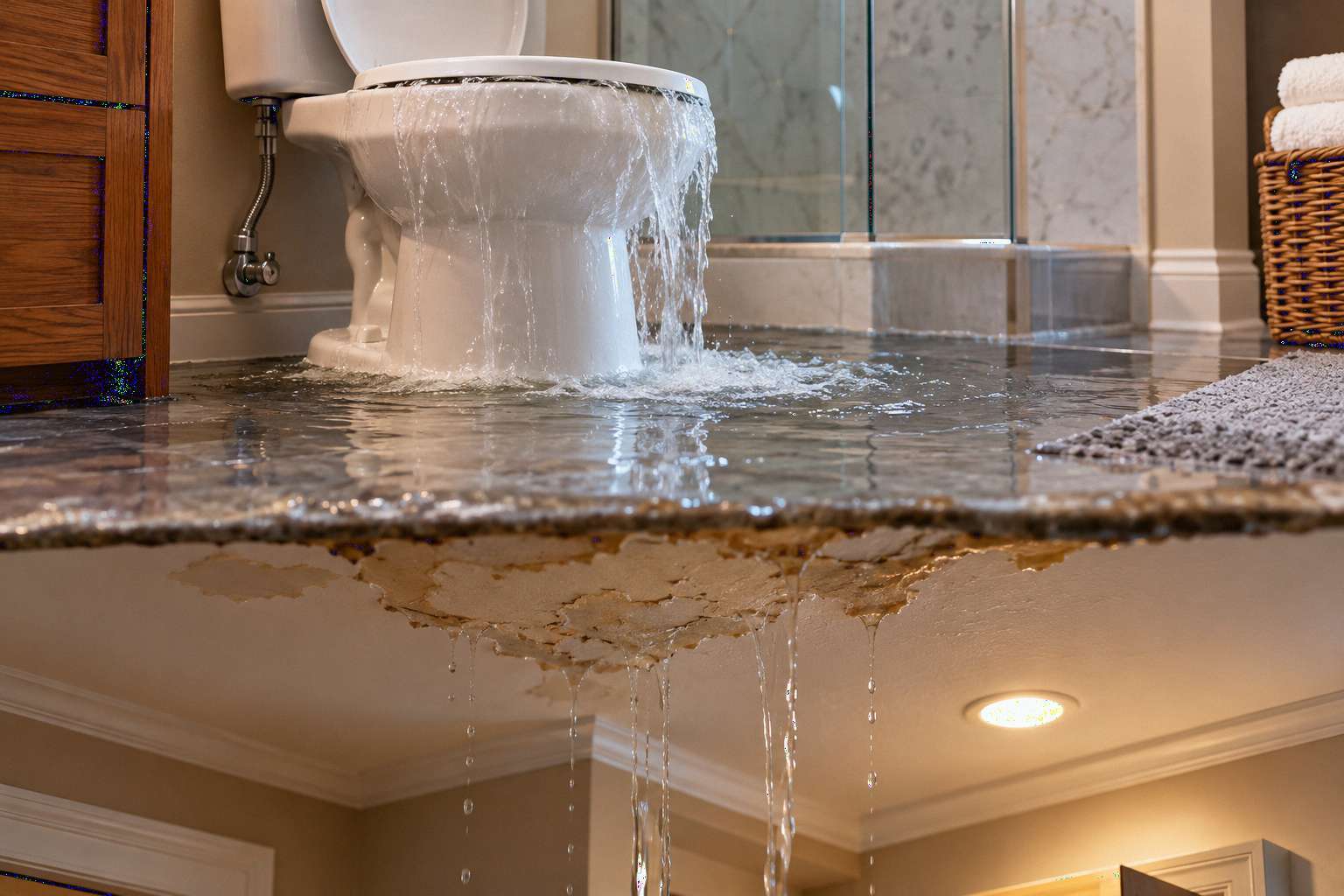
An overflowing toilet is bad enough. Finding out the water has soaked through the bathroom floor and into the ceiling downstairs? That's a whole different problem.
Unfortunately, toilet overflow water damage can be more serious than the puddle suggests.
Water doesn't always stay on the bathroom floor. It can slip through gaps around the toilet, travel beneath tile, soak the subfloor, and spread into neighboring rooms. If the bathroom is upstairs, moisture can reach drywall, insulation, and ceiling materials below.
Then there's another question: Was the water actually clean?
A broken toilet supply line, an overflowing bowl, and a sewer backup may look similar at first, but they don't present the same contamination risks.
Some situations call for relatively simple cleanup. Others require contaminated-water removal, structural drying, and repairs.
Knowing the difference can help you respond safely, prevent additional damage, and avoid paying for work that isn't necessary.
Quick Answer: When Is a Toilet Overflow More Than a Bathroom Cleanup?
Toilet overflow water damage becomes a restoration issue when water reaches hidden building materials, spreads beyond the bathroom, or contains significant contamination.
A small, recent sanitary-water spill contained on a nonporous surface may be manageable with proper cleaning.
However, professional assessment is advisable when:
- The overflow involves sewage or wastewater.
- Water reaches adjacent rooms.
- Tile, vinyl, or laminate may be wet underneath.
- The subfloor feels soft or swollen.
- Drywall, insulation, or cabinets become saturated.
- Water appears on the downstairs ceiling.
- Moisture or unpleasant odors remain after cleanup.
The important distinction isn't simply how much water you see. It's where the water traveled and what it contacted.
What Causes a Toilet to Overflow?
Identifying the source is essential because it affects both plumbing repairs and water damage restoration.
Clogged Toilet Bowl
A blockage prevents wastewater from draining normally. If someone flushes again, the bowl can fill and spill over the rim.
Depending on the contents, the overflow may introduce urine, fecal matter, or other contaminants onto the bathroom floor.
Broken Toilet Supply Line
The flexible supply connector or pressurized plumbing connection can fail, releasing water directly from the home's supply system.
This water may initially be sanitary, but it can still cause extensive moisture damage.
Sewer or Drain Backup
A blockage farther down the waste line may force wastewater back through the toilet.
Warning signs include several slow drains, gurgling fixtures, or wastewater appearing without a recent flush.
These conditions require plumbing attention and may involve gross contamination.
For related guidance, see sewage backup cleanup Virginia
Failed Toilet Seal or Connection
A damaged wax ring or connection near the toilet base may allow wastewater to escape during flushing.
Because the leak can occur beneath the fixture, moisture may reach the subfloor before anyone notices the problem.
Repeated dampness around the toilet base deserves investigation.
Is Toilet Overflow Water Clean, Gray, or Black?
Not all toilet-related water losses are classified the same way.
Professional restoration uses three water contamination categories:
- Category 1 — Clean Water: Water originating from a sanitary source, such as a pressurized drinking-water supply line.
- Category 2 — Gray Water: Significantly contaminated water, potentially including certain toilet bowl overflows containing urine but no fecal matter.
- Category 3 — Black Water: Grossly contaminated water, including fecal contamination and sewage backflow originating beyond the plumbing trap.
These are not simply descriptions of water color.
Clear-looking wastewater can still contain harmful contaminants. Likewise, water that began from a sanitary source may become contaminated after contacting other materials.
The proper classification depends on the source, water pathway, and actual conditions.
Learn more in our guide to water damage categories 1, 2 and 3
What Should You Do Immediately After a Toilet Overflow?
The first priority is preventing additional water damage while keeping everyone safe.
1. Stop the Water Source
If the toilet continues filling and the valve is safely accessible, turn the supply shutoff valve clockwise.
Don't keep flushing a clogged toilet.
If sewage is backing up through the drain system, stop using connected plumbing fixtures until a plumber identifies the problem.
2. Keep People Away From Contaminated Water
Keep children and pets outside the affected area.
Avoid touching suspected sewage. Don't enter standing water when electrical equipment, wiring, or outlets may be involved.
3. Document the Damage
Take photos of the toilet, affected flooring, baseboards, and adjacent rooms.
If the bathroom is upstairs, look for damage on the level below without entering areas with sagging ceilings or electrical hazards.
4. Contact a Plumber
The underlying plumbing problem must be corrected.
A restoration company can address the resulting water damage, but plumbing repairs may require a separate qualified professional.
5. Arrange Appropriate Cleanup
A small sanitary-water spill may need limited cleaning.
Suspected sewage, saturated building materials, or water spreading into concealed spaces requires a more careful assessment.
Where Can Toilet Overflow Water Hide?
Water can move through building materials in ways that aren't immediately visible.
Under Bathroom Tile
Ceramic and porcelain tile resist surface moisture, but a tile installation isn't automatically waterproof.
Water may enter through damaged grout, openings around the toilet, perimeter gaps, or flooring transitions.
Once beneath the tile, moisture may remain trapped against the underlayment or subfloor.
Beneath Vinyl and Laminate Flooring
Water can travel through seams and collect beneath the finished surface.
Certain materials may swell, separate, or lose adhesion after prolonged exposure.
For a broader explanation, see water damage under flooring
Behind Baseboards and Drywall
Water often spreads along the bottom of walls.
Baseboards can conceal wet drywall, while wall cavities may allow moisture to travel into neighboring spaces.
Around Plumbing Penetrations
Openings around supply lines, drains, and the toilet flange may provide pathways into the floor assembly.
These concealed routes help explain why a relatively small bathroom overflow can create more extensive damage than expected.
Wet Subfloor From a Toilet Overflow: Can It Be Saved?
A wet subfloor from a toilet overflow doesn't automatically require replacement.
The decision depends on material condition, contamination, and whether the assembly can be adequately cleaned and dried.
Plywood vs. OSB After Water Exposure
Plywood may remain structurally sound after certain water losses if the layers stay bonded.
OSB can develop edge swelling and other permanent changes following significant saturation.
Neither material should be judged solely by appearance.
Signs of Subfloor Damage
Soft spots, unusual movement, swelling, separated flooring, and persistent moisture can indicate problems.
How Hidden Moisture Is Evaluated
Technicians may take multiple moisture readings, inspect accessible areas below the floor, and assess the condition of the surrounding assembly.
When Replacement Becomes Necessary
Replacement may be appropriate when the material has lost structural integrity, cannot be adequately dried, or contains contamination that cannot be properly addressed.
For more detailed guidance, see subfloor water damage
Can a Toilet Overflow Damage the Ceiling Downstairs?
Yes. This is one of the most commonly overlooked consequences of upstairs bathroom flooding.
Water may travel through plumbing penetrations, floor joints, and other concealed pathways before reaching the ceiling below.
Signs of toilet overflow ceiling damage include:
- Yellow or brown water stains
- Bubbling or peeling paint
- Dripping around ceiling openings
- Soft or sagging drywall
- Damp insulation
- Persistent musty odors
A small ceiling stain doesn't necessarily mean the affected area is small.
If the ceiling is visibly sagging or water has reached electrical fixtures, keep people away and arrange qualified assessment.
Do not repaint the damaged area until the moisture source and affected materials have been addressed.
For additional information, see ceiling water damage
Which Materials Can Be Dried and Which Need Replacement?
Not every wet building material needs demolition.
However, some materials cannot be adequately cleaned or restored after significant contamination.
Tile and Nonporous Surfaces
Intact tile, glass, and certain hard surfaces may be cleaned and reused.
The condition of the materials underneath them must still be evaluated.
Drywall and Insulation
Some sanitary-water damage may be restorable.
Drywall or insulation contaminated by sewage often requires removal, particularly when the material is porous and cannot be thoroughly cleaned.
Wood Framing and Subfloors
Structurally sound wood may sometimes be cleaned and dried.
Severe deterioration, inaccessible contamination, or permanent damage may make selective replacement necessary.
Cabinets and Trim
Solid wood and certain finished surfaces may be restorable.
Swollen particleboard, MDF, and damaged composite components can be more difficult to save.
What Does Professional Toilet Overflow Cleanup Include?
Professional toilet overflow cleanup addresses contamination, visible water, and moisture hidden inside the structure.
Moisture Inspection
Technicians identify the affected area and check whether water reached flooring assemblies, drywall, cabinets, or the level below.
Contamination Assessment
The water source is evaluated to determine appropriate safety measures and cleaning requirements.
Water Extraction
Standing water is removed using methods and equipment suitable for the conditions.
Cleaning and Material Removal
Restorable surfaces are cleaned.
Materials that cannot be adequately cleaned or dried may require controlled removal.
Structural Drying
After contamination concerns have been addressed, air movers, dehumidifiers, and other appropriate methods help remove remaining moisture.
Monitoring and Verification
Material moisture readings help determine whether drying is progressing and when the remaining structure is ready for repairs.
For the full process, see water mitigation process
Can Toilet Overflow Water Damage Cause Mold?
Yes.
Mold can develop when water-damaged drywall, insulation, wood, or flooring remains damp.
This can happen even after a sanitary supply-line leak.
EPA recommends drying wet materials within 24–48 hours when possible to reduce mold risk.
That is a prevention goal, not a guarantee that mold will develop—or be prevented—within a specific timeframe.
If moisture remains trapped beneath flooring or inside wall cavities, further inspection may be needed.
For more information, see mold after water damage Virginia
DIY Toilet Overflow Cleanup vs. Professional Restoration
A small, recent sanitary-water spill confined to accessible nonporous flooring may be manageable without professional restoration.
But a wastewater overflow involving absorbent materials or hidden moisture is different.
Professional assessment is particularly important when:
- Sewage contamination is suspected.
- Water reaches the subfloor.
- Moisture spreads into another room.
- A downstairs ceiling becomes wet.
- Drywall or insulation is saturated.
- The affected area cannot be fully inspected.
Removing the visible puddle isn't the same as confirming the surrounding materials are clean and dry.
How Long Does Toilet Overflow Water Damage Take to Dry?
There is no universal drying timeline.
A small spill on an accessible tile surface is different from moisture trapped beneath flooring or inside a ceiling assembly.
The duration depends on material type, saturation, temperature, humidity, drying access, and equipment performance.
Contamination and necessary material removal also influence the restoration sequence.
Drying should be considered complete when appropriate measurements support that conclusion.
For a more detailed explanation, see structural drying after water damage
How Much Does Toilet Overflow Restoration Cost?
The cost depends on the work required.
A limited sanitary-water cleanup may involve extraction and drying.
A sewage-contaminated bathroom with damaged flooring, a wet subfloor, and ceiling damage downstairs may require significantly more work.
An estimate may include:
- Water extraction
- Contamination cleanup
- Selective demolition
- Structural drying
- Subfloor or drywall replacement
- Flooring and finish repairs
Plumbing repairs may be priced separately from restoration.
For cost factors, see water damage restoration cost
Does Homeowners Insurance Cover Toilet Overflow Water Damage?
Coverage depends on the cause of the loss and the policy terms.
A sudden accidental plumbing failure may be treated differently from a sewer backup or damage caused by ongoing leakage.
In Virginia, insurers are required to offer optional water and sewer backup coverage. However, that doesn't mean every homeowner has purchased it.
Document the source, affected materials, plumbing findings, and necessary mitigation work.
For additional guidance, see does insurance cover water damage restoration
How to Prevent Another Toilet Overflow
Some plumbing failures happen unexpectedly, but regular maintenance can reduce common risks.
- Avoid flushing wipes and other non-flushable products.
- Investigate recurring toilet clogs.
- Inspect supply connections and shutoff valves.
- Repair leaks around the toilet base.
- Pay attention to slow drains and gurgling fixtures.
- Know where the main water shutoff is located.
Repeated backups involving several fixtures may indicate a problem beyond the toilet itself.
Toilet Overflow Water Damage Restoration in Northern Virginia
Toilet overflows can affect single-family houses, townhomes, condos, and rental properties throughout Alexandria, Arlington, Fairfax, McLean, and nearby Northern Virginia communities.
Total Home Rescue provides water damage mitigation, structural drying, and reconstruction services throughout the DMV area.
Whether water stays in the bathroom or reaches the floor below, the first step is identifying the source, contamination level, and full extent of damage.
For emergency restoration guidance, see emergency water damage restoration
Final Takeaway
Toilet overflow water damage becomes more than a bathroom cleanup when moisture enters concealed materials or wastewater creates contamination concerns.
A proper response includes stopping the source, evaluating water contamination, inspecting floors and walls, cleaning appropriately, and verifying drying before repairs.
The goal isn't just a bathroom that looks clean. It's a bathroom that's been properly restored.
Frequently Asked Questions About Toilet Overflow Water Damage
1. Is water from an overflowing toilet considered sewage?
Not every toilet-related water loss is sewage damage.
A broken sanitary supply line is different from wastewater escaping out of the toilet bowl.
Certain bowl overflows may contain significant contamination even without visible fecal matter.
When feces are present, or sewage backs up from beyond the plumbing trap, gross contamination is a major concern.
Water color and odor are not reliable ways to determine safety.
If the source is uncertain, avoid direct contact until the conditions are appropriately assessed.
Correct classification matters because contamination influences cleaning methods, protective equipment, and whether certain materials can be saved.
2. Can toilet overflow water get underneath tile and damage the subfloor?
Yes.
Water can enter through openings around the toilet flange, grout defects, floor transitions, or perimeter gaps.
Even when the tile surface appears dry, moisture may remain in underlayment, plywood, or OSB subflooring.
Possible consequences include swelling, deterioration, and persistent moisture.
Whether the subfloor can be saved depends on contamination, structural integrity, and drying access.
Professional evaluation may involve moisture measurements from several locations and inspection from beneath the floor where accessible.
The important question is whether the entire affected assembly can be properly cleaned and dried.
3. What should I do if an upstairs toilet overflowed and water is leaking through the ceiling downstairs?
Stop the overflow and avoid additional flushing until the plumbing problem is resolved.
Keep people away from sagging ceiling areas and potentially wet electrical fixtures.
Document the damage in both the bathroom and the room below.
Water may have traveled through the floor assembly, affecting ceiling drywall, insulation, or framing.
A moisture inspection can help establish the full extent of the problem.
If sewage was involved, contamination controls may also be necessary.
Avoid repainting the ceiling or closing affected materials before appropriate cleaning, drying, and verification are complete.
4. Can I clean up toilet overflow water myself, or do I need a restoration company?
A small sanitary-water spill limited to an accessible nonporous surface may sometimes be manageable with appropriate cleaning and drying.
However, toilet bowl wastewater and sewage backups present different risks.
Professional evaluation is advisable when water enters flooring layers, drywall, insulation, or the ceiling below.
The same applies when several rooms are affected or the water source is uncertain.
Household cleaning can remove visible moisture without addressing contamination or trapped water.
The correct decision depends on whether the affected materials can be safely and thoroughly restored.
5. Does homeowners insurance cover toilet overflow cleanup, wet subfloor replacement, and downstairs ceiling repairs?
Coverage depends on the cause of the loss and the terms of the policy.
A sudden accidental plumbing failure may be covered under some homeowners policies.
Sewer backups, repeated leakage, and maintenance-related issues may have different coverage requirements or exclusions.
For a second-floor toilet overflow, document the bathroom damage and any resulting damage to the ceiling below.
Keep photographs, plumbing reports, moisture measurements, mitigation records, and repair estimates.
Contact the insurer promptly and review applicable endorsements, limits, deductibles, and exclusions.
A restoration estimate can document the work needed, but coverage and payment decisions remain subject to the policy.

