

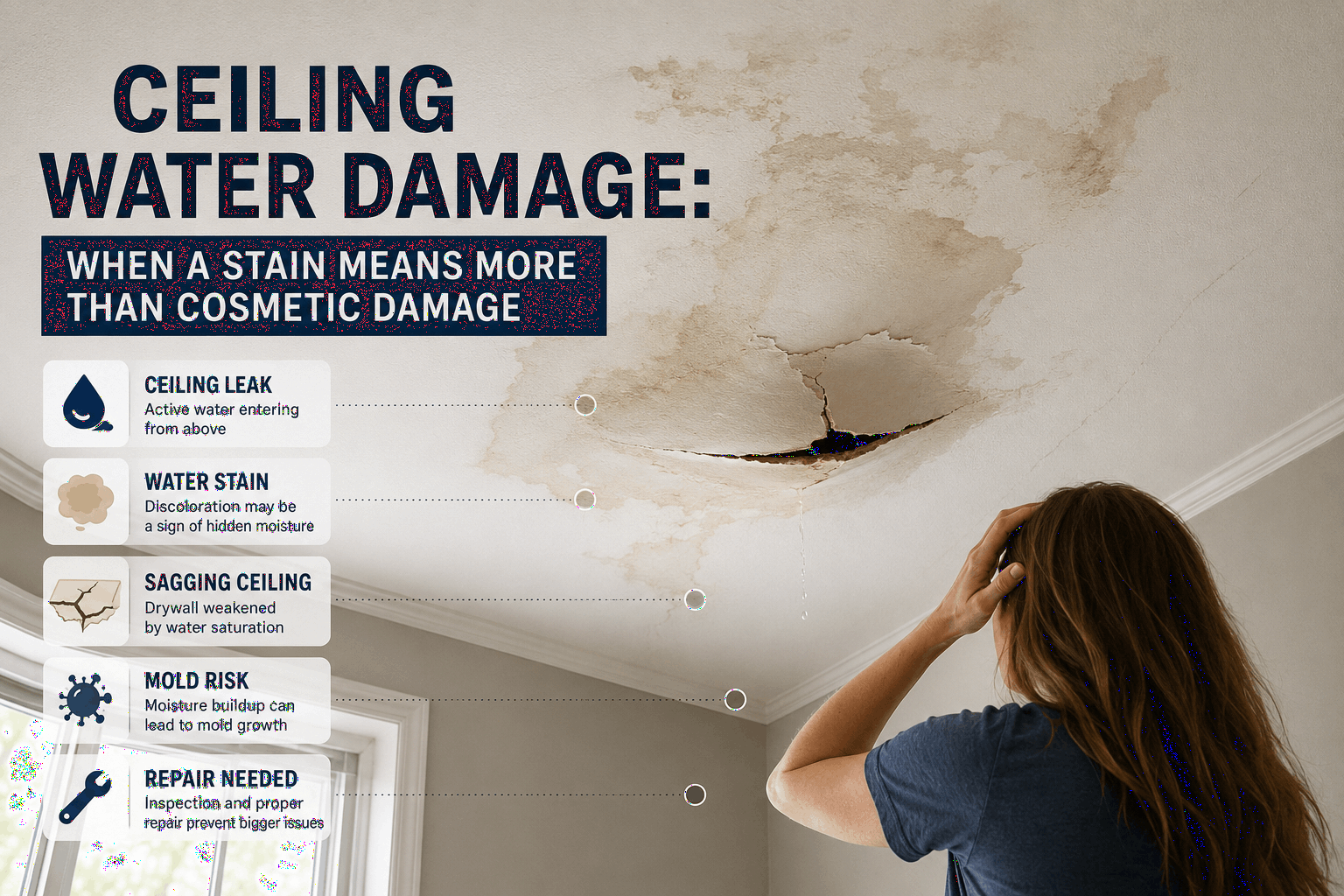
Quick Answer: When Is Ceiling Water Damage Serious?
Ceiling water damage is serious when a stain grows, paint bubbles, drywall feels soft, water drips, cracks appear, a musty odor develops, or the ceiling begins to sag. A water stain on ceiling drywall may look like a cosmetic issue, but it can point to an active ceiling leak, hidden moisture, wet insulation, roof leakage, plumbing damage, HVAC condensation, or an upstairs bathroom leak.
A small dry stain may be mostly cosmetic only after the water source is fixed and the ceiling is confirmed dry. But drywall ceiling damage can become more serious when water remains trapped above the visible surface. A sagging ceiling should be treated as a warning sign because soaked drywall can weaken, hold water, and require careful inspection before repair.
EPA says moisture control is the key to mold control and recommends drying water-damaged areas and items within 24–48 hours when possible.
For the full drying process, see structural drying after water damage
Why Ceiling Water Damage Is Often Hidden
A ceiling stain is often the final visible sign of a water path above the room. Water may move along framing, plumbing, insulation, joists, ductwork, or drywall seams before it appears as a yellow stain, brown ring, dark patch, bubble, or drip.
Common sources of ceiling water damage include:
- Roof leak
- Attic condensation
- Plumbing supply line leak
- Drain line leak
- Toilet leak
- Shower or tub leak
- Sink overflow
- Washing machine leak
- Water heater leak
- HVAC condensation line issue
- Bathroom exhaust problem
- Previous leak that was never fully dried
The stain is only the visible symptom. The more important question is what happened above the ceiling before the mark appeared. Moisture may still be on the back of the drywall, inside insulation, around framing, or near electrical openings.
For a broader homeowner guide, see water damage restoration homeowner guide
Ceiling Water Damage Warning Signs
Some ceiling stains are old. Others are signs of an active ceiling leak or hidden moisture. Homeowners should watch the size, color, texture, odor, and shape of the ceiling.
Common warning signs include:
- Stain getting larger
- Yellow, brown, or dark ceiling ring
- Bubbling paint
- Peeling ceiling texture
- Soft drywall
- Musty odor
- Dripping water
- Cracks near the stain
- Wet insulation above the ceiling
- Ceiling feels bowed or heavy
- Ceiling texture separating
- Stain appears after rain
- Stain appears after shower use
- Stain below an upstairs bathroom
- Stain below attic, roofline, or HVAC equipment
A stain that appears after rain may point to roofing, attic, flashing, siding, or exterior water entry. A stain below a bathroom may point to an upstairs bathroom leak. A stain that slowly grows may mean moisture is still entering or trapped above the drywall.
EPA notes that hidden mold can occur on the back side of drywall, around leaking pipes, and in roof materials above ceiling tiles when moisture problems exist.
For hidden moisture and mold warning signs, see signs of hidden mold in your home
Water Stain on Ceiling: Old Mark or Active Leak?
A water stain on ceiling drywall can remain after the ceiling dries. That means color alone does not prove whether the leak is active. The source, moisture readings, drywall condition, and stain behavior matter more than appearance.
A ceiling stain may be old when:
- The source was already repaired
- The ceiling is dry
- Moisture readings are normal
- There is no musty odor
- The stain is not growing
- The drywall is firm
- No new bubbling appears
- No dripping is present
A ceiling stain may be active when:
- It grows after rain
- It appears after shower use
- It feels damp
- It smells musty
- Paint bubbles
- Texture peels
- Water drips
- The ceiling sags
- Moisture readings are elevated
Painting over an active stain does not fix the problem. It only covers the symptom until the stain returns or the hidden damage becomes worse.
Ceiling Leak Sources: Where the Water May Be Coming From
A ceiling leak is not always directly above the stain. Water can travel across framing, pipes, insulation, and drywall seams before becoming visible.
Possible sources include:
- Roof flashing leak
- Plumbing supply line leak
- Drain line leak
- Toilet wax ring issue
- Shower pan or tub leak
- Sink overflow
- HVAC condensation line
- Attic condensation
- Appliance leak above the ceiling
- Exterior wall or window leak
The stain location helps identify where to inspect, but it does not prove the exact source. A stain below a bathroom may come from a toilet, tub, shower valve, drain, supply line, failed caulk, or grout issue. A stain near an exterior wall may come from roofing, siding, flashing, window trim, or attic moisture.
For urgent water situations, see emergency water damage restoration guide
Upstairs Bathroom Leak and Ceiling Damage
An upstairs bathroom leak is one of the most common reasons homeowners find a stain on the ceiling below. The water may come from a toilet, tub, shower, sink, vanity, drain line, supply line, or failed caulk around wet areas.
Warning signs of an upstairs bathroom leak include:
- Ceiling stain below the bathroom
- Stain grows after shower use
- Dripping after toilet flushing
- Ceiling bubbles after bath use
- Soft drywall below bathroom fixtures
- Musty odor in the room below
- Damp flooring near toilet or tub upstairs
- Cracked caulk or grout near wet areas
The bathroom above should be checked, but the ceiling below should not be ignored. If water entered the ceiling cavity, drying may require moisture testing, opening a damaged area, removing wet insulation, and using drying equipment.
For flooring-related leak concerns, see water damage under flooring
Why Bathroom Leaks Can Be Misleading
Bathroom water can move through pipe openings, floor penetrations, subfloor seams, framing, and wall cavities before reaching the ceiling below.
Why the Ceiling Below Still Matters
The leak source may be repaired upstairs while wet drywall or insulation remains below.
Why Documentation Helps
Photos, videos, moisture readings, and source notes can support repair planning and insurance communication.
Simple Rule
Fix the source first, then dry and verify the ceiling cavity before cosmetic repair.
Drywall Ceiling Damage: When Drying May Not Be Enough
Drywall ceiling damage may be minor when moisture is limited and the drywall remains firm. But ceiling drywall can lose strength when it becomes saturated. Gravity makes ceiling damage different from wall damage because soaked ceiling material can sag, bow, crack, or fail.
Drying may be possible when:
- The water source is clean
- The leak was caught quickly
- The drywall is firm
- No sagging is present
- Insulation is dry or removable
- Moisture readings improve
- The source is fully stopped
Removal may be needed when:
- Drywall is soft
- Drywall is sagging
- Ceiling texture is falling
- Water keeps dripping
- Insulation above is wet
- Visible mold concern appears
- Water came from a contaminated source
- Moisture readings stay elevated
- The ceiling cannot dry safely in place
EPA says absorbent or porous materials, such as ceiling tiles and carpet, may need to be thrown away if they become moldy.
Sagging Ceiling: Why It Is a Major Warning Sign
A sagging ceiling should not be treated like a normal stain. Sagging may mean water has soaked the drywall, insulation, ceiling texture, or materials above the room. A bowed ceiling can hold water and may worsen if the leak continues.
Do not poke, press, or cut into a sagging ceiling without proper precautions. Water may be trapped above the drywall, and weakened material can release suddenly.
A sagging ceiling may indicate:
- Saturated drywall
- Water trapped above the ceiling
- Wet insulation
- Active leak
- Damaged fasteners
- Weakened ceiling material
- Need for controlled removal
- Need for moisture inspection
If the ceiling is actively dripping, bowing, cracking, or separating, the room should be handled carefully. The water source should be stopped before drying, removal, or repair begins.
Moisture Above the Ceiling
Moisture above the ceiling may be hidden from view. A surface stain may only show the lowest point where water finally reached the room. Moisture can remain in insulation, framing, nearby wall cavities, or around electrical openings.
Inspection may include:
- Moisture readings
- Thermal imaging when appropriate
- Checking attic or floor cavity access
- Looking for wet insulation
- Checking plumbing above
- Checking nearby walls
- Removing damaged ceiling sections when needed
- Monitoring drying progress
The IICRC S500 standard describes procedures and precautions for professional water damage restoration in residential, commercial, and institutional buildings and the contents within those structures.
For the mitigation process, see water mitigation process
Mold Concerns After Ceiling Water Damage
Mold concerns increase when moisture remains in ceiling drywall, insulation, framing, or nearby wall cavities. EPA guidance emphasizes that indoor mold growth is controlled by controlling moisture.
Mold concern may be higher when:
- The leak was not found quickly
- The stain keeps returning
- The ceiling smells musty
- Insulation stayed wet
- Humidity stayed high
- The ceiling cavity was never dried
- Visible growth appears
- The leak happened repeatedly
For mold after leaks, see mold after water damage Virginia
For ceiling-specific mold concerns, see mold on ceiling causes remediation
For prevention guidance, see how to prevent mold growth Northern Virginia
Professional Ceiling Water Damage Cleanup Process
A professional process starts with finding and stopping the source. Drying or replacing ceiling material before the leak is fixed can lead to returning stains and repeated repairs.
The process may include:
- Identify the source
- Stop the leak
- Document visible damage
- Check moisture readings
- Inspect the ceiling cavity
- Remove wet insulation when needed
- Set drying equipment
- Monitor moisture levels
- Remove damaged drywall when needed
- Confirm dryness before repair
- Repair drywall, texture, and paint after drying
For insurance documentation, see water damage insurance claim help
For coverage questions, see does insurance cover water damage restoration
Common Mistakes Homeowners Make
Many ceiling repairs fail because the visible stain gets treated before the water source and hidden moisture are handled.
Common mistakes include:
- Painting over the stain too soon
- Ignoring a small ceiling stain
- Assuming the leak is old
- Not checking the room above
- Not checking the attic
- Not checking moisture readings
- Ignoring musty odor
- Leaving wet insulation in place
- Repairing drywall before drying
- Ignoring a sagging ceiling
- Waiting until the stain spreads
A stain should be sealed and painted only after the source is fixed and the ceiling materials are dry. Otherwise, the stain may return or the damage may continue behind the new paint.
Local Water Damage and Mold Resources
Ceiling water damage often connects with water mitigation, structural drying, mold prevention, drywall repair, insurance documentation, and ceiling mold concerns.
FAQ: Ceiling Water Damage
1. Is a water stain on ceiling drywall always serious?
A water stain on ceiling drywall is not always a major emergency, but it should not be ignored. A small stain may be mostly cosmetic if the water source was repaired, the ceiling is dry, the drywall is firm, and moisture readings are normal. However, the same stain may also be the first visible sign of a hidden ceiling leak, roof leak, plumbing issue, wet insulation, or moisture above the drywall.
The safest step is to identify the source before painting. If the stain grows, returns after rain, appears after shower use, feels soft, smells musty, bubbles, cracks, or drips, the ceiling should be inspected for active moisture.
2. What causes ceiling water damage below a bathroom?
Ceiling water damage below a bathroom may come from a toilet leak, wax ring issue, tub overflow, shower leak, drain line leak, supply line leak, sink leak, or water escaping through cracked caulk or grout. An upstairs bathroom leak can travel through floor openings and framing before showing up on the ceiling below.
The stain location can help identify the area to inspect, but it does not prove the exact leak point. The bathroom above and the ceiling cavity below may both need inspection before repair.
3. When does drywall ceiling damage need removal?
Drywall ceiling damage may need removal when the drywall is soft, sagging, crumbling, moldy, contaminated, or unable to dry. Removal may also be needed when insulation above the ceiling is wet or when moisture readings remain elevated after drying attempts.
Drying may be possible when the leak was clean water, found quickly, and the ceiling remains firm. The decision should be based on water source, saturation, drywall condition, insulation, and moisture readings.
4. Is a sagging ceiling dangerous?
A sagging ceiling should be treated as a serious warning sign. It may mean drywall, insulation, or ceiling materials are holding water. A sagging area can worsen if the leak continues or if water remains trapped above the ceiling.
Do not poke or cut into a sagging ceiling without proper precautions. The water source should be stopped, the area should be handled carefully, and the ceiling should be inspected before repair.
5. Can I paint over ceiling water damage?
You should not paint over ceiling water damage until the source is fixed and the material is dry. Paint may hide the stain temporarily, but it will not stop an active leak, dry wet insulation, or repair weakened drywall.
The correct order is to find the source, stop the leak, document the damage, inspect moisture, dry or remove damaged materials, confirm dryness, repair drywall if needed, then prime and paint.
Final Takeaway
Ceiling water damage is more than cosmetic when the ceiling is damp, soft, bubbling, cracking, dripping, musty, or sagging. A ceiling leak can come from plumbing, roofing, attic moisture, HVAC condensation, or an upstairs bathroom leak.
A water stain on ceiling drywall should be inspected before painting. Drywall ceiling damage may require drying, moisture testing, insulation inspection, selective removal, or replacement when the material is saturated or weakened. A sagging ceiling should be handled carefully because it can indicate trapped water and damaged material above the room.
The safest rule is simple: stop the source, document the damage, check moisture, dry or remove affected materials, confirm dryness, and only then repair and paint.

