

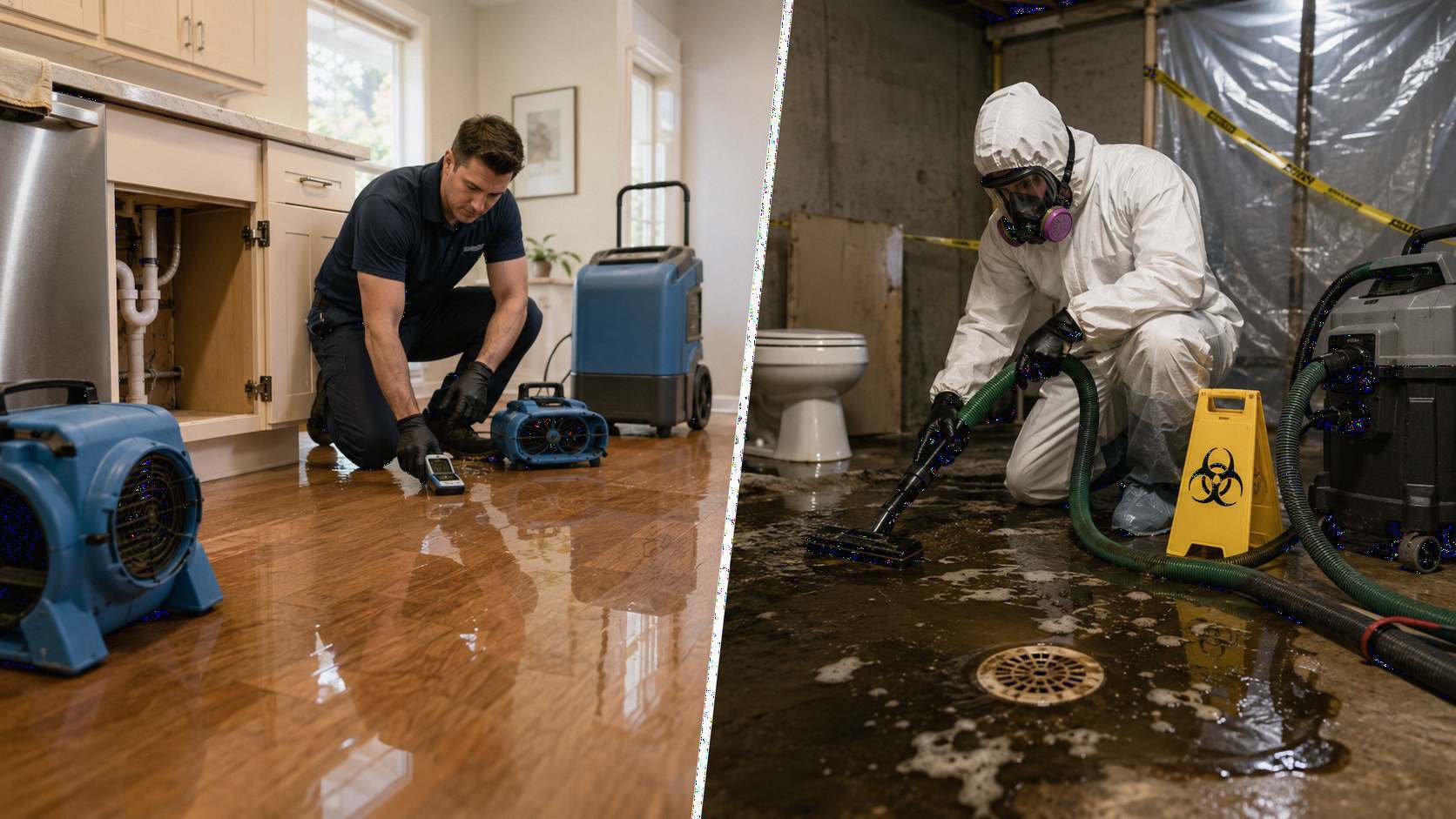
Quick Answer: Sewage Backup Cleanup Virginia Guide
Sewage backup cleanup Virginia is different from regular water damage cleanup because sewage water may be contaminated before it ever touches the floor. A clean water leak usually starts as a drying problem. A sewage backup starts as a safety and contamination problem, then becomes a water damage, drying, odor, and repair issue.
If sewage water damage affects a basement, bathroom, laundry room, utility room, crawl space, or finished living space, homeowners should avoid contact with the water, keep children and pets away, stop using affected plumbing fixtures, and document visible damage only when it is safe. CDC warns that floodwater may contain sewage and that contaminated water can cause illness, including diarrheal disease such as E. coli or Salmonella infection.
In restoration language, sewage backup is commonly treated as a black water contamination concern because the water may contain waste material, microorganisms, odor, and unsafe residue. That is why biohazard cleanup home procedures may include containment, removal of contaminated porous materials, cleaning, disinfection, drying, odor control, and documentation instead of simple extraction and fan drying.
For first-day water damage steps, see first 24 hours water damage checklist
Sewage backup cleanup Virginia requires different handling than a regular water leak because sewage water damage may involve bacteria, viruses, waste material, odor, and black water contamination. A regular clean water leak usually focuses on stopping the source, extracting water, drying materials, and checking moisture. A sewage backup may require safety controls, containment, removal of contaminated porous materials, cleaning, disinfection, drying, odor control, and documentation. Homeowners should avoid contact with sewage water, keep occupants away from affected areas, call a plumber to correct the sewer, drain, or septic problem, and call a restoration professional if contaminated water reaches flooring, drywall, insulation, baseboards, cabinets, carpet pad, or contents.
Why Sewage Backup Cleanup Is Not Regular Water Cleanup
A regular water leak may come from a supply line, refrigerator line, dishwasher hose, washing machine supply hose, water heater, or plumbing fitting. If the source is clean and cleanup starts quickly, the work usually focuses on water extraction, structural drying, moisture monitoring, and repair planning.
Sewage backup cleanup Virginia is different because the source is not clean. Sewage may come from a toilet backup, main sewer line blockage, basement floor drain backup, septic malfunction, sewer surcharge, or wastewater returning into the home. That water can carry waste material, microorganisms, contaminated residue, and odor into finished living spaces.
That changes the cleanup priorities:
- Keep people and pets out of affected areas
- Avoid direct contact with sewage water
- Stop using plumbing fixtures until the source is controlled
- Identify whether the issue is sewer, drain, septic, or fixture related
- Prevent contaminated water from spreading into clean rooms
- Remove porous materials that absorbed sewage when needed
- Clean and disinfect affected hard surfaces
- Dry remaining structural materials
- Control odor before repair work
- Document affected areas and materials for insurance review
EPA says that if water or mold damage was caused by sewage or other contaminated water, homeowners should call a professional experienced in cleaning and fixing buildings damaged by contaminated water.
For a broader water damage guide, see water damage restoration homeowner guide
Sewage Water Damage vs a Clean Water Leak
Sewage water damage is handled differently because the water may affect both the structure and the indoor environment. With a clean water leak, some wet materials may be dried depending on the water source, exposure time, material type, and moisture readings. With sewage exposure, porous materials that absorbed contaminated water often become a removal concern.
A regular clean water leak may affect:
- Flooring
- Drywall
- Baseboards
- Cabinets
- Ceiling materials
- Insulation
- Subflooring
- Personal contents
A sewage backup can affect the same materials, but with added concerns:
- Wastewater residue
- Odor absorption
- Bacteria exposure
- Cross-contamination
- Hidden moisture
- Contaminated carpet pad
- Contaminated drywall
- Contaminated insulation
- Affected personal contents
The important question is not only “How much water is on the floor?” The better question is: what type of water entered the home, where did it travel, and what materials did it touch?
For drying details, see structural drying after water damage
What Black Water Contamination Means
Black water contamination means the water may contain unsafe contaminants and should not be treated like ordinary clean water. Sewage backup water can be concerning because it may include human waste, microorganisms, chemicals, and other unsanitary residue.
CDC states that floodwater can contain sewage, household waste, medical waste, industrial waste, germs, contaminants, and physical debris. For a homeowner, the practical meaning is simple: do not walk through sewage water casually, do not use a household vacuum, and do not move contaminated items into clean rooms.
Many building materials are porous or semi-porous. They can absorb contaminated water and hold moisture behind finished surfaces.
Common materials of concern include:
- Carpet pad
- Carpet
- Drywall
- Insulation
- Particleboard
- MDF trim
- Laminate flooring backing
- Upholstered furniture
- Cardboard boxes
- Fabric contents
- Cabinet toe kicks
- Baseboard material
A sewage backup may look like “dirty water” at first, but appearance alone does not determine safety. If the water came from a sewer line, floor drain backup, septic issue, or toilet overflow from beyond the trap, cleanup should be handled carefully.
For water under flooring, see water damage under flooring
Biohazard Cleanup Home Concerns
A biohazard cleanup home situation means cleanup must control exposure, contamination, moisture, and odor. This does not mean every sewage backup has the same scope. The amount of work depends on the source, how far the water spread, how long it sat, what materials were affected, and whether contamination entered hidden spaces.
Possible cleanup steps include:
- Isolating the affected area
- Using appropriate protective equipment
- Extracting contaminated water
- Removing affected porous materials
- Bagging and disposing of unsalvageable materials
- Cleaning hard surfaces
- Applying appropriate disinfectant
- Controlling odor
- Drying remaining structural materials
- Monitoring moisture
- Documenting affected rooms and materials
A plumber usually addresses the sewer line, drain, septic, or blockage issue. A restoration company addresses contaminated water damage inside the home. Both may be needed because fixing the drain does not automatically clean, disinfect, deodorize, or dry affected building materials.
For emergency water damage guidance, see emergency water damage restoration guide
Common Causes of Sewage Backup in Virginia Homes
Sewage backups can happen for several reasons. Some involve the home’s plumbing system. Others may involve exterior sewer lines, septic systems, heavy rainfall, or municipal sewer conditions.
Common causes include:
- Main sewer line blockage
- Toilet overflow from beyond the trap
- Basement floor drain backup
- Tree root intrusion
- Grease buildup
- Collapsed sewer line
- Septic system malfunction
- Heavy rain overwhelming drainage systems
- Improper items flushed into drains
- Older drain lines
- Sewer surcharge events
For homes with septic systems, warning signs such as slow drains, gurgling fixtures, sewage odor, or wastewater surfacing outside should be taken seriously. EPA states that routine septic inspections can help prevent expensive repairs and avoid sewage backup in the home.
Toilet Backup
A toilet backup may be localized, but it can still become a contaminated water event depending on the source, volume, and what overflowed.
Floor Drain Backup
A basement floor drain backup can spread across concrete, flooring, storage areas, drywall edges, utility rooms, and finished basement materials.
Main Sewer Line Blockage
A main sewer line blockage can affect multiple fixtures and may continue backing up until the plumbing issue is corrected.
Simple Rule
Stop using affected plumbing fixtures until the source is identified and controlled.
Why Fast Response Matters After Sewage Water Damage
With sewage water damage, time matters for two reasons: contamination and moisture. The longer contaminated water sits, the more materials it can affect. Moisture can also move under flooring, behind baseboards, below cabinets, into carpet pad, and into wall cavities.
Fast response helps reduce:
- Moisture spread
- Odor absorption
- Material damage
- Cross-contamination
- Mold concern
- Secondary damage
- Insurance documentation problems
- Delayed repairs
EPA says moisture control is the key to mold control and recommends drying water-damaged areas and items within 24–48 hours to help prevent mold growth. This does not mean every sewage backup becomes mold at exactly 48 hours. It means wet materials should not be ignored, especially when contamination is also involved.
For wet drywall decisions, see wet drywall after water leak
What Homeowners Should Not Do After a Sewage Backup
A sewage backup should not be treated like a normal spill. Some actions can spread contamination or create safety concerns.
Avoid:
- Walking through affected areas without protection
- Letting children or pets near the backup
- Using a household vacuum on sewage water
- Moving contaminated items into clean rooms
- Running HVAC if contamination may affect the system
- Relying only on candles, sprays, or deodorizer
- Reinstalling flooring before moisture checks
- Painting over affected drywall
- Keeping contaminated carpet pad
- Assuming odor will disappear on its own
CDC advises avoiding contact with water that may contain sewage and other hazards. CDC also recommends washing clothes contaminated with flood or sewage water in hot water and detergent before reuse.
For DIY cleanup limits, see DIY vs professional water damage cleanup
What Materials May Need Removal
Not every material reacts the same way to sewage exposure. Hard, nonporous materials may sometimes be cleaned and disinfected. Porous materials that absorb sewage are more difficult because contamination and moisture can remain inside the material.
Materials that may need removal include:
- Carpet pad
- Carpet
- Wet insulation
- Contaminated drywall
- MDF baseboards
- Laminate flooring
- Particleboard cabinets
- Cardboard boxes
- Upholstered furniture
- Fabric items that cannot be properly cleaned
- Contaminated ceiling materials below the backup
Removal decisions should be based on contamination, material type, moisture level, exposure time, and whether the item can be cleaned safely. EPA specifically recommends professional help when water or mold damage was caused by sewage or other contaminated water.
For ceiling-related water damage, see ceiling water damage
Insurance and Documentation for Sewage Backup Cleanup
Sewage backup claims can be complicated. Coverage may depend on the policy, source of the backup, sewer backup endorsement, sump overflow terms, exclusions, flood-related language, maintenance issues, and carrier review. A contractor should not guarantee coverage.
Homeowners should document:
- Date and time of the backup
- Affected rooms
- Source area if visible
- Photos before cleanup when safe
- Wet materials
- Damaged contents
- Plumber findings
- Restoration moisture readings
- Cleanup and removal steps
- Communication with the insurance carrier
FloodSmart states that most homeowners, renters, and business insurance does not cover flood damage, and that flood insurance generally takes effect 30 days after purchase, with listed exceptions. This is why sewer backup, flood, drain, and sump-related coverage should be reviewed before a loss.
For claim documentation, see water damage insurance claim help
For water damage coverage questions, see does insurance cover water damage restoration
For mold-related coverage questions, see does insurance cover mold remediation Virginia
Mold Concern After Sewage Backup
Sewage backups can also create mold concern when materials stay wet. Basements, bathrooms, laundry rooms, crawl spaces, and utility rooms are vulnerable because they may have lower airflow, hidden wall cavities, wet insulation, carpet, and stored contents.
Mold concern increases when:
- Water sat for hours
- Drywall stayed wet
- Carpet pad absorbed water
- Insulation was affected
- Humidity stayed high
- Odor remained after cleanup
- Contaminated contents were moved into dry rooms
- The same area had previous water damage
CDC says a flooded home may be contaminated with mold or sewage after flooding, which can create health risks for the family. EPA explains that moisture control is the key to mold control, so source control, removal of contaminated materials when needed, cleaning, disinfection, and drying should happen before cosmetic repairs.
For mold after water damage, see mold after water damage Virginia
For prevention guidance, see how to prevent mold growth Northern Virginia
Local Water Damage and Mold Resources
Sewage backup cleanup in Virginia often connects with water mitigation, emergency water damage restoration, structural drying, wet drywall, flooring damage, insurance documentation, and mold prevention.
FAQ: Sewage Backup Cleanup Virginia
1. Why is sewage backup cleanup different from regular water damage cleanup?
Sewage backup cleanup Virginia is different because sewage water may contain biological contamination, waste material, bacteria, viruses, odor, and unsafe residue. A regular clean water leak may mainly require extraction, drying, moisture checks, and repair planning. A sewage backup may require containment, removal of contaminated porous materials, cleaning, disinfection, odor control, drying, and documentation.
The main difference is the type of water. With a clean water leak, the first concern is moisture. With sewage water damage, the first concern is contamination, followed by moisture damage. That is why sewage backup should not be handled like a simple plumbing leak or minor spill.
2. Is sewage backup considered black water contamination?
Sewage backup is commonly treated as black water contamination because the water may contain unsanitary biological material. Even if the water looks diluted, the source can make it unsafe.
That is why homeowners should avoid direct contact, keep children and pets away, stop using affected plumbing fixtures, and avoid moving contaminated items into clean rooms. Cleanup should focus on contamination control, safe removal decisions, cleaning, disinfection, drying, and odor control.
3. Can I clean a small sewage backup myself?
Small incidents on hard, nonporous surfaces may appear manageable, but sewage cleanup carries more risk than ordinary water cleanup. If sewage touches carpet, carpet pad, drywall, insulation, baseboards, cabinets, wood materials, or stored contents, professional cleanup may be safer.
Homeowners should also consider exposure time, odor, hidden moisture, and whether the water spread under flooring or behind walls. If there is uncertainty about the source or what materials were affected, treat the situation carefully and get professional guidance.
4. What materials may need removal after sewage water damage?
Materials that absorb sewage water may need removal. This can include carpet pad, carpet, drywall, insulation, MDF trim, laminate backing, cardboard boxes, upholstered furniture, and other porous contents. Hard nonporous surfaces may be cleaned and disinfected depending on the situation.
Removal decisions depend on what the water touched, how long it sat, whether the material is porous, whether it can be cleaned safely, and whether moisture remains hidden behind finished surfaces. Repairs should wait until contaminated materials and moisture have been addressed.
5. Does insurance cover sewage backup cleanup in Virginia?
Insurance coverage for sewage backup cleanup depends on the policy, cause of loss, endorsements, exclusions, maintenance history, sewer backup coverage, sump overflow terms, flood language, and carrier review. A contractor should not promise coverage.
Homeowners should document the backup with photos, plumber findings, affected materials, damaged contents, restoration notes, cleanup steps, and communication with the insurance carrier. If coverage may apply, clear documentation can help the review process.
Final Takeaway
Sewage backup cleanup Virginia is different from a regular water leak because the water may be contaminated. Sewage water damage can involve unsafe biological material, odor, porous material contamination, hidden moisture, and mold concern. A regular water leak may be mostly about drying. A sewage backup is about safety, contamination control, cleanup, disinfection, drying, documentation, and repair planning.
If sewage reaches drywall, flooring, carpet pad, insulation, baseboards, cabinets, or contents, do not treat it like a simple spill. Stop using affected plumbing, avoid direct contact, keep people and pets away, document the damage when safe, call a plumber for the source, and call a restoration professional for contaminated water damage cleanup.

