

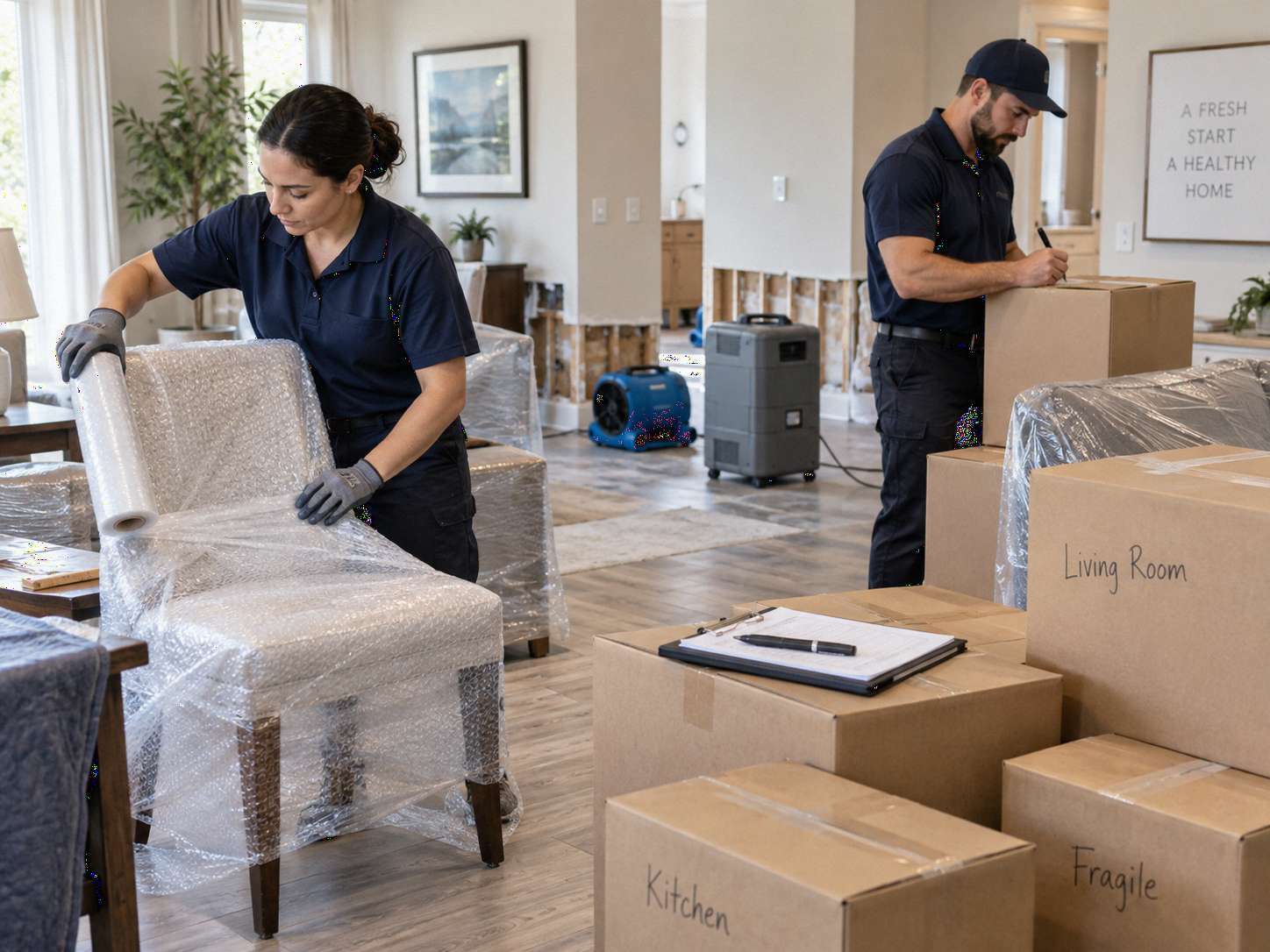
A water damage contents pack out is the process of documenting, protecting, packing, and temporarily moving belongings so restoration crews can safely access wet building materials.
Not every water loss requires a full pack-out.
Sometimes furniture only needs to be shifted away from a wet wall. In other cases, an entire room must be cleared because flooring needs to be removed, drywall must be opened, or reconstruction will continue after drying.
The main question is not simply:
“Did the belongings get wet?”
The better question is:
“Can restoration be completed properly with these belongings still in the room?”
A pack out after water damage may be necessary when:
- Furniture blocks wet walls
- Flooring must be removed
- Drywall demolition is extensive
- Multiple rooms are affected
- Belongings themselves became wet
- Contaminated water is involved
- Reconstruction will create dust or debris
- There is not enough safe space inside the property
The goal is to protect contents while giving the restoration team enough access to dry and repair the building.
Quick Answer: When Is a Water Damage Contents Pack Out Needed?
A water damage contents pack out is usually needed when belongings interfere with mitigation, drying, demolition, or reconstruction.
A full pack-out becomes more likely when:
- Large rooms need to be cleared
- Furniture covers wet flooring
- Contents are exposed to water
- Multiple rooms need work
- Off-site storage is necessary
- Reconstruction will take place after drying
For smaller losses, contents manipulation may be enough.
Contents manipulation means moving belongings within the property rather than removing them completely.
For the overall mitigation process see water mitigation process
What Is a Water Damage Contents Pack Out?
A water damage contents pack out is a structured process for moving contents out of the restoration area while keeping them organized and documented.
Contents may be relocated:
- To another dry room
- To another floor
- To a garage or secure interior area
- To temporary storage
- Off-site when necessary
A professional pack-out usually includes more than simply carrying belongings into another room.
Typical Pack-Out Steps
The process may include:
- Photographing rooms and belongings
- Identifying affected and unaffected contents
- Creating an inventory
- Packing smaller items
- Labeling boxes by room
- Protecting larger furniture
- Moving contents to a safe location
- Tracking items for eventual return
This organization becomes especially important on larger projects.
What Is Contents Manipulation?
Contents manipulation is the process of moving items within the property so technicians can access the affected area.
Examples include:
- Moving a sofa away from a wet wall
- Moving a dining table across the room
- Emptying a closet along a wet wall
- Moving storage boxes away from wet flooring
- Shifting furniture to create drying access
When Contents Manipulation May Be Enough
Contents manipulation may work when:
- The affected area is small
- Belongings are dry
- There is enough safe space inside the home
- Flooring does not need full removal
- Demolition is limited
When Pack-Out Makes More Sense
A pack out after water damage may be more efficient when belongings would otherwise need to be moved repeatedly during mitigation, drying, and reconstruction.
Why Belongings Must Sometimes Be Moved for Restoration
Restoration crews need access to wet materials.
Furniture and household contents can block:
- Drywall
- Baseboards
- Flooring
- Subfloors
- Closets
- Cabinets
- Drying equipment
They may also restrict airflow.
For more information see structural drying after water damage
Wet Flooring Often Requires a Clear Work Area
If moisture reached underneath flooring, furniture may need to be removed so technicians can:
- Lift flooring
- Check the subfloor
- Dry trapped moisture
- Replace damaged material
For related guidance see water damage under flooring
Wet Walls Need Access Too
Large furniture against a wall may prevent moisture inspection or drywall removal.
For more information see wet drywall after water leak
When Is a Full Pack Out After Water Damage More Likely?
A full or substantial water damage contents pack out is more likely under several conditions.
Multiple Rooms Are Affected
When water spreads across several rooms, there may not be enough unaffected space to keep everything inside the property.
Flooring Replacement Is Needed
Flooring replacement usually requires most or all furniture to be removed from the room.
Extensive Drywall Work Is Required
Demolition and drywall repair create:
- Dust
- Debris
- Limited working space
Moving belongings helps protect them.
Reconstruction Will Follow Mitigation
After drying, the property may still require:
- Drywall
- Flooring
- Trim
- Painting
- Cabinets
- Finish carpentry
In these situations, keeping contents out of the work area may be more practical.
For the rebuild phase see reconstruction after water damage
Contaminated Water Is Involved
Contents exposed to sewage or other contaminated water require more controlled handling.
For related guidance see sewage backup cleanup Virginia
How a Water Damage Contents Pack Out Works
A well-organized pack-out should follow a logical sequence.
Step 1: Identify the Affected Area
The restoration team determines where water traveled.
This helps establish:
- Which rooms need access
- Which belongings can remain
- Which contents became wet
- Which items may need to move
For more information see hidden water damage detection
Step 2: Separate Contents by Condition
Items may be grouped as:
- Dry and unaffected
- Potentially affected
- Wet
- Damaged
- Requiring additional evaluation
Wet contents should not simply be mixed with dry belongings.
Step 3: Photograph and Inventory Items
Documentation helps keep track of belongings during the project.
An inventory may include:
- Room
- Item description
- Quantity
- Visible condition
- Box number
- Photograph
Room-Based Labeling Works Best
Labels such as:
- Kitchen — Upper Cabinets
- Living Room — Bookshelf
- Bedroom — Closet
are much more useful than boxes marked only “miscellaneous.”
Step 4: Pack Smaller Items
Smaller contents are placed into labeled containers where appropriate.
The goal is to make both storage and eventual pack-back easier.
Step 5: Protect Large Furniture
Large furniture may be:
- Wrapped
- Covered
- Carefully moved
- Disassembled when appropriate
The approach depends on the item and whether it was affected by water.
Step 6: Move Contents to a Safe Area
The destination should not interfere with:
- Drying equipment
- Walkways
- Demolition
- Construction work
Step 7: Complete Restoration
Once the area is clear, technicians can access:
- Flooring
- Walls
- Insulation
- Cabinets
- Ceilings
- Framing
Step 8: Return Belongings
After restoration is complete, contents can be returned in an organized pack-back.
What Belongings Can Usually Stay in the Property?
A water damage contents pack out does not mean everything must leave.
Items may remain when they are:
- Dry
- Outside the affected area
- Not blocking restoration
- Protected from dust
- Stored in a secure unaffected room
Partial Pack-Outs Are Common
If only one room is affected, belongings from other rooms may stay in place.
The objective is to move what is necessary without creating unnecessary handling.
Furniture Water Damage: Can Furniture Stay or Be Saved?
Furniture water damage needs to be considered separately from damage to the building.
Even dry furniture may need to move if it blocks access.
Furniture that became wet should be evaluated based on:
- Water source
- Material
- Degree of saturation
- Physical condition
Upholstered Furniture
Upholstered pieces may absorb moisture into:
- Fabric
- Foam
- Padding
- Internal framing
Water source matters significantly.
Solid Wood Furniture
Possible effects include:
- Swelling
- Warping
- Finish discoloration
- Joint movement
Some solid wood furniture may be dried successfully.
Particleboard and MDF Furniture
Engineered wood may absorb water and swell.
Severe swelling or delamination can become permanent.
Metal and Glass Furniture
These materials typically absorb less water, although attached fabric, wood, hardware, or electronics may still be affected.
How to Protect Belongings After a Flood or Leak
When conditions are safe, early action may help protect unaffected contents.
Move Dry Items Away From the Wet Area
Relocate belongings before water reaches them.
Keep Wet Items Off Dry Flooring
A wet rug, box, or furniture leg can transfer moisture onto an unaffected floor.
Photograph Damage
Document damaged belongings before disposal or major cleaning when practical.
For related guidance see water damage insurance claim help
Keep Contaminated Contents Separate
Items exposed to contaminated water should not be mixed unnecessarily with unaffected belongings.
What Happens to Electronics?
Electronics require extra care after water exposure.
Examples include:
- Televisions
- Computers
- Printers
- Gaming systems
- Audio equipment
- Small appliances
Do not assume an electronic device is safe simply because the exterior appears dry.
If water reached the device, powering it on before appropriate evaluation may cause additional damage or create a safety issue.
Document affected electronics before moving them.
What About Clothing, Books, and Documents?
Different contents require different handling.
Clothing
Clothing affected by relatively clean water may sometimes be cleaned and dried.
Contaminated water exposure requires greater caution.
Books
Books can absorb moisture quickly.
Possible damage includes:
- Swelling
- Warping
- Staining
- Stuck pages
Important Documents
Important papers may sometimes be salvageable depending on their condition.
They should not automatically be discarded simply because they became wet.
Can Belongings Stay in the Room During Drying?
Sometimes.
Belongings may stay if they:
- Remain dry
- Do not block equipment
- Do not cover affected flooring
- Do not prevent wall access
Large amounts of furniture or boxes can reduce access and complicate drying.
A technician may recommend moving only part of the room rather than completing a full pack-out.
Water Damage Contents Pack Out and Insurance
A pack-out may become part of an insurance claim when the underlying water loss is covered.
Useful documentation can include:
- Photos
- Inventory records
- Box labels
- Storage records
- Damaged-item documentation
- Contractor invoices
For general insurance guidance see does insurance cover water damage restoration
Coverage Is Not Automatic
Whether pack-out, storage, cleaning, or pack-back is covered depends on:
- Policy language
- Cause of loss
- Applicable limits
- Claim circumstances
Documentation helps support the claim but does not guarantee coverage.
Pack Out vs Contents Cleaning
A pack-out and contents cleaning are different services.
Pack Out
Pack-out focuses on:
- Moving
- Protecting
- Organizing
- Storing
Contents Cleaning
Contents cleaning focuses on treating items that were actually affected by the loss.
Some belongings may need both.
Others may only need to be moved.
When Can Belongings Be Moved Back?
Contents should generally return after the restoration area is ready for normal use.
That may require completion of:
- Structural drying
- Demolition
- Drywall work
- Flooring
- Painting
- Construction cleanup
Returning furniture too early can interfere with the final stages of restoration.
What Is Pack-Back After Water Damage?
Pack-back is the process of returning belongings after mitigation and reconstruction are complete.
A typical pack-back may include:
- Confirming the room is finished
- Returning boxes by room
- Unpacking belongings
- Reassembling furniture where needed
- Returning items to designated areas
- Reviewing the inventory
Good Pack-Out Documentation Makes Pack-Back Easier
A well-labeled inventory helps prevent confusion.
Without proper documentation, the return process can become difficult on larger projects.
Common Water Damage Contents Pack-Out Mistakes
Moving Items Without Documentation
Belongings become difficult to track.
Mixing Wet and Dry Contents
Moisture may transfer to unaffected items.
Packing Wet Items Into Closed Boxes
Moisture can become trapped.
Leaving Furniture Over Wet Flooring
This may prevent proper drying.
Storing Belongings in the Active Work Area
Items may repeatedly interfere with restoration.
Returning Contents Too Early
Construction dust, paint, or flooring work may damage them.
Discarding Damaged Items Before Documentation
This may create gaps in insurance records.
DIY Pack Out vs Professional Contents Handling
A homeowner may be able to move belongings without professional help when:
- The affected area is small
- Contents are dry
- Furniture is light
- Clean storage space is available
- Water is not contaminated
Professional assistance becomes more useful when:
- Multiple rooms are affected
- Furniture is heavy
- Large inventories are involved
- Contents became wet
- Contaminated water is involved
- Off-site storage is required
- Reconstruction is extensive
For a broader comparison see DIY vs professional water damage cleanup
Where Pack-Out Fits Into Water Damage Restoration
Contents handling is one part of the larger restoration process.
A typical project may follow this sequence:
Emergency response → moisture inspection → contents manipulation or pack out → demolition → structural drying → reconstruction → pack-back
For a broader overview see water damage restoration homeowner guide
Planning contents handling early helps prevent repeated moving as the project progresses.
Final Takeaway
A water damage contents pack out is needed when belongings interfere with restoration work, are at risk of additional damage, or must be removed so wet building materials can be accessed.
A full pack-out is not always necessary.
For smaller losses, contents manipulation may provide enough access.
For larger projects, a structured pack out after water damage can help:
- Protect belongings
- Create working space
- Improve access to wet materials
- Separate wet and dry contents
- Maintain an organized inventory
- Simplify pack-back after reconstruction
The key is to move what needs to move without unnecessarily handling contents that can safely remain in place.
FAQ About Water Damage Contents Pack Out
1. When is a water damage contents pack out necessary?
A water damage contents pack out is typically considered when belongings prevent access to wet building materials or may be damaged if they remain in the restoration zone.
Common examples include:
- Flooring removal
- Drywall demolition
- Furniture blocking wet walls
- Multiple affected rooms
- Wet contents
- Contaminated water
- Extended reconstruction work
A full pack-out is not required for every leak.
For smaller losses, moving selected furniture within the home may be enough.
2. What is the difference between contents manipulation and a pack out after water damage?
Contents manipulation means moving belongings within the same property.
For example, furniture may be moved from one side of the room to the other so technicians can access a wet wall.
A pack-out is more extensive.
Belongings are documented, packed, labeled, and removed from the work area for a longer period.
Pack-out becomes more practical when restoration involves extensive demolition, flooring replacement, multiple rooms, or reconstruction.
3. Can furniture with water damage be saved?
Sometimes.
Whether furniture can be restored depends on:
- Water source
- Material
- Amount of saturation
- Construction
- Physical condition
Solid wood furniture may behave differently from particleboard or MDF.
Upholstered furniture can retain moisture inside padding and internal components.
Furniture exposed to contaminated water also requires a different evaluation than furniture exposed to clean plumbing water.
4. Does homeowners insurance cover a water damage contents pack out?
It may, depending on the policy and cause of loss.
Some covered water claims may include costs related to:
- Moving contents
- Packing
- Storage
- Cleaning
- Pack-back
Coverage varies.
Keep photographs, inventory records, contractor documentation, invoices, and storage information.
The appropriate insurance carrier should confirm coverage for the specific claim.
5. When can belongings be moved back after water damage restoration?
Belongings should generally be returned after the affected area is ready for normal use.
That may mean waiting until:
- Structural drying is complete
- Demolition is finished
- Drywall repair is complete
- Flooring is installed
- Painting is finished
- Construction debris is removed
Returning belongings too early can interfere with the final stages of restoration.
The return process is commonly called pack-back.
A properly documented water damage contents pack out makes pack-back much easier because belongings can be returned according to room and inventory labels.

