

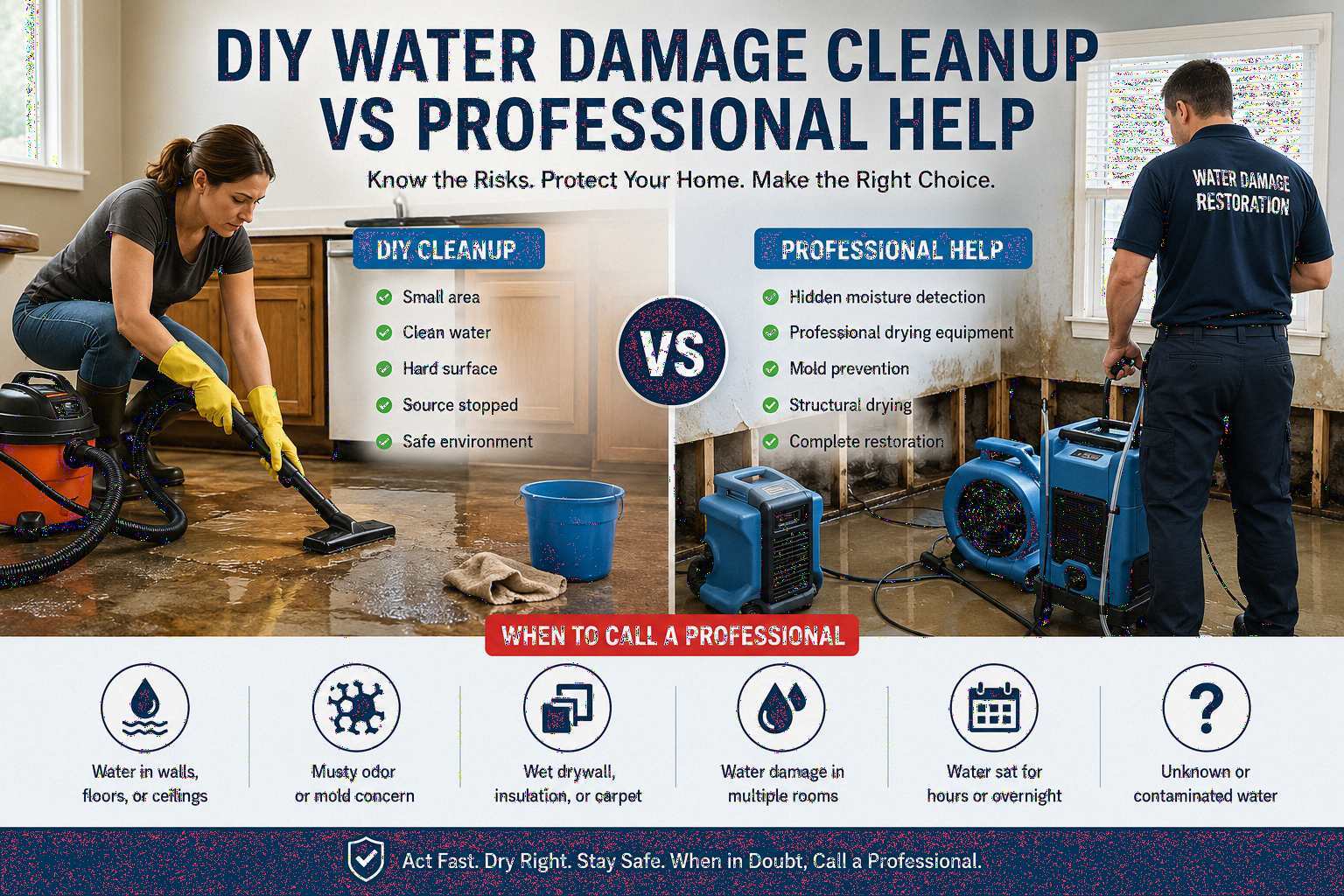
Quick Answer: DIY Water Damage Cleanup vs Professional Help
The safest way to compare DIY water damage cleanup vs professional help is to ask whether the water damage is small, clean, visible, safe, and fully controllable. If the water came from a clean source, the leak stopped quickly, the affected area is small, electricity is not involved, and water stayed on a hard surface, DIY cleanup may be reasonable.
Professional help is usually the better choice when water reaches drywall, carpet pad, insulation, cabinets, subflooring, baseboards, ceilings, flooring layers, or multiple rooms. Those materials can hold moisture after the surface looks dry.
EPA guidance says water-damaged areas and items should be dried within 24–48 hours when possible to help prevent mold growth. The ANSI/IICRC S500 standard describes procedures and precautions for professional water damage restoration in residential, commercial, and institutional buildings and their contents.
For first-day action steps, see first 24 hours water damage checklist
DIY water damage cleanup vs professional help depends on safety, water source, affected materials, hidden moisture, and drying confidence. DIY cleanup may be safe for a small clean-water spill on a hard surface when the source is stopped and no building materials are wet. A homeowner may rent wet vacuum equipment for limited standing-water removal, but DIY drying risks increase when water reaches drywall, flooring layers, carpet pad, cabinets, insulation, ceilings, wall cavities, or multiple rooms. Call a professional when water is contaminated or unknown, moisture may be trapped, materials are wet, musty odor appears, or you cannot confirm that the structure is dry.
Why the DIY vs Professional Decision Matters
Water damage often looks easier than it is. A visible puddle can be removed with towels, a mop, a wet vacuum, or fans. But visible water is only the first layer of the problem.
Water can move under flooring, behind baseboards, inside drywall, below cabinets, into insulation, and into ceilings below the leak. Once moisture enters layered or absorbent materials, the job becomes less about cleanup and more about controlled drying.
Common water damage sources include:
- Dishwasher leak
- Washing machine leak
- Refrigerator supply line leak
- Sink overflow
- Toilet overflow
- Burst pipe
- Water heater leak
- Ceiling leak
- Roof leak
- Basement water intrusion
A small clean-water spill on tile is not the same as water inside drywall, carpet pad, cabinets, or subflooring. That is why DIY water damage cleanup vs professional help should be decided by risk, not by how dry the surface looks.
For a broader homeowner guide, see water damage restoration homeowner guide
When DIY Water Damage Cleanup May Be Safe
DIY cleanup may be reasonable when the damage is limited, clean, visible, and stopped. You should know where the water came from, where it went, and whether any building materials absorbed moisture.
DIY may be safe when:
- The water came from a clean source
- The source has stopped
- The affected area is small
- Water stayed on a hard surface
- No electrical hazard is present
- Drywall is not wet
- Cabinets are not wet
- Carpet pad is not wet
- Flooring layers are not affected
- No ceiling below is stained
Examples may include a small sink overflow caught immediately, a minor clean-water spill on tile, or an appliance drip that did not reach walls, cabinets, baseboards, flooring seams, or rooms below.
Even when DIY seems safe, document the area first. Take photos, remove visible water, move belongings away from wet surfaces, and keep checking for swelling, staining, odor, soft drywall, damp trim, or flooring changes.
For appliance-specific water damage, see appliance leak water damage
When to Rent Wet Vacuum Equipment
Some homeowners decide to rent wet vacuum equipment after water damage. A wet vacuum can help remove standing clean water faster than towels or a mop, but it should not be treated as a complete restoration plan.
A wet vacuum may help when:
- The water is clean
- The area is safe
- Electricity is not a concern
- The source has stopped
- The affected area is limited
- The surface is accessible
- Water did not enter wall cavities
- Water did not reach flooring layers
- You can continue drying afterward
The limitation is simple: a wet vacuum removes visible water. It does not tell you whether drywall, subflooring, carpet pad, insulation, cabinet bases, or wall cavities are dry. It can make the room look better while hidden moisture remains.
For water removal and mitigation steps, see water mitigation process
DIY Drying Risks Homeowners Should Not Ignore
The biggest DIY drying risks come from assuming that a dry-looking surface means the structure is dry. After water reaches absorbent materials, that assumption can be wrong.
Common DIY drying risks include:
- Using fans without dehumidification
- Drying the surface but not the structure
- Leaving wet carpet pad under carpet
- Missing water under laminate or vinyl plank
- Ignoring damp baseboards
- Missing moisture inside drywall
- Not checking cabinet bases or toe-kicks
- Not checking ceilings below the leak
- Painting before materials are dry
- Reinstalling trim too early
Fans can move air, but air movement alone does not confirm moisture levels. Professional water damage restoration follows defined procedures and precautions for affected buildings, building systems, and personal property under the ANSI/IICRC S500 standard.
For structural drying details, see structural drying after water damage
When to Call a Professional
Knowing when to call a professional is the most important part of this decision. You do not need professional restoration for every small clean-water spill, but you should call when water may be inside materials that cannot be judged by appearance.
Call a professional when:
- Drywall is wet, soft, stained, or swollen
- Carpet pad is wet
- Flooring is cupping, bubbling, or swelling
- Water reached insulation
- Cabinets absorbed moisture
- A ceiling below the leak is stained
- Multiple rooms are affected
- Water sat for hours or overnight
- The leak was hidden
- Musty odor appears
- The source is contaminated or unknown
- You cannot tell where moisture traveled
A plumber fixes the leak source. A restoration company handles the water damage inside the structure, including moisture inspection, extraction, drying equipment, monitoring, material removal when needed, documentation, and repair planning.
For emergency service guidance, see emergency water damage restoration guide
The DIY Safety Test
Before choosing DIY cleanup, ask these questions:
- Is the water clean?
- Has the source stopped?
- Is the area safe from electricity?
- Did water stay on a hard surface?
- Did water avoid drywall and baseboards?
- Did water avoid cabinets and flooring layers?
- Can you dry the area without guessing?
If any answer is “no” or “not sure,” professional inspection is usually safer. Water damage becomes harder when hidden moisture is missed and repairs start too early.
Clean Water vs Unknown Water
Clean water from a known supply line is different from sewage, floodwater, toilet overflow, or water from an unknown source.
Surface Water vs Absorbed Water
Water on tile is different from water inside drywall, carpet pad, cabinets, insulation, or subflooring.
Cleanup vs Drying
Removing visible water is not the same as drying the structure.
Simple Rule
DIY is reasonable only when the water is clean, small, visible, safe, and fully controllable.
What Professionals Check That DIY Cleanup Often Misses
Professional water damage cleanup is not only about larger equipment. It is also about knowing where water commonly travels and how to verify drying.
A professional may check:
- Drywall moisture
- Wall cavity moisture
- Baseboards and trim
- Flooring moisture
- Subfloor concerns
- Carpet pad saturation
- Cabinet bases and toe-kicks
- Ceiling damage below the leak
- Indoor humidity
- Material condition
- Whether selective removal is needed
EPA explains that hidden mold may be suspected when a building smells moldy but the source is not visible, or when there has been water damage. EPA also emphasizes that moisture control is the key to mold control.
For flooring concerns, see water damage under flooring
For wet drywall decisions, see wet drywall after water leak
DIY Cleanup Mistakes That Can Make Damage Worse
The most common DIY mistake is starting repairs before drying is verified. Cleanup should come first. Drying should follow. Repairs should wait until affected materials are dry, removed, or confirmed ready.
Avoid these mistakes:
- Painting wet drywall
- Covering ceiling stains too soon
- Reinstalling baseboards before drying
- Replacing flooring over damp underlayment
- Ignoring rooms below the leak
- Running fans without humidity control
- Throwing away damaged items before documenting
- Not checking cabinets and toe-kicks
- Waiting too long to inspect hidden areas
- Assuming no odor means no moisture
For ceiling-related water damage, see ceiling water damage
Mold Concern After DIY Water Cleanup
Mold concern is one reason DIY cleanup should not rely on guessing. EPA says water-damaged areas and items should be dried within 24–48 hours when possible to help prevent mold growth.
This does not mean every leak becomes a mold problem at exactly 48 hours. It means moisture and time matter. If drywall, flooring, carpet pad, cabinets, insulation, or wall cavities remain wet, concern may increase.
Mold concern may be higher when:
- The leak was hidden
- Drying started late
- Water reached drywall
- Insulation stayed wet
- Flooring trapped water
- Cabinets stayed damp
- Indoor humidity remained high
- A musty odor appeared
- Previous water damage existed
For mold after leaks, see mold after water damage Virginia
For mold prevention, see how to prevent mold growth Northern Virginia
For hidden mold signs, see signs of hidden mold in your home
Should You Buy Fans, Rent Equipment, or Call?
Before you rent wet vacuum equipment, buy fans, or start removing materials, decide whether the project is truly DIY-safe.
DIY may make sense if:
- The source is stopped
- The water is clean
- The affected area is small
- The surface is hard and accessible
- Drywall is not wet
- Cabinets are not wet
- Flooring layers are not affected
- No ceiling below is stained
- The area is drying quickly
Professional help is usually better if:
- Water entered walls or flooring
- The area stayed wet overnight
- Carpet pad is saturated
- Cabinets or insulation are wet
- The source is unknown
- The water may be contaminated
- You smell mustiness
- You need documentation
- You are unsure whether the area is dry
For insurance-related questions, see does insurance cover water damage restoration
Local Water Damage and Mold Resources
The decision between DIY water damage cleanup vs professional help often connects with water mitigation, structural drying, wet drywall, flooring damage, mold prevention, insurance documentation, and repair planning.
FAQ: DIY Water Damage Cleanup vs Professional
1. Is DIY water damage cleanup safe?
DIY water damage cleanup may be safe when the water is clean, the leak is stopped, electricity is not involved, and the affected area is small. It is most reasonable when water stayed on a hard surface and did not reach drywall, baseboards, flooring layers, carpet pad, insulation, cabinets, or ceilings.
DIY becomes risky when you cannot confirm where the water traveled. Hidden moisture can remain under flooring, behind baseboards, inside drywall, below cabinets, and in rooms below the leak even after visible water is removed.
2. Should I rent wet vacuum equipment after water damage?
You may rent wet vacuum equipment for small clean-water situations on safe, accessible surfaces. It can help remove standing water faster than towels or a mop.
A wet vacuum is not a complete drying plan. It does not confirm that drywall, subflooring, carpet pad, insulation, cabinet bases, or wall cavities are dry. If water reached those areas, professional moisture inspection is usually a better option.
3. What are the biggest DIY drying risks?
The biggest DIY drying risks are hidden moisture, incomplete drying, high humidity, and early repairs. Many homeowners dry the visible surface but miss water under flooring, behind trim, inside drywall, below cabinets, or in rooms beneath the leak.
Using fans alone can also create a false sense of progress. Air movement may help the surface dry, but it does not measure moisture or control humidity. If materials remain damp, paint, trim, or new flooring can cover the problem.
4. When should I call a professional for water damage?
You should know when to call a professional: call when water reaches drywall, flooring, insulation, cabinets, ceilings, baseboards, carpet pad, or multiple rooms. You should also call when the source is unknown, the water may be contaminated, the leak was hidden, the area stayed wet overnight, or musty odor appears.
A professional can inspect moisture, remove standing water, set drying equipment, monitor progress, remove wet materials when needed, and plan repairs after drying. This is especially useful when insurance documentation may be needed.
5. Can I start repairs after DIY cleanup?
Do not start repairs until affected materials are dry, removed, or confirmed ready for rebuild. Painting drywall, reinstalling baseboards, or installing flooring over damp materials can trap hidden moisture.
Before repairs, check whether water reached wall cavities, flooring layers, insulation, cabinets, or ceilings below the leak. If you cannot confirm dryness, professional inspection is safer than starting repairs too early.
Final Takeaway
The choice between DIY water damage cleanup vs professional help depends on risk. DIY may be reasonable for a small, clean, controlled water spill on a hard surface. Professional help is usually better when water reaches building materials, hidden spaces, flooring systems, cabinets, ceilings, insulation, carpet pad, or multiple rooms.
If you plan to rent wet vacuum equipment, remember that water removal is only one part of the job. The bigger issue is drying. The most important DIY drying risks are hidden moisture and early repairs. When the damage is not clearly small, clean, visible, safe, and controllable, that is when to call a professional.

