

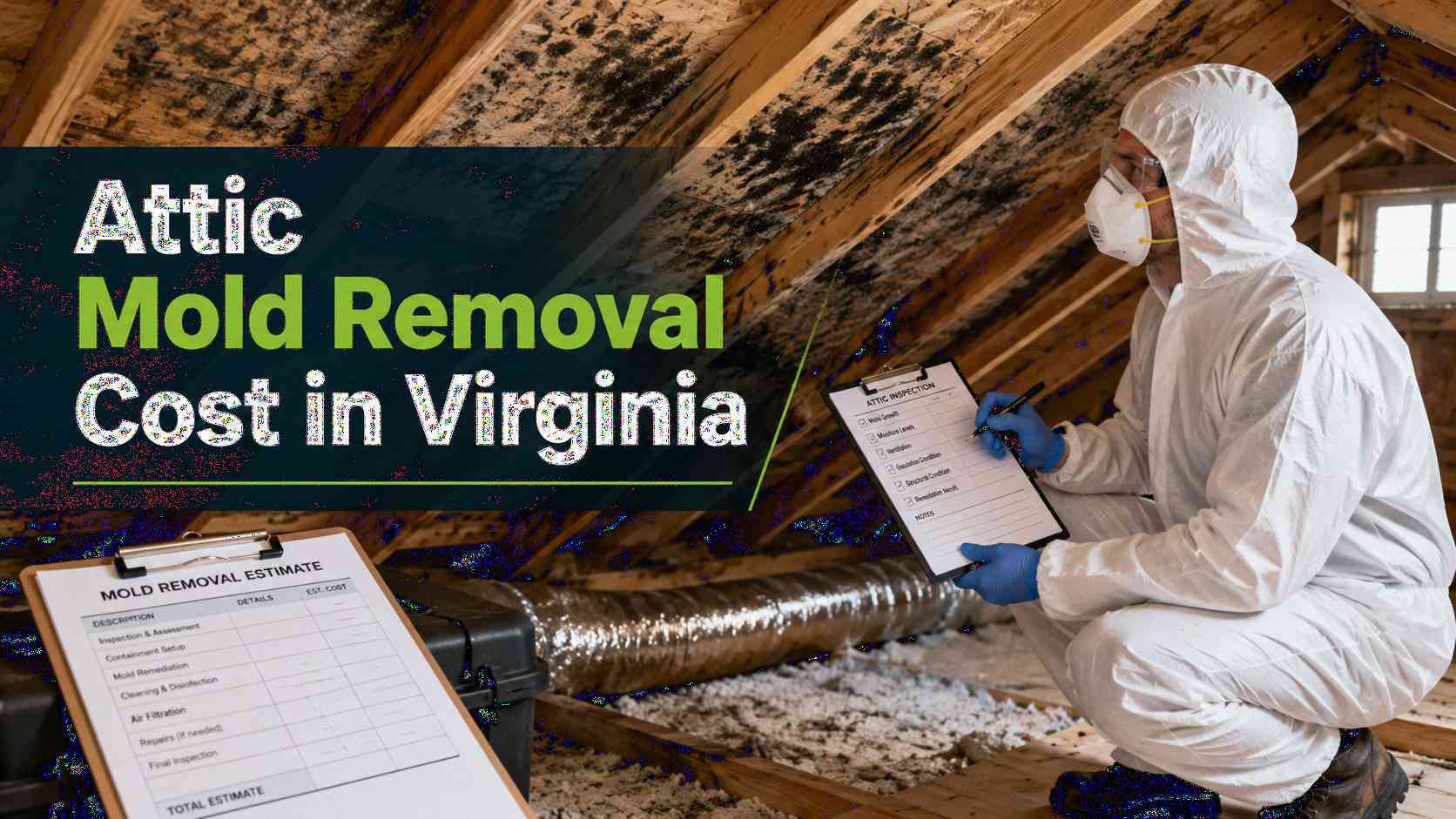
Quick Answer: Attic Mold Removal Cost Virginia Homeowners Should Expect
Attic mold removal cost Virginia homeowners can expect usually starts around $750–$2,000+ for a small localized cleanup, $2,000–$5,500+ for moderate mold on sheathing, and $5,500–$10,000+ for larger attic mold remediation projects. The final price can increase when mold is widespread, attic access is tight, insulation is wet or contaminated, roof leak damage is present, or clearance testing is requested.
The most accurate attic mold remediation cost comes from an attic inspection and a written scope. Photos can help with early planning, but they usually cannot show the full condition of roof sheathing, rafters, trusses, insulation, ventilation, and hidden moisture paths.
The key pricing point is simple: attic mold cleanup price is not only about cleaning visible staining. It is about identifying the moisture source, cleaning affected materials correctly, preventing cross-contamination, and reducing the chance that mold returns.
For a broader statewide cost breakdown, see mold remediation cost Virginia guide
Why Attic Mold Pricing Varies So Much
Attics are difficult work areas. A contractor may need to work in low clearance, around exposed roofing nails, loose insulation, electrical wiring, roof framing, vents, bath fan ducts, and limited lighting. That makes attic mold removal more labor-intensive than basic surface mold cleanup in an open room.
Two attics can look similar in photos but have very different costs. One may have a small condensation stain near a bathroom fan duct. Another may have mold on roof sheathing, wet blown-in insulation, a roof leak, and ceiling damage below the attic. The visible mold is only one part of the estimate.
A complete attic mold estimate may include:
- Inspection of sheathing, rafters, trusses, vents, ducts, and insulation
- Moisture source identification
- Work-area protection or containment
- HEPA filtration when needed
- Cleaning of affected wood surfaces
- Removal of wet or contaminated insulation when necessary
- Antimicrobial treatment where appropriate
- Bagging and disposal of debris
- Photo documentation
- Optional clearance testing
For the full remediation workflow, read mold remediation step by step process
Average Attic Mold Removal Cost Virginia Price Ranges
Most attic mold removal cost Virginia estimates fall into small, moderate, or large project categories. Roof leak mold cost can fall into any category depending on how long the leak was active and what materials were affected.
Insert Table 1 here.
These price ranges are planning estimates, not guaranteed prices. A small attic mold cleanup price may only include surface cleaning in one accessible area. A larger estimate may include containment, HEPA filtration, insulation handling, wood surface cleaning, disposal, documentation, and optional testing.
If mold appeared after water intrusion, see mold after water damage Virginia
Main Factors That Affect Attic Mold Remediation Cost
Size of the Affected Area
The size of the affected area is one of the biggest cost drivers. A small area near a roof vent, hatch, or bathroom fan duct is usually less expensive than widespread attic mold across multiple roof planes.
A strong estimate should define the affected area clearly. It should explain whether the scope includes one section of sheathing, several rafters, the full roof deck, insulation, or nearby ceiling materials. A vague line item that only says “attic mold removal” is not detailed enough for a fair comparison.
Mold on Sheathing Cost
Mold on sheathing cost is one of the most common attic mold pricing questions. Roof sheathing is the wood surface under the roofing system. Mold can grow on sheathing when warm humid air reaches cold wood, when ventilation is poor, when bathroom fans discharge into the attic, or when a roof leak wets the decking.
If the sheathing is structurally sound, remediation may focus on cleaning the surface and correcting the moisture source. If the sheathing is soft, rotted, delaminated, or damaged by long-term moisture, repair or replacement may be needed. That repair work should be separated from mold remediation in the estimate.
For the dedicated service page, visit attic mold removal
Roof Leak Mold Cost
Roof leak mold cost can be higher because a leak may affect several materials at once. Water can move through shingles, flashing, pipe boots, roof vents, sheathing, rafters, insulation, ceiling drywall, and wall cavities below.
A roof leak mold estimate should clarify:
- Whether the roof leak is active or already repaired
- Whether sheathing is stained, contaminated, or physically damaged
- Whether insulation is wet or contaminated
- Whether ceiling drywall below the attic is affected
- Whether drying is needed
- Whether roof repair is included or excluded
If staining or mold is visible on a ceiling below the attic, read mold on ceiling causes remediation
If hidden wall damage may be present, see mold behind drywall signs removal
Insulation Condition
Insulation can significantly change attic mold cleanup price. Dry and unaffected insulation may be protected during remediation. Wet, contaminated, compressed, or debris-covered insulation may need removal.
Blown-in insulation often adds labor because it may need to be vacuumed, bagged, and disposed of. Batt insulation may be easier to remove in some attics, but replacement still needs to be listed clearly. Homeowners should always ask whether insulation removal and replacement are included or excluded.
Attic Access and Layout
Attic access affects labor. A high, open, walkable attic is easier to work in than a low-slope attic with a small hatch, no decking, and deep blown-in insulation. Tight access increases setup time, safety precautions, and labor hours.
This is why attic mold removal cost Virginia pricing should not be based only on square footage. Access, roof pitch, framing, insulation depth, and distance from the attic entry can all change the final estimate.
Containment and HEPA Filtration
Containment and HEPA filtration may be needed when the affected area is larger, when debris may be disturbed, or when the living space needs extra protection. These controls can increase the estimate, but they also make the scope more complete.
A very low attic mold cleanup price may exclude containment, air filtration, detailed cleaning, or documentation. That does not automatically mean the price is wrong, but it does mean the homeowner should understand what is included.
Clearance Testing
Clearance testing is not always required, but it may be useful after larger projects, real estate inspection issues, insurance-related work, or when documentation is important. Clearance testing is often performed by an independent third party and should be listed separately.
For more detail, see mold remediation clearance testing
What Should Be Included in an Attic Mold Estimate?
A professional attic mold estimate should be written, specific, and easy to compare. A one-line price is not enough for attic mold remediation because it does not tell the homeowner what is included.
A clear estimate should include:
- Affected attic areas
- Materials included in the scope
- Cleaning method
- Containment details
- HEPA filtration if included
- Insulation removal if included
- Disposal details
- Antimicrobial treatment if included
- Photo documentation
- Optional clearance testing
- Exclusions for roof repair, drywall, paint, HVAC, electrical, framing, and insulation replacement
For a local estimate example, see mold remediation estimate Fairfax VA 2026
Low Estimate vs Complete Estimate
The lowest attic mold remediation cost is not always the best value. A cheaper estimate may exclude containment, insulation handling, disposal, access protection, documentation, or moisture-source recommendations. A more complete estimate may cost more but can reduce confusion, missed work, and repeat mold growth.
Always compare attic mold estimates by scope, not only by total price.
Questions to Ask Before Hiring
Before approving an attic mold remediation estimate, ask:
- What caused the attic mold?
- Is the mold on sheathing, rafters, insulation, drywall, or multiple materials?
- Is the moisture source already fixed?
- Is containment included?
- Is HEPA filtration included?
- Is insulation removal included?
- Is roof repair excluded?
- Is clearance testing recommended?
- What documentation will be provided?
For contractor selection guidance, read how to hire mold remediation company Northern Virginia
Virginia Contractor Compliance Note
Virginia homeowners should ask whether the company performing residential mold remediation has proper certification and follows applicable standards. A written scope, clear exclusions, and documented process are important before approving any attic mold project.
Mold on Sheathing Cost vs Insulation Cost
Mold on sheathing cost and insulation-related cost should be treated separately. Sheathing is a wood surface that may be cleaned if it is sound. Insulation is porous and may need removal if it is wet, contaminated, or heavily impacted.
Insert Table 2 here.
This distinction matters because homeowners often assume one attic mold cleanup price includes everything in the attic. That is not always true. A contractor may price wood cleaning separately from insulation removal, insulation replacement, roof repair, drywall repair, or painting.
Does Insurance Cover Attic Mold Removal Cost in Virginia?
Insurance may cover attic mold remediation cost only in certain situations. Coverage depends on the policy, cause of moisture, timing, documentation, exclusions, and mold limits. A sudden covered roof leak may be reviewed differently from long-term condensation, poor ventilation, humidity, or deferred maintenance.
Before assuming coverage, homeowners should document the damage, stop the moisture source, take photos, save repair invoices, and speak with the insurance carrier. If an estimate is needed for a claim, it should separate remediation, roof repair, insulation replacement, drywall repair, and reconstruction.
For a detailed insurance guide, see does insurance cover mold remediation Virginia
DIY Attic Mold Cleanup vs Professional Remediation
DIY attic mold cleanup may seem like a way to reduce cost, but attics are difficult work areas. Disturbing insulation or scraping wood without proper controls can spread dust and debris. DIY cleaning also may not identify the real moisture source.
Professional remediation is usually recommended when:
- Mold covers a large area
- Mold is on roof sheathing
- Insulation is wet or contaminated
- A roof leak caused the issue
- The home is being sold
- Mold keeps returning
- The attic has difficult access
- Documentation is needed
- Occupants have health sensitivity concerns
For health-related context, read is black mold dangerous health risks
How to Prevent Attic Mold From Returning
The best way to reduce future attic mold removal cost Virginia homeowners may face is to control moisture. Mold cleanup without moisture correction is incomplete.
Common prevention steps include:
- Repair roof leaks quickly
- Vent bathroom fans outdoors
- Keep soffit vents open
- Improve attic ventilation where needed
- Seal air leaks from the living space
- Watch for winter condensation
- Avoid storing damp items in the attic
- Inspect the attic after major storms or roof work
For prevention guidance, read how to prevent mold growth Northern Virginia
If you suspect mold in other parts of the home, see signs of hidden mold in your home
Local Attic Mold Removal Cost Virginia Service Areas
Northern Virginia homes often have attic conditions that affect pricing: older construction, townhouse rooflines, additions, heavy insulation, limited attic access, and seasonal humidity. These factors can change attic mold remediation cost even when visible mold looks similar.
For regional service information, visit mold remediation Northern Virginia complete local guide 2026
For the main service page, visit mold remediation
For local service pages, see mold remediation Alexandria VA
Related Mold Problems to Check
Attic mold can be connected to broader moisture patterns in the home. Roof leaks, humidity, HVAC condensation, and water intrusion may also affect ceilings, walls, basements, closets, and vents.
For lower-level moisture problems, see basement mold remediation Northern Virginia
For city-specific guidance, read mold remediation Alexandria VA guide
For Arlington homeowners, see mold remediation Arlington VA guide
For HVAC-related concerns, read mold HVAC closet vents Virginia
For the dedicated cost page, see attic mold removal cost Virginia guide
FAQ: Attic Mold Removal Cost Virginia
1. What is the average attic mold removal cost in Virginia?
The average attic mold removal cost Virginia homeowners should expect depends on the size of the affected area, attic access, moisture source, sheathing condition, and insulation condition. A small localized cleanup may cost around $750–$2,000+. Moderate mold on sheathing cost may be around $2,000–$5,500+. Larger attic mold remediation cost can exceed $5,500–$10,000+ when mold is widespread, insulation is affected, containment is needed, or clearance testing is requested.
These are planning ranges, not guaranteed prices. The final attic mold cleanup price should come from an inspection and a written scope. The estimate should separate mold remediation from roof repair, insulation replacement, drywall repair, painting, and reconstruction so the homeowner can compare bids correctly.
2. Why does mold on sheathing cost more than regular mold cleanup?
Mold on sheathing cost can be higher because roof sheathing is located in a difficult work area and may be part of a larger moisture issue. A contractor may need to clean wood surfaces while working around rafters, trusses, insulation, exposed nails, wiring, and limited headroom. That takes more labor and more safety planning than cleaning an open wall surface.
If the sheathing is only surface-impacted and still structurally sound, remediation may focus on cleaning and moisture correction. If the sheathing is soft, rotted, delaminated, or damaged by a long-term roof leak, repair or replacement may be needed. That is why mold on sheathing cost should be based on both contamination and wood condition.
3. What increases roof leak mold cost?
Roof leak mold cost increases when water affects multiple materials. A leak can wet roof sheathing, rafters, insulation, ceiling drywall, and wall cavities below the attic. The price can also increase if the leak is still active, drying is required, contaminated insulation must be removed, or repairs are needed.
Mold remediation usually does not include roof repair unless the estimate clearly says so. Homeowners should make sure the roof leak is corrected before remediation is completed. Otherwise, the attic can become wet again and mold may return. A strong estimate should separate mold cleanup, roof repair, insulation replacement, drywall repair, and any reconstruction.
4. Is attic mold covered by homeowners insurance in Virginia?
Attic mold may be covered by homeowners insurance only in certain situations. Coverage depends on the policy, cause of moisture, timing, exclusions, and mold limits. Mold caused by a sudden covered water event may be handled differently than mold caused by long-term humidity, poor ventilation, condensation, or deferred maintenance.
Homeowners should take photos, stop the moisture source, keep inspection notes, and contact the carrier before assuming coverage. If insurance is involved, the estimate should separate attic mold cleanup price from roof repair, insulation replacement, drywall repair, and reconstruction. Clear documentation can help the carrier understand what happened and what work is being requested.
5. Can I clean attic mold myself?
DIY cleaning may be possible for a very small, accessible, surface-level issue, but attic mold is often better handled professionally. Attics can contain loose insulation, dust, exposed nails, wiring, and unstable footing. Cleaning without containment may disturb debris and spread particles into other areas.
DIY cleaning also may not identify the moisture source that caused the mold. Professional remediation is recommended when mold is widespread, located on roof sheathing, connected to a roof leak, affecting insulation, recurring after cleaning, or involved in a real estate transaction. If documentation or clearance testing is needed, professional remediation is usually the better option.
6. Does attic mold mean the roof needs replacement?
No, attic mold does not automatically mean the roof needs replacement. Attic mold can be caused by condensation, poor ventilation, bathroom fans exhausting into the attic, blocked soffit vents, or air leaks from the living space. In these cases, ventilation correction or air sealing may be more relevant than roof replacement.
However, if attic mold is connected to an active or long-term roof leak, roof repair may be needed. If sheathing is damaged, soft, rotted, or delaminated, the affected materials may need repair or replacement. A proper inspection should determine whether the issue is ventilation-related, leak-related, or a combination of both.
7. What should be included in attic mold cleanup price?
A clear attic mold cleanup price should include the work area, cleaning method, labor, equipment, containment if needed, HEPA filtration if needed, debris handling, disposal, and documentation. It should also state whether insulation removal, antimicrobial treatment, post-remediation photos, and clearance testing are included.
Just as important, the estimate should list exclusions. Roof repair, HVAC work, electrical work, insulation replacement, drywall repair, painting, and structural repair may be separate. Homeowners should ask for these details before approving the work so they know exactly what the estimate covers and what may cost extra later.
8. How can I lower attic mold remediation cost?
The best way to lower attic mold remediation cost is to catch the problem early and correct the moisture source. Repair roof leaks, fix bathroom fan exhaust problems, keep soffit vents open, and address condensation before mold spreads across sheathing and insulation.
Do not disturb insulation or spray chemicals across the attic before inspection because that can make the scope harder to evaluate. Ask for a written estimate, compare included services, and clarify exclusions. A complete scope may cost more than a vague low number, but it can prevent repeat work, missed moisture problems, and confusion during the project.
Final Takeaway
Attic mold removal cost Virginia homeowners pay depends on much more than visible staining. The final attic mold remediation cost is shaped by affected area, mold on sheathing cost, roof leak mold cost, insulation condition, attic access, containment, disposal, and optional clearance testing.
The best next step is a documented attic inspection and a written estimate. A good attic mold cleanup price should explain what will be cleaned, what moisture source must be corrected, what materials are included, and what repairs are excluded. That gives homeowners a clearer budget and a better chance of solving the attic mold problem correctly the first time.

