

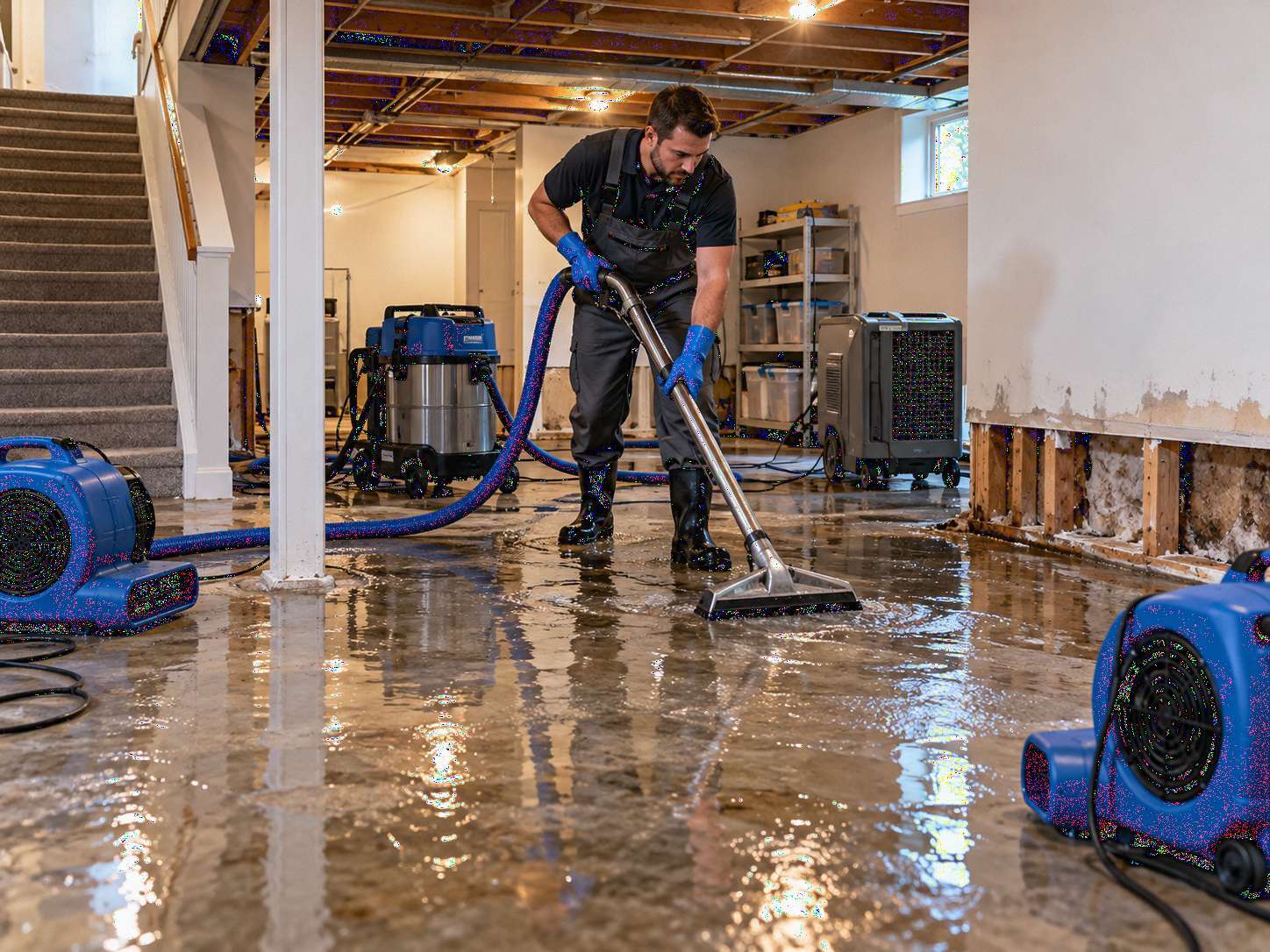
A flooded basement can damage much more than the floor.
Water may spread beneath flooring, wick into drywall, saturate insulation, soak furniture and stored belongings, and remain trapped inside wall cavities after the visible water is gone.
That is why proper flooded basement cleanup is not simply pumping water out and placing a few fans in the room.
A complete cleanup usually involves:
- Making the basement safe
- Stopping the source of water
- Documenting the damage
- Removing standing water
- Finding the full moisture boundary
- Removing materials that cannot be properly restored
- Drying the structure
- Monitoring hidden moisture
- Addressing mold or contamination when necessary
- Rebuilding only after the basement is ready
If there is significant standing water in basement areas, safety should come before cleanup.
Electrical equipment, contaminated water, wet building materials, and hidden moisture can all change how the loss should be handled.
Quick Answer: What Should You Do First When Your Basement Floods?
If your basement fills with water, follow this order:
- Do not enter if electricity may be involved
- Avoid contact with sewage or unknown floodwater
- Stop the water source if it is safe
- Photograph the damage
- Move dry belongings away from the affected area when safe
- Begin basement water removal
- Inspect walls, flooring, insulation, and contents
- Start structural drying
- Monitor hidden moisture before repairs
For a broader emergency checklist see first 24 hours water damage checklist
Why Flooded Basement Cleanup Is Different From Mopping Up a Leak
Basements collect water at the lowest level of the home.
That makes it easier for moisture to spread across flooring and into the lower portions of walls.
Even a shallow basement flood may affect:
- Carpet and padding
- Laminate flooring
- Luxury vinyl plank
- Drywall
- Insulation
- Baseboards
- Wood framing
- Cabinets
- Furniture
- Stored boxes
Water Often Travels Beyond the Visible Wet Area
The visible puddle does not necessarily show the full moisture boundary.
Water may move underneath flooring or into wall cavities.
Drywall Can Wick Water Upward
Drywall may absorb moisture above the visible waterline.
Wet Contents Can Slow Basement Drying
Cardboard, rugs, upholstery, books, and other porous contents can hold moisture and keep humidity elevated.
Surface Dryness Is Not Enough
A room can appear dry while moisture remains inside materials.
Moisture Should Be Verified Before Rebuilding
New drywall or flooring should not be installed over unresolved moisture.
Restoration Should Follow the Moisture, Not Just the Waterline
The cleanup scope should be based on where water actually traveled.
Common Causes of Basement Flooding
The source of the water matters because it affects both safety and restoration decisions.
Common causes include:
- Burst pipes
- Plumbing leaks
- Water heater failure
- Sump pump failure
- Heavy rain
- Groundwater intrusion
- Window well flooding
- Foundation leakage
- Sewer or drain backup
Burst Pipe or Plumbing Leak
A failed pipe can release a large amount of water quickly.
Water Heater Failure
A leaking or failed water heater may flood the utility area and spread water into finished basement rooms.
Sump Pump Failure
During heavy rainfall or rising groundwater, a failed sump pump can allow water to accumulate rapidly.
Rainwater and Groundwater
Water may enter through:
- Foundation cracks
- Window wells
- Poor grading
- Basement doors
- Drainage problems
Sewage or Drain Backup
This type of basement flood requires more careful handling because contamination may be present.
Why the Water Source Changes the Cleanup Plan
The source affects:
- Personal safety
- Cleaning procedures
- Material removal decisions
- Contents handling
- Whether porous materials may be salvageable
Step 1: Do Not Enter Until the Basement Is Safe
Before basement water removal, look for electrical and contamination hazards.
Do not walk into standing water when:
- Electrical outlets are submerged
- Appliances are sitting in water
- Extension cords are wet
- The electrical panel may be affected
- Sewage contamination is suspected
- Structural damage is visible
If electrical safety cannot be confirmed, the flooded area should not be treated as a simple DIY cleanup.
Step 2: Stop Additional Water
When it can be done safely, stop the source.
That may involve:
- Shutting off the main water valve
- Closing an appliance supply valve
- Addressing a broken pipe
- Restoring sump pump operation
- Reducing exterior water entry
Drying cannot succeed while water continues entering the basement.
For the broader mitigation process see emergency water damage restoration
Step 3: Document the Basement Before Major Cleanup
Take clear photographs or video of:
- Standing water
- Wet walls
- Damaged flooring
- Furniture
- Stored contents
- Appliances
- Visible source of water
When practical, document damaged belongings before discarding them.
For related guidance see water damage insurance claim help http://totalhomerescue.pro/guides/water-damage-insurance-claim-help
Step 4: Begin Basement Water Removal
Once the basement is safe, remove bulk water.
Depending on the amount of water, basement water removal may involve:
- Pumps
- Professional extraction equipment
- Wet vacuums for small losses
- Carpet extraction tools
The goal is to reduce standing water and stop continued saturation.
Water Extraction Is Not the Same as Drying
After extraction, moisture may remain in:
- Walls
- Flooring
- Insulation
- Framing
- Concrete
- Cabinets
- Contents
This is why flooded basement cleanup continues after the floor looks clear.
Step 5: Identify Everything That Became Wet
The next step is to define the full affected area.
Moisture may be hidden:
- Under carpet
- Under floating flooring
- Behind baseboards
- Behind drywall
- Inside insulation
- Behind cabinets
- Under stairs
Step 6: Decide What Can Be Dried and What Needs Removal
Not every wet building material needs automatic removal.
The decision depends on:
- Water source
- Material
- Saturation
- Physical condition
- Ability to expose the material to airflow
Wet Drywall
Drywall may need removal when it is:
- Soft
- Swollen
- Sagging
- Delaminated
- Contaminated
- Covering wet insulation
- Preventing access to framing
Wet Insulation
Insulation can trap moisture inside the wall assembly.
Wet Carpet and Padding
Carpet can sometimes be restored after certain clean-water losses.
Padding may hold large amounts of water underneath the surface.
Baseboards
Baseboards may need temporary removal so the wall assembly can be inspected and dried.
Step 7: Start Flooded Basement Drying
After extraction and necessary removal, flooded basement drying begins.
Professional structural drying commonly combines:
- Air movers
- Dehumidifiers
- Moisture measurement
- Repeated monitoring
Air Movers Increase Evaporation
Air movers direct airflow across damp surfaces.
Dehumidifiers Remove Moisture From the Air
As building materials release moisture, dehumidifiers help remove that moisture from the environment.
Moisture Monitoring Confirms Progress
Drying decisions should be based on actual material conditions rather than appearance alone.
Why Fans Alone May Not Be Enough for Flooded Basement Drying
Household fans move air but do not necessarily control the moisture released into the basement.
If evaporation increases without adequate dehumidification, indoor humidity can remain high.
That can slow drying of:
- Framing
- Drywall
- Concrete
- Flooring
Professional basement water damage restoration focuses on both airflow and moisture removal.
Step 8: Check for Hidden Moisture Under Flooring
Water commonly becomes trapped underneath basement flooring.
Carpet
The carpet face may begin to feel dry while the padding remains saturated.
Laminate
Laminate may develop:
- Swelling
- Edge lifting
- Joint distortion
- Core damage
Luxury Vinyl Plank
LVP may resist surface water, but water can move beneath the planks and remain against the substrate.
Hardwood
Possible problems include:
- Cupping
- Warping
- Swelling
- Finish damage
Tile
Tile itself may remain intact while moisture affects materials underneath it.
Does Concrete Need to Be Dried?
Yes, concrete can retain moisture.
A basement slab or foundation wall may appear dry at the surface while moisture continues moving through the material.
This matters particularly before installing:
- Flooring
- Adhesives
- Coatings
- Other finish materials
The substrate should be ready before permanent finishes are installed.
What Should You Do With Furniture and Stored Belongings?
Contents should not be ignored during basement flood cleanup.
Common basement contents include:
- Furniture
- Rugs
- Clothing
- Cardboard boxes
- Electronics
- Books
- Tools
- Seasonal items
Dry belongings may need to be moved away from the affected area so they do not interfere with restoration.
Wet belongings should be separated and evaluated.
For large losses see water damage contents pack out
Can Wet Basement Furniture Be Saved?
Sometimes.
Furniture water damage depends on:
- Material
- Water source
- Degree of saturation
- Physical condition
Upholstered Furniture
Moisture can remain inside:
- Fabric
- Foam
- Padding
- Internal framing
Solid Wood
Solid wood may swell or warp but may sometimes be dried successfully.
Particleboard and MDF
These materials can develop significant swelling, softening, or delamination.
Mold After a Basement Flood
A basement that remains damp can develop conditions favorable to mold growth.
Watch for:
- Musty odors
- Visible spotting
- Discoloration
- Growth behind drywall
- Persistent dampness
For basement-specific guidance see basement mold remediation Northern Virginia
Mold Remediation Is Not the Same as Drying
Flooded basement drying removes moisture.
Mold remediation addresses microbial growth that already exists.
If mold is already present, simply drying the basement may not address the full problem.
DIY Flooded Basement Cleanup vs Professional Basement Water Damage Restoration
Some small clean-water leaks may be manageable without professional restoration.
Professional help becomes more appropriate when:
- There is significant standing water
- Multiple rooms are affected
- Electrical hazards may exist
- Sewage or groundwater is involved
- Drywall or insulation is saturated
- Water is trapped under flooring
- Mold is visible or suspected
- Hidden moisture is likely
How Long Does Flooded Basement Drying Take?
There is no universal drying time.
The timeline depends on:
- Amount of water
- Water source
- Materials affected
- Humidity
- Temperature
- Equipment
- Demolition scope
- How quickly extraction began
Drying should not end simply because equipment has been running for a set number of days.
The correct endpoint should be based on actual moisture conditions.
When Can Basement Reconstruction Begin?
Reconstruction should begin after affected materials are ready for permanent repair.
Possible repairs include:
- Insulation replacement
- Drywall
- Flooring
- Baseboards
- Painting
- Cabinet repair
Closing walls or installing flooring too early can trap unresolved moisture.
Does Insurance Cover Flooded Basement Cleanup?
Coverage depends heavily on the cause of the loss and the specific policy.
A plumbing failure may be treated differently from exterior flooding or groundwater intrusion.
Useful documentation may include:
- Photos
- Videos
- Moisture records
- Mitigation invoices
- Damaged-content inventories
- Repair estimates
For general guidance see does insurance cover water damage restoration
The appropriate insurance carrier should confirm coverage for the specific claim.
Common Flooded Basement Cleanup Mistakes
Avoid these common problems:
- Walking into standing water before checking electrical hazards
- Waiting too long to begin extraction
- Assuming water removal equals drying
- Using only household fans
- Leaving wet insulation inside walls
- Ignoring water under flooring
- Leaving wet cardboard in the basement
- Installing flooring before the substrate is ready
- Rebuilding before moisture verification
- Ignoring mold or persistent musty odors
A Better Flooded Basement Cleanup Sequence
A well-organized project usually follows this order:
Safety check → source control → documentation → basement water removal → moisture inspection → selective demolition → structural drying → moisture verification → mold treatment if needed → reconstruction
Following the correct sequence reduces unnecessary demolition and helps prevent repairs from being installed over wet materials.
Final Takeaway
Proper flooded basement cleanup goes far beyond removing visible standing water.
A complete response may require:
- Safety assessment
- Source control
- Basement water removal
- Inspection of hidden areas
- Material removal
- Flooded basement drying
- Moisture monitoring
- Contents handling
- Mold evaluation
- Basement water damage restoration
The key principle is:
Remove the water, follow the moisture, dry the structure, verify the result, and rebuild only when the basement is ready.
FAQ About Flooded Basement Cleanup
1. What should I do first when there is standing water in my basement?
Do not automatically enter the basement.
First determine whether water may have reached:
- Electrical outlets
- Appliances
- Extension cords
- Electrical equipment
Also consider whether the water may contain sewage or other contamination.
If the basement is safe to enter, stop the source when possible, photograph the damage, and begin basement water removal.
Once standing water is removed, do not assume the cleanup is finished.
Walls, flooring, insulation, framing, and belongings may still be wet.
2. Can I clean up a flooded basement myself?
A very small clean-water leak may sometimes be manageable.
DIY cleanup becomes less appropriate when:
- Water covers a large area
- Water depth is significant
- Electricity may be involved
- Sewage or groundwater is present
- Drywall is saturated
- Insulation is wet
- Flooring has water underneath
- Mold is visible
- Hidden moisture is suspected
The difficult part of flooded basement cleanup is often not removing the visible water but confirming that concealed materials are dry.
3. What is the best way to dry a flooded basement?
Flooded basement drying usually starts after bulk water is extracted.
The process may include:
- Removing damaged or non-restorable materials
- Opening areas where moisture is trapped
- Positioning air movers
- Operating dehumidifiers
- Monitoring materials with moisture meters
Fans alone may not be enough because evaporation adds moisture to the indoor air.
Effective drying requires both airflow and moisture removal.
4. Does drywall always need to be removed after a basement flood?
No.
The decision depends on:
- Water source
- Amount of saturation
- Physical condition
- Insulation behind the wall
- Ability to dry the material
Drywall is more likely to require removal when it is soft, swollen, sagging, contaminated, or blocking access to wet insulation or framing.
A small clean-water exposure may be handled differently from sewage or groundwater intrusion.
5. How can I prevent mold after flooded basement cleanup?
The most important step is controlling moisture completely.
That means:
- Removing standing water
- Drying walls and flooring
- Removing wet materials that cannot be adequately restored
- Controlling humidity
- Checking concealed areas
- Removing wet cardboard and other moisture-holding contents
If mold is already visible or a persistent musty odor develops, flooded basement drying alone may not be enough.
A separate mold remediation process may be necessary.

