

Quick Answer: Spring Flooding Water Damage Virginia Guide
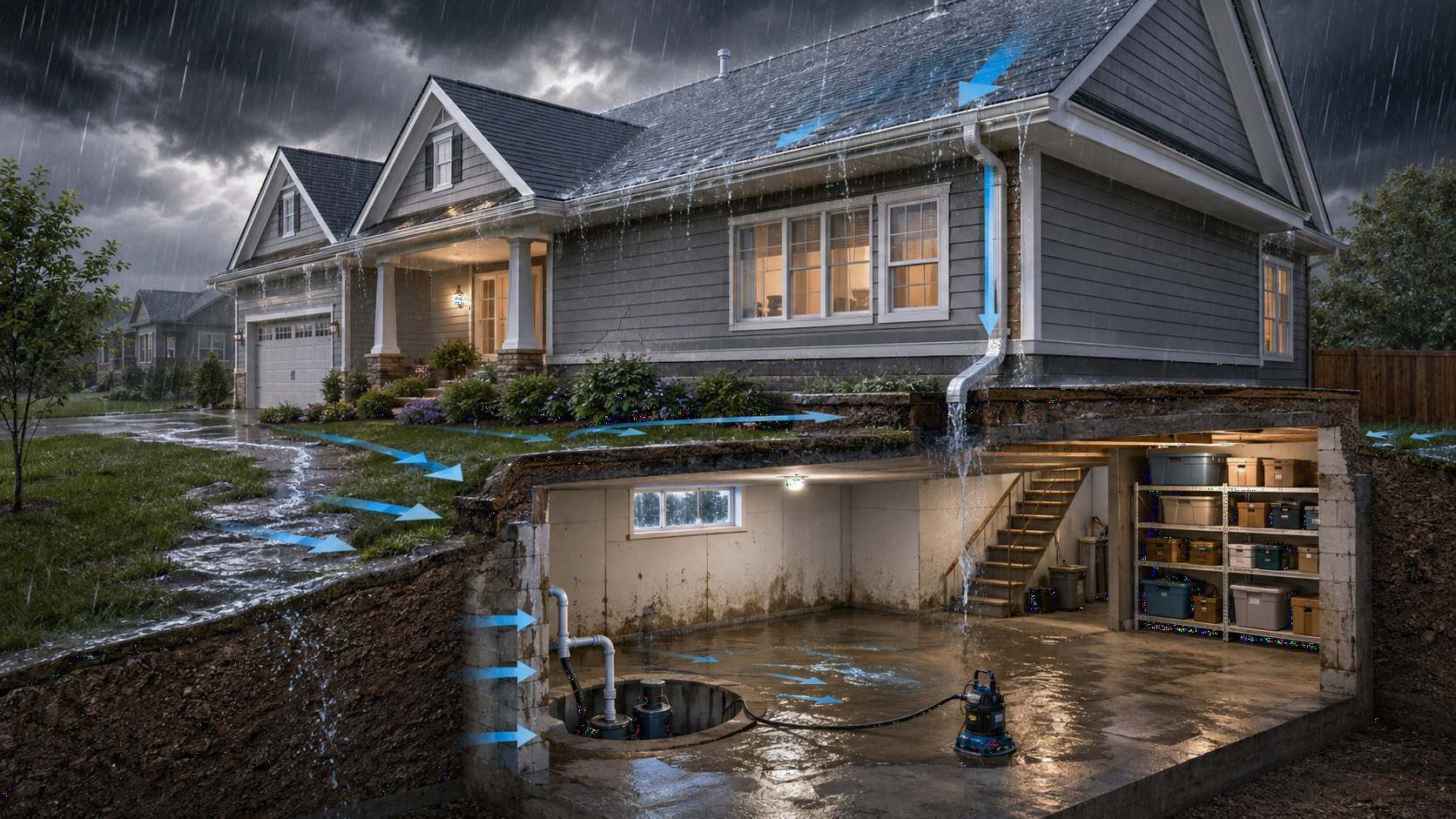
Spring flooding water damage Virginia becomes a serious risk when spring storms bring heavy rain, saturated soil, overflowing gutters, window well leaks, foundation seepage, power interruptions, and sump pump failure. In Northern Virginia, finished basements are especially vulnerable because water can quickly reach carpet pad, drywall, insulation, baseboards, flooring layers, utility rooms, lower-level living areas, and stored contents.
The best way to reduce heavy rain basement flooding is to prepare before the storm. Homeowners should clean gutters, move water away from the foundation, check grading, clear window wells, test the sump pump, consider a battery backup sump pump, and keep important items off the basement floor. Ready.gov recommends keeping important documents in a waterproof container, moving valued items to higher levels, decluttering drains and gutters, and considering a sump pump with a battery.
If spring storm water damage reaches porous building materials, surface cleanup may not be enough. EPA says the key to mold control is moisture control and recommends drying water-damaged areas and items within 24–48 hours to help prevent mold growth.
For first-day cleanup steps, see first 24 hours water damage checklist
Spring flooding water damage Virginia prevention starts with controlling stormwater before it reaches the foundation, checking gutters and grading, testing the sump pump, preparing for power outages, clearing window wells, and moving basement contents off the floor. Heavy rain basement flooding often happens when soil becomes saturated, downspouts discharge too close to the house, window wells fill, drains back up, grading slopes toward the foundation, or sump pump failure occurs. Spring storm water damage should be dried quickly because moisture inside drywall, flooring, carpet pad, insulation, baseboards, and stored contents can lead to hidden damage and mold concern.
Why Spring Storms Create Basement Flooding Risk in Northern Virginia
Spring storms in Northern Virginia can bring fast rainfall, wind-driven water, saturated soil, and temporary drainage overload. A basement does not need several inches of standing water to have a serious moisture issue. A wet wall edge, damp carpet, water around a sump pit, or moisture under flooring can still affect finished materials.
Homes in Alexandria, Arlington, Fairfax, McLean, Falls Church, Vienna, Tysons, Springfield, Burke, and nearby DMV communities often include finished basements, utility rooms, walk-out doors, window wells, sump systems, storage spaces, and lower-level family rooms. Those features make spring flooding water damage Virginia more than a seasonal inconvenience. When water reaches finished materials, cleanup becomes a drying and documentation issue.
Common spring storm water damage sources include:
- Heavy rain near the foundation
- Saturated soil around basement walls
- Clogged gutters
- Short or disconnected downspouts
- Poor exterior grading
- Window well overflow
- Sump pump failure
- Power outage during a storm
- Floor drain backup
- Water around walk-out basement doors
- Foundation cracks or gaps
- Water under basement flooring
EPA also recommends cleaning and repairing roof gutters regularly and making sure the ground slopes away from the building foundation so water does not enter or collect around the foundation.
For a broader water damage guide, see water damage restoration homeowner guide
How Heavy Rain Basement Flooding Starts
Heavy rain basement flooding usually starts outside the home. Stormwater collects near the foundation, soil becomes saturated, and water finds the easiest path into the basement. That path may be a window well, foundation crack, floor-wall joint, door threshold, utility penetration, sump pit, or floor drain.
Water can enter through:
- Basement wall cracks
- Wall-floor joints
- Window wells
- Walk-out basement doors
- Sump pit overflow
- Floor drains
- Utility penetrations
- Poorly sealed exterior openings
- Saturated foundation walls
The key question is not only “How much water is visible?” The better question is “Where did the moisture travel?” Basement water can move behind baseboards, under floating floors, into carpet pad, inside drywall, below cabinets, and into stored boxes.
For water under flooring, see water damage under flooring
Basement Areas to Check Before and After Spring Storms
Some basement areas should be checked before heavy rain and again after the storm passes. If a spot has leaked before, treat it as high risk.
High-risk basement areas include:
- Sump pump pit
- Finished basement wall edges
- Exterior wall corners
- Window wells
- Walk-out basement doors
- Basement carpet
- Utility rooms
- Laundry rooms
- HVAC closets
- Floor drains
- Storage rooms
- Under-stair spaces
- Rooms with previous seepage
- Walls below poor grading
Basement water often follows patterns. If a window well overflowed once, it may overflow again. If a wall edge gets damp after every heavy rain, the issue may be connected to grading, drainage, foundation pressure, or exterior water management.
For basement mold concerns after water damage, see basement mold remediation Northern Virginia
Sump Pump Failure During Spring Storms
Sump pump failure is one of the most common reasons homeowners discover basement water during heavy rain. A pump may seem fine during light rain but fail during a stronger spring storm because of power loss, a stuck float, a clogged intake, an undersized pump, a blocked discharge line, or a missing backup system.
Common sump pump failure causes include:
- Power outage
- Stuck float switch
- Clogged pump intake
- Old pump
- Undersized pump
- Blocked discharge line
- No battery backup
- Pump unplugged by accident
- Check valve issue
- Heavy rain overwhelming the system
Ready.gov recommends considering a sump pump with a battery as part of flood preparedness, which matters because spring storms can bring water entry and power interruptions at the same time.
Before spring storm season, test the pump. Pour water into the pit, confirm the pump turns on, confirm water discharges properly, and check that the discharge line sends water away from the foundation. Also check whether the pump system has backup power, especially if the basement is finished.
For emergency water damage guidance, see emergency water damage restoration guide
Spring Storm Water Damage Prevention Checklist
The strongest spring flooding water damage Virginia plan starts outside the home. The goal is to move water away from the foundation before it reaches basement walls, window wells, drains, or the sump system.
Before spring storms:
- Clean gutters
- Extend downspouts away from the foundation
- Check that soil slopes away from the house
- Clear window wells
- Test the sump pump
- Consider battery backup for the sump pump
- Check the sump discharge direction
- Move stored items off the floor
- Use shelves or plastic bins instead of cardboard on the floor
- Inspect basement wall edges after rain
- Check floor drains
- Keep important documents above floor level
This preparation is easier before storm season than during an active basement flood. It also helps protect contents, reduce moisture exposure, and make cleanup more organized if water still enters the home.
For mitigation after water enters the home, see water mitigation process
What to Do When Water Enters the Basement
When heavy rain basement flooding starts, safety comes first. Do not step into standing water if electrical hazards may be present. Do not touch outlets, cords, appliances, or electrical panels in wet areas. Ready.gov warns that floodwater can contain dangerous debris, contamination, and electrical hazards, and advises people not to walk, swim, or drive through floodwaters.
If it is safe:
- Stop or reduce the source if possible
- Avoid electrical hazards
- Take photos before cleanup
- Move dry contents away from water
- Separate wet and dry items
- Remove small items from the floor
- Check where water entered
- Check nearby finished materials
- Call a plumber if the issue is drain or sump related
- Call water damage restoration if building materials are wet
- Contact insurance if a claim may be involved
A plumber can address a failed pump, blocked discharge line, drain issue, or plumbing-related problem. A water damage restoration company addresses wet drywall, carpet pad, insulation, baseboards, flooring, cabinets, contents, and hidden moisture.
For structural drying, see structural drying after water damage
Water Along Basement Wall Edges
Water along basement wall edges may point to seepage, exterior drainage issues, grading problems, or pressure from saturated soil.
Water Around the Sump Pit
Water around the sump pit may mean pump failure, pump overload, power loss, a stuck float, or a blocked discharge line.
Water Under Basement Flooring
Water under flooring can remain hidden even after the surface looks dry.
Simple Rule
If water reached finished materials, check moisture before repairs.
Why Fast Drying Matters After Spring Storm Water Damage
After spring storm water damage, visible water is only part of the problem. Moisture can remain inside drywall, carpet pad, insulation, flooring layers, trim, and stored contents.
Watch for:
- Wet drywall
- Damp baseboards
- Soft trim
- Wet carpet pad
- Swollen laminate
- Musty odor
- Wet insulation
- Moisture under flooring
- Damp storage boxes
- Watermarks along walls
- Cabinet swelling
EPA recommends drying water-damaged areas and items within 24–48 hours to help prevent mold growth, and EPA also notes that mold can be hidden behind drywall, wallpaper, paneling, ceiling tiles, carpet, and pads. This does not mean every basement leak becomes mold at exactly 48 hours. It means wet materials should not be ignored.
For wet drywall decisions, see wet drywall after water leak
When DIY Cleanup May Not Be Enough
A small clean-water spill on a hard surface may sometimes be manageable for a homeowner. Heavy rain basement flooding is different because water may enter from outside, through drains, around foundation walls, through window wells, or through a failed sump system.
Professional help may be safer when:
- Water covers a large area
- Water reached drywall
- Carpet pad is wet
- Flooring is swollen
- Water sat for hours or overnight
- Musty odor appears
- The source is unclear
- Sump pump failure caused flooding
- Water entered a finished basement
- Stored contents are soaked
- Electrical hazards may be present
- The same area floods repeatedly
Do not rely only on box fans if water reached hidden areas. Air movement alone may not remove moisture from carpet pad, wall cavities, insulation, or subflooring. Moisture should be checked before repairs, repainting, or flooring replacement begins.
For DIY cleanup limits, see DIY vs professional water damage cleanup
Insurance and Documentation After Basement Flooding
Basement flooding can create complicated insurance questions. Coverage depends on the policy, cause of loss, exclusions, endorsements, flood coverage, sewer backup coverage, sump pump overflow terms, documentation, and carrier review. A contractor should not guarantee coverage.
Document:
- Date and time of the storm
- Photos of standing water
- Photos of the entry point
- Photos of affected walls and flooring
- Damaged contents
- Moisture-related findings
- Cleanup steps taken
- Professional estimates
- Communication with insurer
FloodSmart, the National Flood Insurance Program website, states that most homeowners and renters insurance does not cover flood damage, and that flood insurance coverage generally goes into effect 30 days after the purchase date, with listed exceptions. This is why homeowners should review flood-related coverage before spring storm season, not when heavy rain is already in the forecast.
For claim documentation, see water damage insurance claim help
For coverage questions, see does insurance cover water damage restoration
Mold Concern After Basement Flooding
Basements are vulnerable after spring flooding water damage Virginia because they often include drywall, insulation, carpet, wood framing, stored contents, cardboard boxes, and lower airflow areas. Moisture can remain behind finished surfaces after visible water is gone.
Mold concern increases when:
- Water sat for hours
- Materials stayed damp
- Carpet pad absorbed water
- Cardboard boxes were wet
- Drywall stayed damp
- Insulation was affected
- Humidity stayed high
- Musty odor appeared
- Previous basement flooding occurred
EPA explains that mold spores will not grow if moisture is not present, and if mold is a problem, the mold should be cleaned up and the water problem fixed. The practical takeaway is simple: dry wet materials, control humidity, fix the source, and avoid cosmetic repairs before moisture is addressed.
For mold after leaks, see mold after water damage Virginia
For prevention tips, see how to prevent mold growth Northern Virginia
Local Water Damage and Mold Resources
Spring basement flooding in Northern Virginia often connects with water mitigation, structural drying, mold prevention, flooring damage, wet drywall, insurance documentation, and restoration planning.
FAQ: Spring Storms and Basement Flooding
1. What causes spring flooding water damage Virginia homeowners should watch for?
Spring flooding water damage Virginia is commonly caused by heavy rain, saturated soil, clogged gutters, short downspouts, grading that slopes toward the house, window well overflow, sump pump failure, power outages, floor drain backup, and water entering through foundation gaps.
Northern Virginia homes with finished basements need extra attention because water can quickly affect carpet, drywall, baseboards, insulation, stored contents, and flooring layers. Even a small amount of water along a wall edge can point to moisture behind finished materials.
2. How can I reduce heavy rain basement flooding risk?
To reduce heavy rain basement flooding risk, start outside the home. Clean gutters, extend downspouts away from the foundation, make sure grading slopes away from the house, clear window wells, and inspect low areas near basement doors. Inside the basement, test the sump pump, consider backup power, keep contents off the floor, and check wall edges after heavy rain.
If your basement has flooded before, do not assume the issue is gone because the floor is dry today. Repeated water entry usually means drainage, sump, grading, foundation, or stormwater control needs closer attention.
3. What should I do if sump pump failure causes basement flooding?
If sump pump failure causes basement flooding, start with safety. Do not step into standing water if electrical hazards may be present. If safe, take photos, move dry belongings away from water, and contact a plumber or sump pump professional to address the pump issue.
Then call water damage restoration if water reached drywall, carpet pad, flooring, insulation, cabinets, or stored contents. The pump problem and the water damage are connected, but they are not the same job. The pump needs repair or replacement, while wet materials may need extraction, drying, monitoring, and documentation.
4. When is spring storm water damage more than DIY cleanup?
Spring storm water damage is more than DIY cleanup when water reaches porous materials or hidden areas. Wet carpet pad, damp drywall, swollen flooring, wet insulation, musty odor, and water under flooring are warning signs.
DIY cleanup may remove visible water, but it may not confirm that the structure is dry. If water sat for hours, spread across a finished basement, entered walls, or affected multiple materials, professional moisture checks and drying may be safer.
5. Can basement flooding lead to mold?
Basement flooding can lead to mold concern when materials stay wet or humidity remains high. EPA recommends drying water-damaged areas and items within 24–48 hours to help prevent mold growth.
This does not mean every basement leak becomes mold at exactly 48 hours. It means the risk increases when wet materials are not dried properly. If drywall, carpet pad, insulation, cardboard boxes, or wood materials stay damp, moisture should be addressed before repairs or repainting.
Final Takeaway
Northern Virginia homeowners should treat spring storms as a basement water damage risk before heavy rain starts. Spring flooding water damage Virginia prevention begins with gutters, downspouts, grading, window wells, sump pump testing, backup power planning, and moving stored items off the floor.
The biggest heavy rain basement flooding risks are saturated soil, poor drainage, foundation entry points, floor drains, and sump pump failure during a storm. Once water enters finished materials, surface cleanup may not be enough. Document the damage, control the source if possible, dry affected materials quickly, and avoid repairs until moisture is addressed.

