

Quick Answer
If you are trying to understand how to choose water damage restoration company help in Northern Virginia, choose the company that can clearly explain three things: what is wet, how it will be dried, and how the work will be documented. Water damage restoration is not only about removing visible water. A reliable company should inspect hidden moisture, explain the drying process, provide a written scope, discuss licensing and insurance when applicable, and avoid making unsupported insurance promises.
An IICRC certified restoration company or a company with trained restoration technicians can be a strong trust signal because the ANSI/IICRC S500 standard describes procedures and precautions for professional water damage restoration in residential, commercial, and institutional buildings. In Virginia, homeowners can use DPOR’s License Lookup to search contractor licensing information.
For first-day homeowner steps, see first 24 hours water damage checklist
To choose a water damage restoration company in Northern Virginia, look for moisture inspection, water extraction, structural drying knowledge, written scope, drying documentation, clear communication, proper insurance, and licensing when applicable. An IICRC certified restoration company may be a useful trust signal, but homeowners should still verify the actual scope, credentials, insurance, and documentation process. Red flags water damage contractor warning signs include no moisture readings, vague estimates, pressure to sign, insurance approval promises, no written scope, starting repairs before drying, and avoiding license or insurance questions.
Why the Right Company Matters After Water Damage
Water damage can look simple at first. You may see a wet floor, a ceiling stain, a leaking appliance, or soaked carpet. But the visible damage is often only part of the problem. Water can move under flooring, behind baseboards, inside drywall, below cabinets, into insulation, and down into ceilings below the leak.
That is why choosing the right company matters. A general handyman may focus on repairs. A restoration company should focus on mitigation first. The correct order is usually inspection, water removal, drying, monitoring, documentation, and then repair planning.
In Northern Virginia, this matters because many homes have finished basements, multi-level layouts, townhomes, condos, older plumbing, HVAC closets, and tight utility areas. A leak upstairs can become a ceiling issue downstairs. A kitchen leak can move under cabinets. A basement leak can affect drywall, baseboards, flooring, and stored contents.
EPA guidance says moisture control is the key to mold control and that water-damaged areas and items should be dried within 24–48 hours when possible to help prevent mold growth.
For a broader guide, see water damage restoration homeowner guide
Step 1: Ask How They Inspect Hidden Moisture
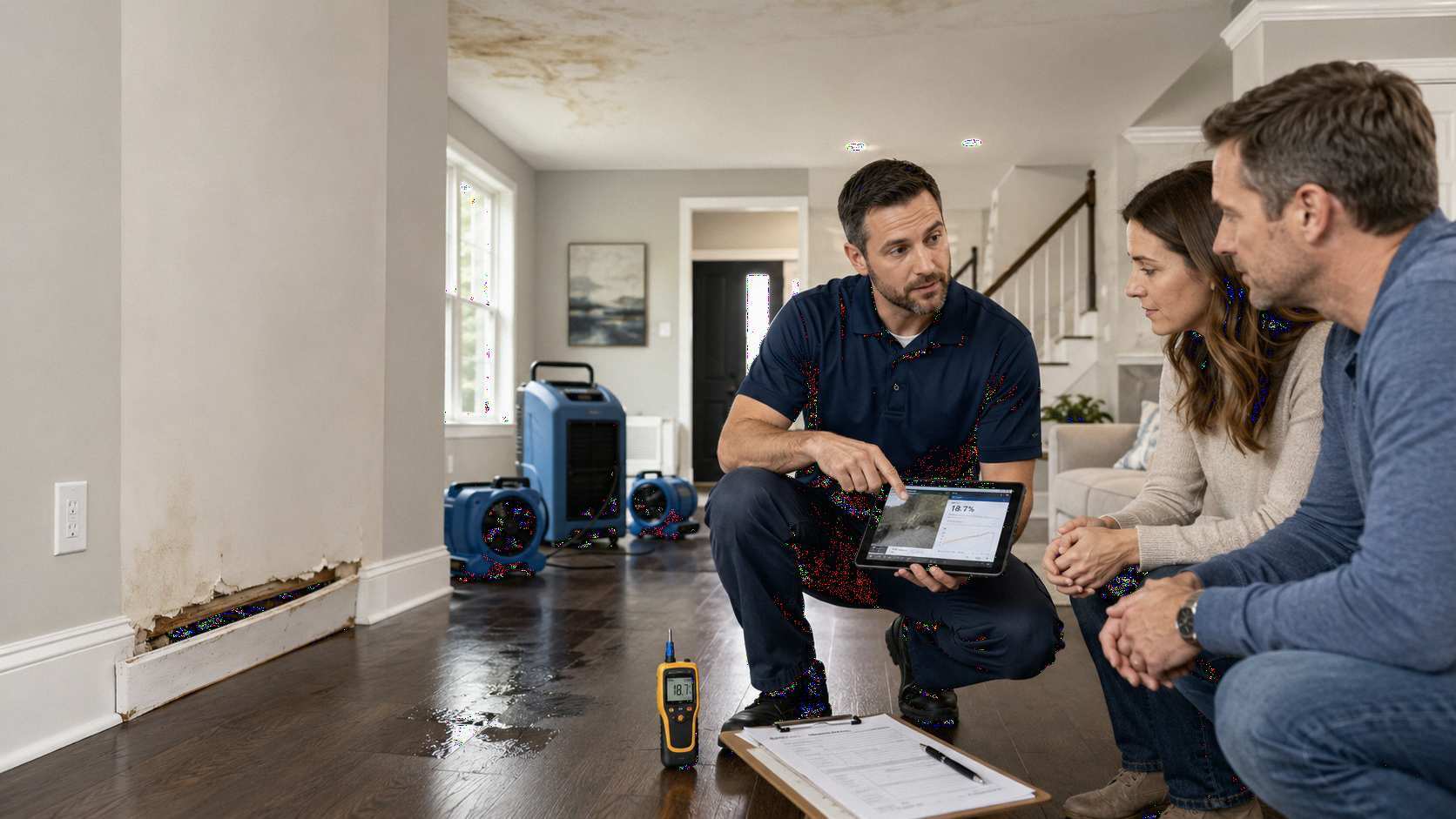
The first test is simple: ask how the company checks hidden moisture. A good water damage restoration company should not only look at visible water. It should inspect the affected room and nearby areas where water may have traveled.
A proper inspection may include:
- Source-area review
- Moisture readings
- Drywall inspection
- Flooring inspection
- Baseboard and trim check
- Cabinet and toe-kick inspection
- Ceiling inspection below the leak
- Humidity review
- Photos and notes
- Written scope discussion
If a contractor talks about painting, patching, or replacing flooring before checking moisture, slow down. That can be one of the first red flags water damage contractor warning signs.
For wet drywall decisions, see wet drywall after water leak
Step 2: Make Sure They Explain Water Mitigation Before Repairs
A strong restoration company should explain the difference between mitigation and repair. Mitigation focuses on stopping the damage from getting worse. Repair focuses on rebuilding after the property is dry or damaged materials have been removed.
Water mitigation may include:
- Water extraction
- Removing wet materials when needed
- Setting air movers
- Setting dehumidifiers
- Monitoring moisture
- Checking humidity
- Documenting drying progress
- Preparing the area for repairs
This is where homeowners often make a costly mistake. They hire someone to “fix the wall” or “replace the floor” before moisture is addressed. Repairs should not cover damp materials.
For the mitigation process, see water mitigation process http://totalhomerescue.pro/guides/water-mitigation-process
Step 3: Understand the Value of an IICRC Certified Restoration Company
Many homeowners search for an IICRC certified restoration company because IICRC standards and certifications are common in the restoration industry. Certification can show that the company or technicians have training connected to recognized restoration practices.
The ANSI/IICRC S500 standard is focused on professional water damage restoration and describes procedures and precautions for restoring water-damaged structures and contents. That is a useful trust signal, but it should not be the only factor.
Ask these questions:
- Who will inspect the damage?
- Who will monitor drying?
- Will moisture readings be documented?
- What equipment may be used?
- What materials are affected?
- What happens if materials cannot dry in place?
- Will the written scope separate mitigation from repairs?
- Will repairs wait until drying is addressed?
A company can mention credentials, but the real test is whether it explains the job clearly and documents the work properly.
For drying details, see structural drying after water damage http://totalhomerescue.pro/guides/structural-drying-after-water-damage
Step 4: Verify Licensed Insured Restoration Work
A licensed insured restoration company should be willing to provide its legal business name, explain the work it performs, and discuss insurance and licensing when applicable. This matters because water damage projects can include different scopes: extraction, demolition, drying, drywall repair, flooring repair, painting, and rebuild.
Virginia DPOR provides a public License Lookup tool for searching licensing records. DPOR also publishes contractor consumer tips advising homeowners to hire licensed contractors and verify license status online.
Ask for:
- Legal business name
- Written estimate
- License information when applicable
- Insurance information
- Scope of work
- Exclusions
- Payment terms
- Subcontractor disclosure if applicable
- Mitigation vs repair explanation
Do not assume every company advertising water damage services performs the same work. Some companies handle mitigation only. Some handle repairs. Some subcontract rebuild. You need to know what is included before approving the project.
For insurance-related water damage guidance, see does insurance cover water damage restoration http://totalhomerescue.pro/guides/does-insurance-cover-water-damage-restoration
Step 5: Compare Scope Before Price
Price matters, but scope matters more. One company may quote visible cleanup only. Another may include extraction, drying equipment, monitoring, documentation, and repair planning. Those are not the same service.
A clear water damage restoration estimate should explain:
- Affected rooms
- Affected materials
- Water removal needs
- Drying equipment
- Monitoring
- Material removal if needed
- Repairs if included
- Exclusions
- Assumptions
- Documentation
When comparing estimates, do not ask only, “Which one is cheaper?” Ask, “Which one actually addresses the moisture problem?”
For cost-related guidance, see water damage restoration cost guide
Step 6: Watch for Red Flags Water Damage Contractor Warning Signs
The biggest red flags water damage contractor warning signs usually involve pressure, vague scope, skipped moisture inspection, or unsupported insurance claims.
Be careful if a contractor:
- Gives only a verbal estimate
- Refuses to provide a written scope
- Skips moisture inspection
- Does not document affected areas
- Pushes repairs before drying
- Avoids license or insurance questions
- Promises insurance approval
- Pressures you to sign immediately
- Cannot explain equipment use
- Uses fear instead of facts
- Gives unclear company information
- Avoids discussing exclusions
Urgency after water damage is normal. Pressure is different. A reliable contractor can explain why quick action matters without forcing you into unclear work.
For emergency water damage guidance, see emergency water damage restoration guide
Step 7: Ask About Documentation for Insurance Communication
A restoration company can document water damage, but it should not guarantee insurance coverage. Coverage depends on the policy, cause of loss, exclusions, documentation, and carrier review.
A reliable company may provide:
- Photos of affected areas
- Photos of the source area
- Moisture notes
- Scope of work
- Estimate details
- Drying documentation
- Material removal notes
- Repair recommendations
- Communication support
A red flag is any contractor who says the insurance company will definitely pay before the carrier reviews the claim. A safer answer is that the contractor can document the damage and provide a clear scope, but coverage depends on the policy and insurance carrier.
For insurance claim support, see water damage insurance claim help
Step 8: Choose Local Northern Virginia Experience
Local experience matters because homes in Northern Virginia vary widely. Water can move differently in condos, townhomes, split-level homes, older houses, finished basements, and multi-level properties.
A local restoration company should understand common water damage situations in:
- Alexandria
- Arlington
- Fairfax
- McLean
- Falls Church
- Vienna
- Tysons
- Springfield
- Burke
- Washington DC area homes
A company serving Northern Virginia should be able to explain how a kitchen leak may affect a basement ceiling, how an upstairs bathroom leak may affect a lower-level wall, or how an HVAC closet leak may affect flooring and drywall.
For appliance leak guidance, see appliance leak water damage
For burst pipe guidance, see burst pipe water damage
Questions to Ask Before Hiring
Before hiring, ask direct questions. The way a company answers often tells you how the job will be handled.
Ask:
- How will you check hidden moisture?
- What rooms or materials appear affected?
- What equipment may be needed?
- How often will drying be checked?
- Will I receive photos and documentation?
- Are you licensed and insured for this scope?
- Do you handle mitigation, repairs, or both?
- What is excluded from the estimate?
- How are scope changes handled?
- When can repairs begin?
- Who is my point of contact?
- What payment terms apply?
IICRC Certified Restoration Company
An IICRC certified restoration company may be a useful credibility signal, but it should still provide a clear inspection, written scope, drying plan, and documentation.
Licensed Insured Restoration
Licensed insured restoration work should be verified when the scope includes construction-related work, demolition, drywall repair, flooring, painting, or rebuild.
Red Flags Water Damage Contractor
No moisture inspection, vague pricing, no written scope, pressure tactics, and insurance promises are warning signs.
Simple Rule
Choose the company that explains mitigation before selling repairs.
How to Choose Water Damage Restoration Company Help Without Guessing
Use this simple process before signing:
- Confirm the water source is stopped if possible
- Document visible damage
- Ask for moisture inspection
- Request a written scope
- Ask what is included and excluded
- Verify licensing when applicable
- Ask about insurance carried by the company
- Review red flags before signing
- Compare scope to scope
- Start repairs only after drying is addressed
This process helps you avoid choosing based only on advertising, fear, or a low estimate that does not include the full scope.
For water under flooring, see water damage under flooring
For ceiling leaks, see ceiling water damage
Water Damage, Drying, and Mold Concern
Mold concern is one reason drying documentation matters. EPA explains that moisture control is the key to mold control and recommends drying water-damaged areas and items within 24–48 hours when possible.
This does not mean every water damage situation becomes a mold problem at exactly 48 hours. It means wet materials should not be ignored. A restoration company should understand when materials can dry in place, when removal may be needed, and when mold remediation should be considered.
For mold after leaks, see mold after water damage Virginia
For mold prevention, see how to prevent mold growth Northern Virginia
For hidden mold signs, see signs of hidden mold in your home
Local Water Damage and Mold Resources
The decision about how to choose water damage restoration company help often connects with water mitigation, structural drying, wet drywall, flooring damage, ceiling damage, mold prevention, insurance documentation, and repair planning.
FAQ: How to Choose a Water Damage Restoration Company
1. How do I choose a water damage restoration company?
Choose a water damage restoration company by comparing inspection, drying process, documentation, written scope, communication, licensing, and insurance. Do not choose only by the lowest price or fastest promise. The company should explain how it checks hidden moisture, what equipment may be needed, how drying is monitored, and when repairs can begin.
You should also ask for clear exclusions. If construction-related work is part of the project in Virginia, verify licensing through official DPOR resources and confirm that the legal company name matches the estimate.
2. Should I hire an IICRC certified restoration company?
An IICRC certified restoration company can be a useful trust signal because ANSI/IICRC S500 is a recognized professional water damage restoration standard. It describes procedures and precautions for restoration in water-damaged residential, commercial, and institutional buildings.
Certification should not be the only factor. Review the written scope, communication, documentation, insurance, licensing when applicable, local experience, and whether the company can explain the drying process clearly.
3. What are the biggest red flags water damage contractor warning signs?
The biggest red flags water damage contractor warning signs include no moisture inspection, no written scope, vague pricing, pressure to sign, insurance approval promises, no documentation process, avoiding license or insurance questions, and starting repairs before drying.
A contractor should be able to explain what is wet, what needs drying, what may need removal, what is included, and what is excluded. If the company cannot explain the process clearly, compare other options.
4. What does licensed insured restoration mean?
Licensed insured restoration means the company should carry appropriate insurance and have proper licensing when required for the work being performed. Water mitigation, demolition, drywall repair, flooring repair, painting, and rebuild may involve different scopes, so the homeowner should ask what work is actually included.
Ask for the legal company name, license information when applicable, proof of insurance, written scope, and estimate details. Verification is better than assumption, especially when repairs are included.
5. Should a restoration company talk to my insurance company?
A restoration company can provide documentation, photos, estimates, moisture information, and scope notes for insurance communication. That can be helpful, but the company should not guarantee claim approval or promise that insurance will pay for everything.
Coverage depends on the policy, cause of loss, exclusions, documentation, and carrier review. A reliable company should document the damage and explain the scope without making unsupported insurance promises.
Final Takeaway
Knowing how to choose water damage restoration company help in Northern Virginia comes down to inspection, drying process, documentation, licensing, insurance, and communication. A strong company should explain the moisture problem before selling repairs.
An IICRC certified restoration company or trained restoration team can be a useful trust signal. A licensed insured restoration provider can reduce risk when construction-related work is involved. The biggest red flags water damage contractor signs are pressure, vague scope, no moisture readings, no written estimate, insurance promises, and repairs that begin before drying is addressed.
Choose the company that documents the damage, verifies moisture conditions, explains the scope clearly, and follows the right order: mitigation first, repairs after drying.

