

Quick Answer: Frozen Pipe Water Damage Prevention Winter Guide
Frozen pipe water damage prevention winter preparation is one of the most important seasonal steps for Northern Virginia homeowners. Winter water damage can start with frozen pipes, burst supply lines, ice dams, roof-edge leaks, wet insulation, ceiling stains, and moisture hidden behind walls or under flooring.
The biggest winter pipe burst risk VA homeowners should watch is plumbing in cold, drafty, or poorly heated spaces. The American Red Cross recommends opening kitchen and bathroom cabinet doors so warmer air can circulate around plumbing and letting cold water drip from faucets served by exposed pipes during very cold weather.
A freeze warning water damage plan matters because the National Weather Service defines a Freeze Warning as significant, widespread freezing temperatures expected. Before freezing weather, homeowners should insulate pipes, seal drafts, disconnect outdoor hoses, keep heat on, close garage doors, and know where the main water shutoff valve is located.
For immediate leak response, see first 24 hours water damage checklist
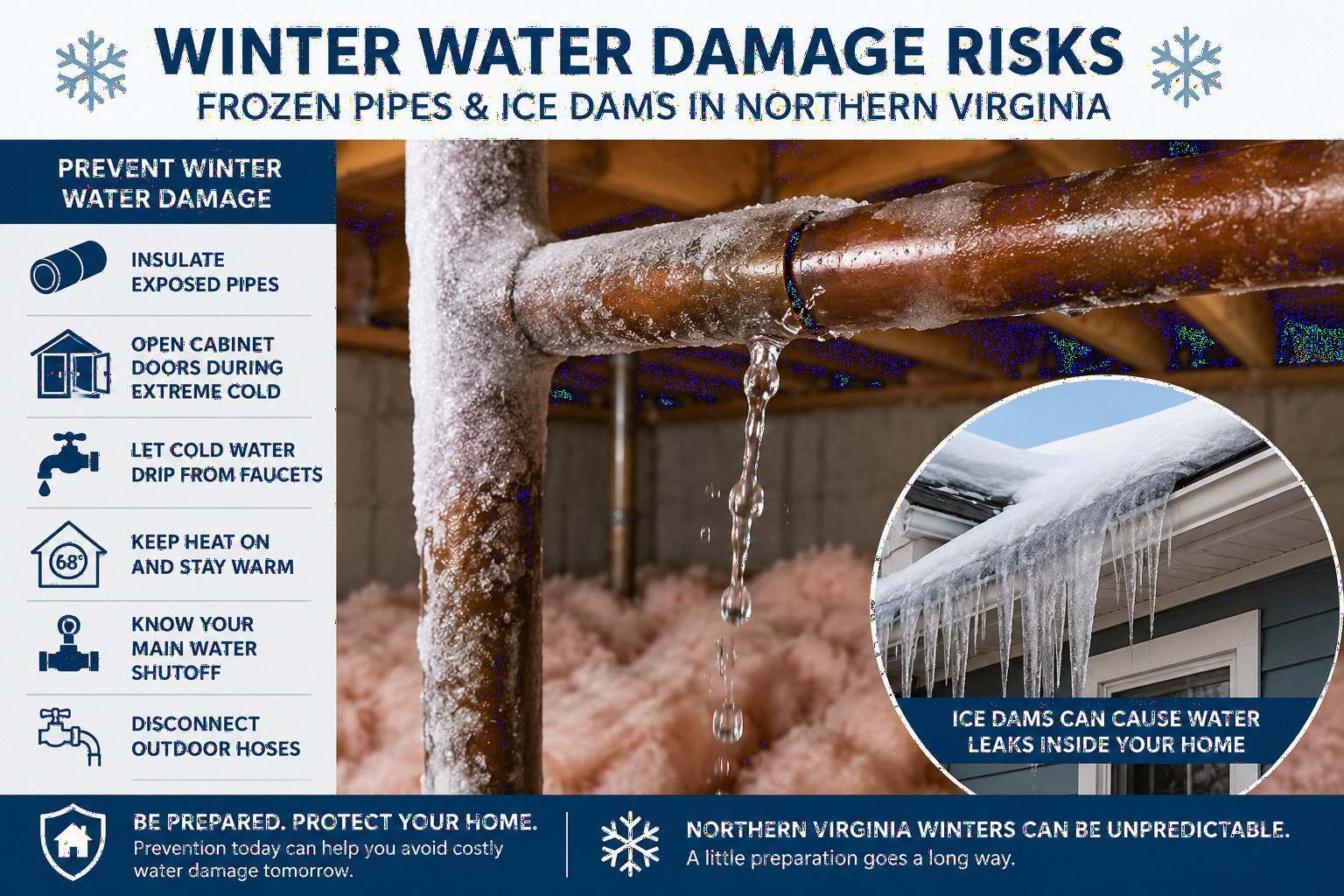
Frozen pipe water damage prevention winter steps in Northern Virginia include insulating exposed pipes, sealing drafts, disconnecting outdoor hoses, opening cabinet doors during extreme cold, letting cold water drip from faucets served by exposed pipes, keeping heat on, closing garage doors, and knowing the main water shutoff location. Winter pipe burst risk VA is higher in crawl spaces, garages, basements, attics, exterior-wall cabinets, laundry rooms, HVAC closets, hose bibs, and low-use bathrooms. Freeze warning water damage risk increases when widespread freezing temperatures are expected. Ice dams can also cause winter water damage when melted snow refreezes near roof edges and backed-up water leaks into ceilings, walls, insulation, and attic areas.
Why Winter Water Damage Is a Real Risk in Northern Virginia
Northern Virginia winters can be unpredictable. A week may include rain, snow, thawing, refreezing, and sudden overnight temperature drops. That pattern creates two major water damage risks: frozen pipes and ice dams.
Frozen pipe damage usually starts in areas that are colder than the main living space. A pipe may freeze first, then leak later when it thaws. Ice dam damage may begin outside at the roof edge, then show up indoors as a ceiling stain, wet insulation, peeling paint, damp drywall, or a musty odor.
Winter water damage can affect:
- Drywall
- Insulation
- Flooring
- Subflooring
- Cabinets
- Baseboards
- Ceilings
- Attic areas
- Basement finishes
- Stored contents
The purpose of frozen pipe water damage prevention winter planning is to keep water out of building materials. Once water reaches drywall, insulation, flooring layers, cabinets, or ceilings, visible cleanup may not be enough.
For a full homeowner guide, see water damage restoration homeowner guide
How Frozen Pipes Become Water Damage
A frozen pipe does not always leak immediately. Sometimes the first sign is no water from a faucet, low water pressure, or only a trickle. The Red Cross says that if only a trickle comes out when a faucet is turned on, homeowners should suspect a frozen pipe.
The pipe may leak after the frozen section begins to thaw and water pressure returns. That is why winter pipe damage can appear after the coldest part of the storm has passed.
Common warning signs include:
- No water from one faucet
- Only a trickle from a faucet
- Frost on an exposed pipe
- A very cold cabinet under a sink
- Water stain below a bathroom or kitchen
- Moisture near an exterior wall
- Wet flooring after a thaw
- Sound of running water when fixtures are off
A plumber usually handles the pipe repair. A water damage restoration company handles water that entered drywall, flooring, cabinets, insulation, ceilings, and other building materials.
For burst pipe cleanup guidance, see burst pipe water damage
Where Winter Pipe Burst Risk VA Is Highest
The highest winter pipe burst risk VA areas are usually places where plumbing is exposed to cold air, separated from normal heat, or located near drafts. These areas are often overlooked until a freeze warning or water damage event.
High-risk areas include:
- Crawl space plumbing
- Garage plumbing
- Basement utility areas
- Exterior-wall kitchen cabinets
- Bathroom vanities on outside walls
- Laundry rooms
- Attic plumbing
- HVAC closets
- Guest bathrooms
- Hose bibs
- Pipes near vents or foundation gaps
- Pipes near poorly insulated rim joists
A simple rule: if a room, cabinet, crawl space, garage wall, or utility area feels much colder than the rest of the home, pipes in that area deserve attention before freezing weather.
For water that travels below finished surfaces, see water damage under flooring
Frozen Pipe Water Damage Prevention Winter Checklist
The strongest frozen pipe water damage prevention winter strategy starts before the freeze. Once a pipe freezes, the situation becomes reactive. Before freezing weather, homeowners can reduce risk by preparing the most vulnerable areas.
Before winter:
- Insulate pipes in cold areas
- Seal cold air leaks near plumbing
- Disconnect garden hoses
- Close interior shutoff valves for exterior faucets when available
- Keep garage doors closed during cold weather
- Keep indoor heat on
- Check crawl spaces and basements
- Locate the main water shutoff valve
- Move stored contents away from high-risk plumbing
- Review what to do if a pipe freezes
During very cold weather, the Red Cross recommends opening cabinet doors around kitchen and bathroom plumbing and letting cold water drip from faucets served by exposed pipes. These steps are especially important when pipes run along exterior walls or through colder rooms.
For mitigation after water enters the home, see water mitigation process
Why You Should Insulate Pipes Before Winter
To insulate pipes means to reduce direct exposure to freezing air. Pipe insulation can help protect plumbing in garages, crawl spaces, basements, attics, and utility spaces, especially where pipes are near exterior walls or drafty openings.
Pipes that may need insulation include:
- Pipes near exterior walls
- Pipes in crawl spaces
- Pipes in garages
- Pipes in basements
- Pipes in attics
- Pipes near vents
- Pipes near foundation gaps
- Pipes near poorly sealed penetrations
- Pipes serving outdoor faucets
Pipe insulation works best when combined with air sealing. If freezing air is blowing directly onto the pipe, insulation alone may not be enough. Homeowners should look for drafts around crawl space vents, rim joists, utility penetrations, garage walls, and exterior-wall cabinets.
Exterior Wall Pipes
Exterior-wall pipes are vulnerable when cold air enters the wall cavity or cabinet doors block warm room air.
Crawl Space Pipes
Crawl spaces can become very cold during long freezes, especially when vents, gaps, or poor insulation allow air movement.
Garage Plumbing
Garage plumbing can freeze quickly when the garage door stays open or pipes sit near exterior walls.
Simple Rule
Insulate pipes before winter and reduce cold drafts around plumbing.
Freeze Warning Water Damage Plan
A freeze warning water damage plan should be simple and ready before temperatures drop. When a Freeze Warning is issued, homeowners should protect vulnerable plumbing before low flow, frozen pipes, or burst pipes appear.
Before or during a freeze warning:
- Open cabinet doors under sinks on exterior walls
- Let cold water drip from exposed-pipe faucets
- Keep the thermostat steady
- Keep garage doors closed
- Check basements and utility rooms
- Do not shut off heat in unused rooms
- Move belongings away from vulnerable pipes
- Confirm the main water shutoff location
- Watch for low water flow
- Check ceilings below kitchens, bathrooms, and laundry rooms
A freeze warning does not guarantee a pipe will burst. It means conditions are serious enough that vulnerable plumbing should be protected.
For emergency water damage guidance, see emergency water damage restoration guide
What to Do If a Pipe Freezes
If you suspect a frozen pipe, act carefully. The Red Cross recommends keeping the faucet open while applying heat to the frozen area and warns against using open-flame devices such as a blowtorch, kerosene heater, propane heater, charcoal stove, or other open flame.
Basic steps:
- Keep the faucet open
- Apply safe heat if the frozen area is accessible
- Avoid open flames
- Check nearby rooms for water
- Watch ceilings below the pipe
- Know how to shut off the main water supply
- Call a plumber for the pipe issue
- Call water damage restoration if water enters building materials
Do not assume the problem is over when water begins flowing again. Thawing can reveal a split pipe, failed fitting, or hidden leak.
For drying after water damage, see structural drying after water damage
Ice Dams: The Other Winter Water Damage Risk
Frozen pipes are not the only winter issue. Ice dams can also cause water damage in Northern Virginia homes. An ice dam forms when snow melts on a warmer roof surface, runs down to a colder roof edge, and refreezes. Water can then back up behind the ice and enter the home.
University of Minnesota Extension explains that water backing up behind an ice dam can leak into a home and damage walls, ceilings, insulation, and other areas.
Ice dam warning signs include:
- Ice buildup along roof edges
- Large icicles near gutters
- Ceiling stains after snow or thaw
- Wet attic insulation
- Damp drywall near exterior walls
- Peeling paint near ceilings
- Water near upper windows
- Musty odor after winter leaks
For ceiling-related leaks, see ceiling water damage
How to Reduce Ice Dam Water Damage Risk
Ice dam prevention is not only about gutters. The deeper issue is usually heat movement, roof temperature differences, air leakage, insulation, and snow melt/refreeze cycles.
Helpful steps may include:
- Seal attic air leaks
- Improve attic insulation
- Reduce warm air movement into attic spaces
- Maintain appropriate attic ventilation
- Keep gutters maintained
- Remove excessive roof snow safely when appropriate
- Address ceiling leaks quickly
- Inspect attic insulation after a leak
University of Minnesota Extension emphasizes sealing air leakage paths between the house and attic and improving insulation to reduce ice dam risk; it also states that mechanical attic ventilation is not recommended as an ice dam solution.
For attic moisture and mold concerns, see attic mold removal
After Winter Water Damage: Drying Matters
Whether water comes from a frozen pipe, burst pipe, or ice dam leak, the main concern is where the water traveled. Visible cleanup is only the first step. Moisture can remain behind drywall, under flooring, inside insulation, below cabinets, and in ceilings.
EPA says water-damaged areas and items should be dried within 24–48 hours to help prevent mold growth. This does not mean every winter leak becomes mold at exactly 48 hours. It means moisture and time matter.
Watch for:
- Wet drywall
- Soft baseboards
- Swollen flooring
- Ceiling stains
- Wet insulation
- Musty odor
- Cabinet swelling
- Water under flooring
- Moisture in rooms below the leak
For wet drywall decisions, see wet drywall after water leak
When to Call a Professional
Prevention is important, but once water enters building materials, professional help may be safer. Call a water damage restoration professional when:
- A pipe bursts inside a wall or ceiling
- Water reaches drywall or insulation
- Flooring is swollen or cupping
- Cabinets absorb water
- A ceiling stain appears below the leak
- Water sits for hours or overnight
- A musty odor appears
- The leak source is unclear
- Ice dam water enters the living space
- You cannot confirm the area is dry
If insurance may be involved, documentation matters. Take photos before cleanup when safe, keep damaged materials until documented when practical, and avoid starting repairs before moisture is addressed.
For insurance claim documentation, see water damage insurance claim help
For insurance coverage questions, see does insurance cover water damage restoration
Local Winter Water Damage Resources
Winter water damage in Northern Virginia often connects with water mitigation, structural drying, ceiling damage, flooring damage, burst pipes, mold prevention, and restoration planning.
FAQ: Winter Water Damage, Frozen Pipes, and Ice Dams
1. What is the best frozen pipe water damage prevention winter plan?
The best frozen pipe water damage prevention winter plan starts before freezing weather. Insulate pipes in crawl spaces, garages, basements, attics, and exterior-wall cabinets. Seal cold drafts near plumbing, disconnect outdoor hoses, keep heat on, close garage doors, and know where the main water shutoff valve is located.
During very cold weather, open cabinet doors under sinks on exterior walls and let cold water drip from faucets served by exposed pipes. The Red Cross recommends both steps because warmer air circulation and moving water can help reduce frozen pipe risk.
2. Which areas have the highest winter pipe burst risk VA homeowners should watch?
The highest winter pipe burst risk VA areas are usually unheated or poorly heated spaces. These include crawl spaces, garages, basements, attics, exterior-wall cabinets, laundry rooms, HVAC closets, hose bibs, and rarely used bathrooms.
Homeowners should also watch areas with drafts, poor insulation, or previous plumbing issues. Pipes do not have to be fully exposed to freeze. Pipes inside cold walls, cabinets, or utility spaces can also become vulnerable during long cold snaps.
3. What should I do during a freeze warning water damage risk period?
During a freeze warning water damage risk period, protect vulnerable plumbing before temperatures drop. Open sink cabinet doors, let cold water drip from exposed-pipe faucets, keep heat on, close garage doors, check cold rooms, and confirm the main water shutoff location.
If a faucet produces only a trickle or no water, suspect a frozen pipe. Keep the faucet open and apply safe heat if the frozen area is accessible. Do not use an open flame. If a pipe bursts or water enters building materials, call a plumber for the pipe and a restoration company for the water damage.
4. How do ice dams cause water damage inside a house?
Ice dams can cause water damage when snow melts on a warmer roof area and refreezes near the colder roof edge. Water can then back up behind the ice and leak into the home. University of Minnesota Extension explains that backed-up water behind an ice dam can damage walls, ceilings, insulation, and other areas.
Inside the home, an ice dam leak may appear as a ceiling stain, wet attic insulation, peeling paint, damp drywall near an exterior wall, water around upper windows, or musty odor after snow and thaw cycles.
5. When should I call a professional after winter water damage?
Call a professional when water reaches drywall, insulation, flooring, cabinets, ceiling materials, or rooms below the leak. You should also call when a pipe bursts inside a wall, an ice dam leak enters the living space, the leak source is unclear, water sat for hours, or musty odor appears.
Visible cleanup is not always enough. Winter leaks can leave moisture behind finished materials. Professional drying and moisture checks may help prevent hidden water damage from becoming a larger repair problem.
Final Takeaway
Northern Virginia homeowners should treat winter water damage as a prevention issue first. Frozen pipe water damage prevention winter steps include pipe insulation, draft sealing, steady heat, open cabinet doors during extreme cold, faucet dripping for exposed pipes, hose disconnection, closed garage doors, and knowing the main shutoff location.
The biggest winter pipe burst risk VA areas are crawl spaces, basements, garages, attics, exterior-wall cabinets, utility rooms, and poorly heated spaces. A freeze warning water damage plan should be ready before temperatures drop. Ice dams are another major winter risk because backed-up water can leak into ceilings, walls, insulation, and attic areas.
If water enters building materials, do not rely only on surface drying. Document the damage, stop the source when possible, call the right professional, and make sure affected materials are dried before repairs begin.

