

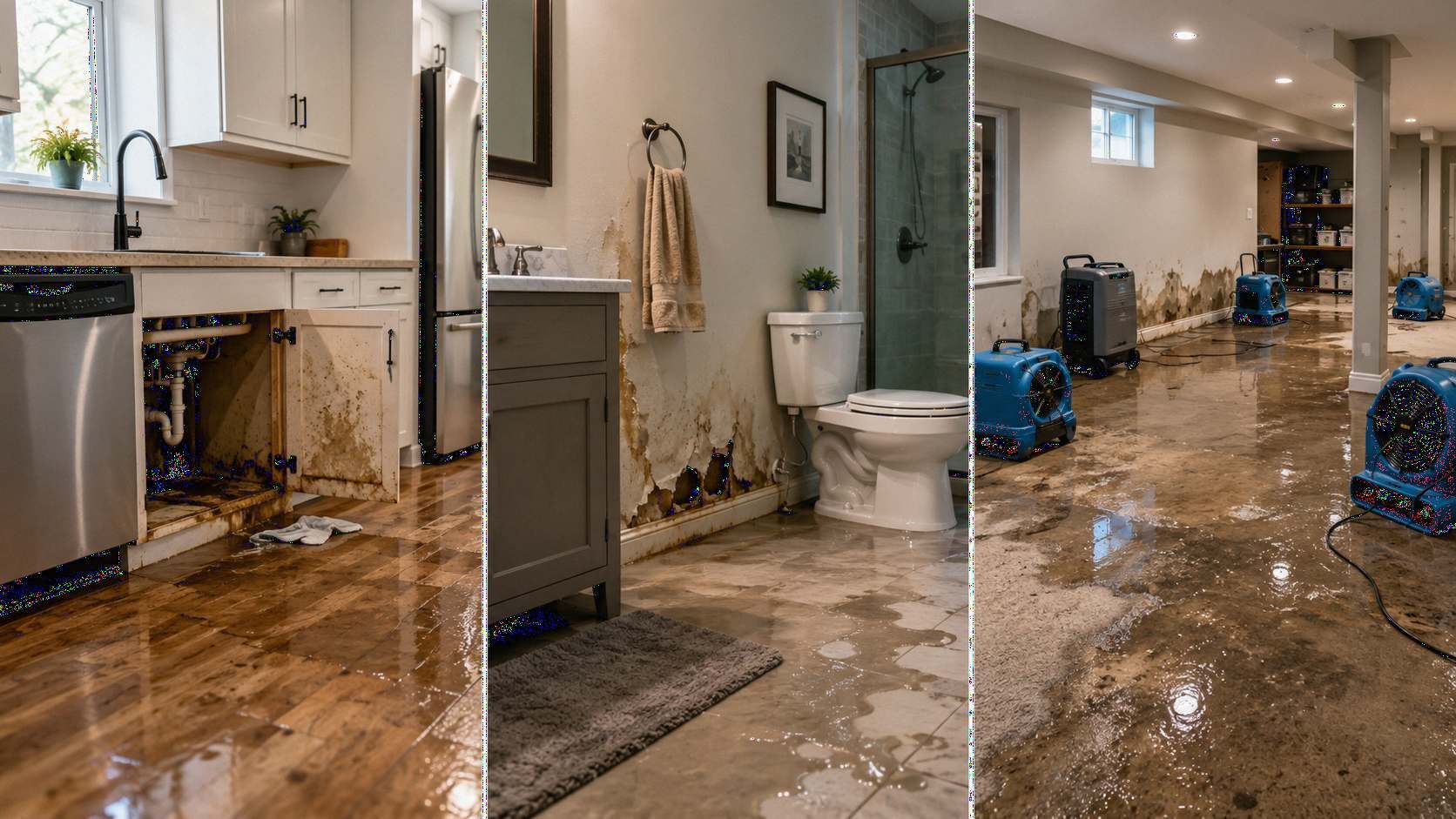
Water Damage Restoration Cost by Room: Kitchen, Bathroom, Basement Compared
The water damage restoration cost by room can vary significantly between a kitchen, bathroom, and basement because each space contains different materials, plumbing connections, finishes, and potential paths for hidden moisture.
Current 2026 national consumer pricing data gives homeowners a useful starting point. Angi reports an average water damage restoration cost of about $3,867, with projects ranging from approximately $450 to $16,000 depending on the source and extent of the damage. HomeGuide places the average project around $2,000 to $6,000, with much larger losses potentially costing considerably more.
For Northern Virginia homeowners, nearby Washington, D.C. provides additional regional context. Angi currently reports an average of about $2,861 for water damage repair in Washington, D.C., with average pricing of approximately $2.23 to $5.57 per square foot. These figures are regional benchmarks only—not Total Home Rescue pricing or a guaranteed estimate for Alexandria, Arlington, Fairfax, McLean, Vienna, or other Northern Virginia communities.
The key point is simple: water damage restoration cost by room is determined by the actual affected materials and restoration scope, not just by whether the loss occurred in a kitchen, bathroom, or basement.
For a complete overview of pricing factors see
Water Damage Restoration Cost by Room: Quick Comparison
Homeowners comparing the water damage restoration cost by room should focus on three questions: how much area became wet, what materials were affected, and what type of water is involved.
A kitchen may contain expensive cabinetry, hardwood or laminate flooring, appliances, drywall, and concealed spaces beneath cabinets.
A bathroom may be smaller but can involve plumbing fixtures, vanities, flooring, subflooring, wall cavities, and the ceiling below.
A basement often has the largest affected footprint and may contain carpet, drywall, insulation, finished flooring, furniture, stored contents, or contaminated water.
This is why a small kitchen leak can sometimes cost more to restore than a larger unfinished basement loss, while a severe basement flood can exceed both.
What Determines Water Damage Restoration Cost by Room?
The biggest factors influencing water damage restoration cost by room include:
- Water source and contamination level
- Total affected square footage
- Depth or volume of water
- Duration of exposure
- Flooring and wall materials
- Cabinet or vanity involvement
- Hidden moisture migration
- Accessibility of wet areas
- Material removal requirements
- Structural drying requirements
- Reconstruction after mitigation
HomeGuide currently estimates professional water extraction and drying at approximately $4 to $12 per square foot, depending primarily on the water category and equipment required. Its 2026 benchmarks place Category 1 water around $4–$6 per square foot, Category 2 around $6–$9, and Category 3 around $9–$12.
These are national consumer benchmarks rather than contractor price guarantees.
For a detailed explanation of the mitigation stage see
For drying specifically see
How Water Category Affects Restoration Cost
Water contamination can have a major effect on restoration scope.
Category 1 generally refers to water originating from a sanitary source. Category 2 involves water with a greater level of contamination, while Category 3 involves heavily contaminated water such as sewage. As contamination increases, cleaning requirements and the potential need to remove affected porous materials can also increase. HomeGuide's current pricing ranges reflect this progression.
Two rooms with identical dimensions can therefore have very different costs.
A clean-water supply leak discovered quickly is not equivalent to a sewage backup affecting the same amount of floor area.
Kitchen Water Damage Cost
The kitchen water damage cost is highly dependent on how far moisture travels beneath cabinets and finished flooring.
Common kitchen water sources include:
- Dishwasher leaks
- Refrigerator supply-line leaks
- Sink supply-line failures
- Drain leaks
- Garbage disposal leaks
- Broken pipes
- Water entering from an adjacent room
For appliance-related losses see
What Makes Kitchen Water Damage Expensive?
Water in a kitchen can affect several building components at once.
A dishwasher leak, for example, may spread beneath flooring before becoming visible. Water around the sink can enter the cabinet base, wall cavity, flooring, or subfloor. Depending on the layout, moisture can also migrate into an adjoining dining room, hallway, or basement ceiling.
As a result, kitchen water damage cost may involve:
- Water extraction
- Moisture assessment
- Cabinet and toe-kick access
- Removal of affected materials where necessary
- Drying beneath cabinets
- Flooring evaluation
- Subfloor drying
- Drywall drying or removal
- Dehumidification
- Moisture monitoring
- Reconstruction
The visible puddle is therefore not a reliable measure of the total affected area.
For moisture concealed beneath flooring see
For hardwood-specific damage see
Kitchen Cabinets and Hidden Moisture
Cabinets are one of the biggest variables affecting kitchen water damage cost.
A small leak confined to the sink cabinet may have a limited scope. A leak that travels beneath several cabinet sections can be more difficult to access and dry.
This does not mean that every wet kitchen requires cabinet removal. The appropriate scope depends on where moisture is actually present, the construction of the cabinets, the materials beneath them, and whether those materials can be effectively dried.
For an explanation of how concealed moisture is identified see
Example: Small Sink Leak vs. Dishwasher Leak
Consider two kitchens with exactly the same square footage.
In the first kitchen, a supply-line leak is discovered quickly and remains localized beneath the sink.
In the second, a dishwasher has been leaking beneath finished flooring and neighboring cabinets before the homeowner notices visible damage.
The rooms are the same size, but the second kitchen water damage cost may be considerably higher because more materials must be accessed, dried, evaluated, or repaired.
What Raises Kitchen Water Damage Cost?
The kitchen water damage cost generally increases when the loss involves multiple cabinet sections, continuous flooring, hardwood, subflooring, drywall, adjoining rooms, contaminated water, or extensive reconstruction.
Kitchen Cost Takeaway
When comparing water damage restoration cost by room, kitchens should be evaluated according to moisture migration and affected materials—not merely total kitchen square footage.
Bathroom Water Damage Cost
The bathroom water damage cost can also vary widely despite the relatively small size of most bathrooms.
Common water sources include:
- Toilet supply-line leaks
- Toilet overflows
- Sink plumbing
- Bathtub overflows
- Shower plumbing
- Drain failures
- Pipes inside walls
- Plumbing connections beneath vanities
Why Bathroom Water Damage Can Become a Multi-Room Loss
Water from an upstairs bathroom can move through floor penetrations, subfloor joints, wall cavities, and plumbing openings.
The affected area may therefore include:
- Bathroom flooring
- Vanity
- Baseboards
- Drywall
- Subfloor
- Wall cavities
- Ceiling below
- Walls in the lower room
This is why bathroom water damage cost should not automatically be assumed to be low simply because the bathroom itself is small.
For leaks affecting a lower ceiling see
For affected wall materials see
Bathroom Water Source Matters
A clean supply-line failure and a contaminated toilet overflow can require different restoration approaches.
Current consumer pricing data consistently shows that contaminated water generally costs more to address than sanitary water because cleaning and material-handling requirements increase. HomeGuide's current national benchmarks range from approximately $4–$6 per square foot for Category 1 extraction and drying to approximately $9–$12 for Category 3.
Consequently, the water source can influence bathroom water damage cost as much as the size of the bathroom.
Bathroom Water Damage and Mold
Slow plumbing leaks can remain concealed behind vanities, drywall, flooring, or other finishes.
The EPA recommends acting quickly after indoor water leaks and states that when wet or damp materials are dried within approximately 24–48 hours, mold will not grow in most cases. The agency also treats this period as guidance rather than an automatic deadline after which mold must be present.
For bathroom-specific mold issues see
For concealed mold inside walls see
Basement Restoration Cost Breakdown
A basement restoration cost breakdown can be more extensive because basement water losses frequently involve a larger floor area.
HomeGuide's 2026 basement flooding data places repair and restoration at approximately $2,000 to $8,000 on average for a small- to medium-sized basement, with many homeowners spending around $5,000. Cost varies substantially based on contamination, damage severity, and whether the basement is finished.
Flooded-basement cleanup alone may average approximately $4 to $12 per square foot for extraction, drying, and sanitizing, depending on contamination.
These figures should be used as planning benchmarks rather than a guaranteed basement restoration cost breakdown for a specific property.
What Is Included in a Basement Restoration Cost Breakdown?
A typical scope may involve:
- Identifying the water source
- Inspecting moisture migration
- Extracting standing water
- Removing affected materials where necessary
- Cleaning based on water conditions
- Setting drying equipment
- Dehumidifying the space
- Monitoring moisture
- Removing debris
- Reconstructing affected finishes
Finished vs. Unfinished Basement
The finish level can substantially affect the basement restoration cost breakdown.
An unfinished basement may contain exposed concrete with relatively few absorbent finish materials.
A finished basement can contain carpet, padding, LVP, hardwood, drywall, insulation, trim, doors, cabinets, and furnished living areas.
When those materials become wet, the project may involve both extensive mitigation and reconstruction.
Basement Sewage Backup
A sewage backup can significantly change the scope because it involves contaminated water.
HomeGuide's current benchmarks place heavily contaminated Category 3 extraction and drying higher than Category 1 work.
For more information see
If prolonged basement moisture has resulted in mold concerns see
Kitchen vs. Bathroom vs. Basement: Which Is Usually More Expensive?
There is no room that will always produce the highest water damage restoration cost by room.
A basement often produces a larger total because more square footage may be affected.
A kitchen can become expensive because cabinets, flooring, appliances, and difficult-to-access moisture are concentrated in one area.
A bathroom can develop into a multi-level loss if water moves through the floor into the ceiling and walls below.
For this reason, the better comparison is:
Kitchen: cabinetry, flooring, appliances, subflooring, hidden moisture, reconstruction
Bathroom: plumbing source, contamination, vanity, subfloor, wall cavities, ceiling below
Basement: affected square footage, standing water, finish level, drywall, carpet, contents, contamination
The water damage restoration cost by room ultimately follows the restoration scope rather than the room label.
Water Mitigation Cost vs. Reconstruction Cost
One of the most important distinctions when comparing estimates is whether the price covers mitigation, reconstruction, or both.
Water Mitigation
Water mitigation focuses on controlling the immediate loss and drying the affected structure.
Depending on conditions, it can include extraction, removal of affected materials, cleaning, air movement, dehumidification, and moisture monitoring. Angi describes the restoration process as beginning with stopping the source, removing standing water, assessing severity, drying, cleaning, and completing necessary repairs.
Reconstruction
Reconstruction occurs after mitigation when removed or damaged finishes need to be restored.
It can include:
- Drywall
- Flooring
- Trim
- Paint
- Cabinets
- Vanities
- Insulation
- Other finish materials
A mitigation-only estimate should not be compared directly with an estimate that includes a complete rebuild.
For the complete sequence see
Why the First 24–48 Hours Matter
Fast response can help limit the area affected by moisture and reduce conditions favorable to mold growth.
The EPA recommends addressing indoor leaks quickly and drying wet or damp areas within approximately 24–48 hours when possible.
Homeowners dealing with an active loss can review
For urgent losses see
For project timing factors see
What If Mold Is Found During Water Damage Restoration?
Mold remediation should not automatically be included in every water-loss project.
However, prolonged moisture, hidden leaks, or previously wet materials can create conditions in which mold becomes part of the restoration scope. The EPA identifies moisture control as the central principle of mold prevention and cleanup.
For the connection between water damage and mold see
For remediation pricing see
For determining when remediation may be appropriate see
Does Insurance Cover Water Damage Restoration by Room?
Insurance coverage is generally determined by the cause of the loss and the wording of the policy rather than the room where the damage occurred.
The National Association of Insurance Commissioners notes that homeowners policies generally cover damage resulting from a sudden and accidental discharge from a plumbing system, subject to the individual policy's terms and exclusions.
External flooding is different. The National Flood Insurance Program states that most homeowners and renters insurance does not cover flood damage and that separate flood insurance is generally used for direct physical flood losses.
For more detail see
For claim documentation see
For common denial issues see
FAQ: Water Damage Restoration Cost by Room
1. What is the average water damage restoration cost by room?
There is no trustworthy universal average that applies to every kitchen, bathroom, or basement.
Current 2026 national data places the average full water damage restoration project around $3,867 according to Angi, while HomeGuide reports approximately $2,000 to $6,000 for many projects. These numbers describe overall projects rather than fixed per-room rates.
The actual water damage restoration cost by room depends on the amount of affected material, water category, flooring type, drywall involvement, hidden moisture, drying requirements, demolition, and reconstruction.
A small bathroom leak caught immediately may require a much smaller scope than a finished basement containing wet drywall and flooring. Conversely, a kitchen loss involving cabinetry and hardwood can cost more than a larger unfinished basement.
The room tells you what materials may be at risk. The moisture assessment determines the actual scope.
2. How much does kitchen water damage restoration cost?
There is no reliable nationwide flat kitchen water damage cost because kitchen losses vary too widely.
A small under-sink supply leak may affect only a cabinet and a small section of flooring. A dishwasher leak may spread beneath multiple cabinets and continuous flooring. A broken supply line can send water into adjoining rooms or the level below.
The kitchen water damage cost therefore depends on which components are affected, including cabinetry, toe kicks, flooring, subflooring, drywall, appliances, and adjacent finishes.
The estimate should also distinguish between mitigation and reconstruction. Drying a wet cabinet area is not the same scope as replacing cabinets, flooring, drywall, trim, and paint.
For accurate budgeting, moisture migration should be identified before applying generic square-foot pricing to the kitchen.
3. How much does bathroom water damage restoration cost?
The bathroom water damage cost depends on the source and how far water traveled.
A sanitary supply-line leak discovered quickly may remain localized. A toilet overflow, shower leak, or concealed plumbing problem may involve subflooring, drywall, the vanity, wall cavities, and the ceiling below.
Contamination is also important. Current national consumer cost data shows higher extraction and drying benchmarks as water contamination increases.
An upstairs bathroom should also be evaluated for vertical moisture migration. Damage visible in the bathroom may represent only one part of the affected area.
For that reason, bathroom size alone is a poor predictor of total restoration cost.
4. What should a basement restoration cost breakdown include?
A useful basement restoration cost breakdown separates the major stages of work instead of presenting only one total number.
Depending on conditions, those stages may include water extraction, removal of affected materials, cleaning, drying equipment, dehumidification, moisture monitoring, debris disposal, and reconstruction.
HomeGuide currently estimates approximately $2,000 to $8,000 for repair and restoration of many small- to medium-sized flooded basements, but the range can change substantially with contamination, severity, and finish level.
A finished basement can require additional work involving drywall, flooring, insulation, baseboards, doors, paint, and other finishes.
Contaminated water can also increase the cleanup scope compared with a sanitary plumbing loss.
5. How can homeowners keep water damage restoration costs from increasing?
The most important step is to control the water source when it is safe to do so and address wet materials promptly.
The EPA advises acting quickly after indoor water leaks and recommends drying wet or damp materials within approximately 24–48 hours when possible to reduce the likelihood of mold growth.
Homeowners should also document visible damage, protect unaffected contents when safe, avoid direct contact with contaminated water, consider the possibility of moisture beyond visibly wet surfaces, and keep mitigation and reconstruction documentation organized.
Another important step is comparing estimates by scope rather than price alone. One contractor may quote mitigation only while another estimate includes demolition and reconstruction.
For DIY versus professional cleanup considerations see
For contractor selection see
Final Takeaway
The water damage restoration cost by room is best understood as a comparison of affected materials rather than a fixed price chart for kitchens, bathrooms, and basements.
The kitchen water damage cost is commonly influenced by cabinetry, flooring, appliances, subflooring, hidden moisture, and difficult access.
The bathroom water damage cost depends heavily on the plumbing source, contamination level, subfloor involvement, wall cavities, and whether water reaches the room below.
The basement restoration cost breakdown is frequently driven by affected square footage, standing-water volume, finished materials, contents, contamination, drying, and reconstruction.
Current 2026 national and Washington, D.C. pricing data can provide homeowners in Northern Virginia with useful budgeting context, but the published ranges vary substantially because every water loss is different.
The most accurate way to determine water damage restoration cost by room is to identify the source, determine how far moisture traveled, evaluate the affected materials, establish the required drying scope, and separate emergency mitigation from reconstruction.
That provides a much more meaningful estimate than assigning a generic price to a kitchen, bathroom, or basement.

