

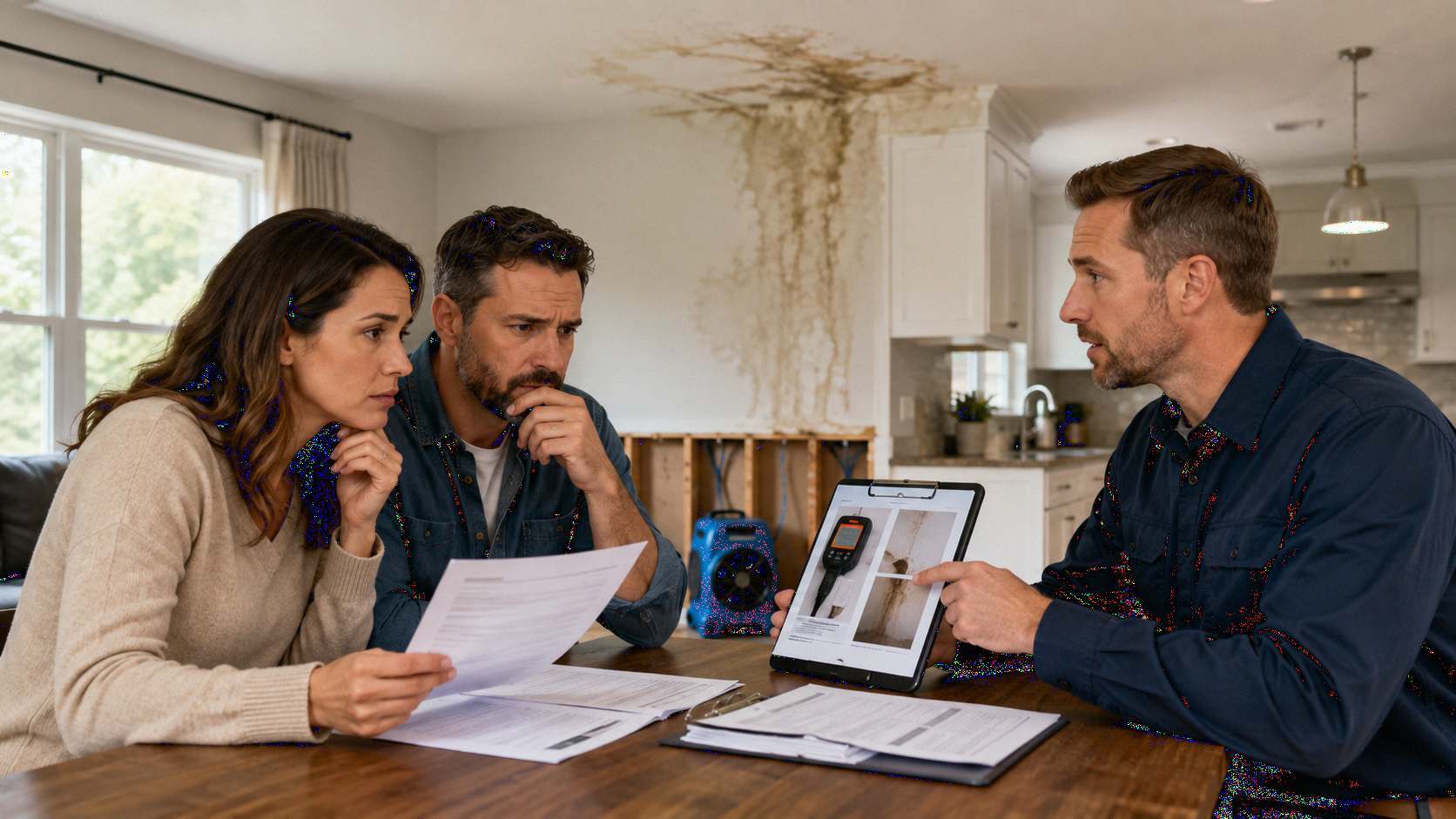
Quick Answer: Water Damage Claim Denied Reasons
The most common water damage claim denied reasons include gradual damage, poor maintenance, late reporting, missing documentation, flood or surface water exclusions, sewer backup issues, mold limitations, pre-existing damage, and an insurance adjuster dispute over cause or scope. A denial does not automatically mean the damage is minor. It means the insurance carrier believes the policy language, facts, or documentation do not support payment.
Most water damage coverage questions begin with one issue: was the loss sudden and accidental, or did it develop over time? NAIC explains that homeowners policies may cover damage from a sudden and accidental discharge from a plumbing system, but damage may not be covered if the insurer determines the homeowner neglected the plumbing system or failed to take reasonable preventive steps.
If your water damage claim is denied, ask for the denial letter in writing, request the exact policy language, organize photos and videos, keep plumber or technician reports, save mitigation invoices, and respond with evidence. A restoration contractor can help document water damage, moisture conditions, affected materials, and mitigation steps, but the insurance carrier decides coverage.
For claim documentation help, see water damage insurance claim heап
Water damage claim denied reasons often include gradual damage exclusion, maintenance issue denial, flood or surface water exclusions, sewer backup exclusions, mold limits, delayed reporting, incomplete documentation, and insurance adjuster dispute over cause, scope, or repair method. Homeowners can respond by requesting the denial letter, reviewing policy language, documenting the water source, saving photos and videos, keeping plumber reports, protecting the property from further damage, preserving damaged materials when possible, and submitting additional evidence. A contractor can help document damage and mitigation, but coverage decisions belong to the insurance carrier.
Why Water Damage Claims Get Denied
Water damage claims are usually denied because the carrier believes the source, timing, documentation, or policy language does not support coverage. The property may have real damage, but insurance review depends on whether the damage connects to a covered cause of loss.
A burst supply line is different from a slow leak under a vanity. A washing machine hose failure is different from long-term moisture under flooring. A roof opening caused by a sudden storm event is different from an old roof leak related to wear, flashing problems, or maintenance. This is why water damage claim denied reasons often start with the cause of water, not only the amount of visible damage.
Common claim denial reasons include:
- The damage was not considered sudden and accidental
- The carrier believes the leak happened gradually
- The denial cites a gradual damage exclusion
- The carrier believes it was a maintenance issue
- The water came from flood, groundwater, or surface water
- Sewer or drain backup coverage was not included
- The claim was reported late
- The homeowner did not mitigate further damage
- The source of water was unclear
- The damage appeared pre-existing
- Mold was excluded or limited
- Photos, reports, or receipts were missing
- The adjuster disputed mitigation or repair scope
For a broader coverage guide, see does insurance cover water damage restoration
Sudden and Accidental Damage vs Gradual Damage
One of the biggest water damage claim denied reasons is the difference between sudden damage and gradual damage. Insurance policies often treat a sudden plumbing discharge differently from damage that developed slowly.
A sudden and accidental water event may involve:
- A pipe that suddenly bursts
- A water heater that releases water without warning
- A washing machine supply hose failure
- A toilet supply line break
- A dishwasher line failure
- A frozen pipe burst after reasonable precautions
- An appliance leak discovered quickly
A gradual water issue may involve:
- A slow leak behind a wall
- Long-term seepage under flooring
- A drain leak under a cabinet
- Repeated roof leak stains
- Old caulking or grout failure
- Moisture damage with staining, rot, or soft materials
- A leak ignored after warning signs appeared
A gradual damage exclusion matters because many policies separate sudden accidental water events from seepage, leakage, deterioration, neglect, or long-term moisture. Virginia’s homeowners insurance guide explains that policies include exclusions and that homeowners policies issued in Virginia generally cover a building against all perils except listed exclusions such as flood, neglect, and certain other causes.
For wet drywall guidance, see wet drywall after water leak
Gradual Damage Exclusion
A gradual damage exclusion usually comes up when the insurance company believes the leak happened over weeks, months, or years. This is one of the most common water damage claim denied reasons because many hidden leaks are discovered only after flooring, cabinets, drywall, or ceilings show visible symptoms.
Signs that may make a carrier question whether damage was gradual include:
- Long-term staining
- Soft or deteriorated subfloor
- Rusted plumbing components
- Mold around the leak area
- Repeated water marks
- Swollen cabinet bottoms
- Delaminated flooring
- Prior patching or paint marks
- Musty odor before the loss was reported
A homeowner may disagree with a gradual damage denial. Water may have spread suddenly even if a fitting showed older wear. Damage may also have been hidden until flooring, drywall, or ceiling materials visibly changed. In that situation, documentation matters.
Helpful evidence may include:
- Plumber report identifying the source
- Photos from the day the damage was found
- Timeline of when symptoms first appeared
- Moisture readings
- Prior repair or maintenance records
- Photos showing the area before the loss
- Appliance service records
- Written statement explaining discovery
A contractor should not promise coverage, but clear documentation can help support the claim file when the issue is timing, source, or repair scope.
Maintenance Issue Denial
A maintenance issue denial happens when the carrier believes the damage resulted from lack of maintenance instead of a covered sudden event. The Insurance Information Institute explains that maintenance damage is not covered and that homeowners are responsible for maintaining the home and taking reasonable precautions to protect it from damage.
Examples that may trigger a maintenance issue denial include:
- Old roof leak that was not repaired
- Repeated plumbing leak ignored over time
- Damaged shower grout or caulking
- Long-term leak under a sink
- Known foundation seepage
- Repeated appliance leak
- Poorly maintained HVAC drain line
- Prior water stains with no repair record
This type of denial often becomes a timing dispute. The adjuster may believe the damage developed gradually, while the homeowner believes the loss happened suddenly. That is where source documentation becomes important.
Useful documentation may include:
- Date the water was discovered
- Photos before cleanup
- Photos of the water source
- Plumber or technician report
- Moisture readings
- Mitigation notes
- Prior repair records
- Maintenance receipts
- Photos showing no prior damage
- Written timeline of events
For appliance leak guidance, see appliance leak water damage
Flood, Surface Water, and Sewer Backup Exclusions
Not all water damage is treated the same. Internal plumbing water, outside floodwater, surface water, groundwater, sewer backup, and sump overflow may be handled under different policy language.
Virginia SCC explains that homeowners insurance policies issued in Virginia generally do not provide coverage for damage caused by floods, surface water, or surges. FloodSmart also states that most homeowners, renters, and business insurance does not cover flood damage, and NFIP flood insurance generally takes effect 30 days after purchase, with listed exceptions.
Sewer and drain backup is another common source of confusion. Virginia administrative code states that insurers shall offer coverage for water backing up through sewers or drains, subject to exclusions or limitations, either within the policy or as an endorsement. That does not mean every policy automatically covers every sewer backup loss. It means homeowners should review whether they purchased the option, what limits apply, and what exclusions remain.
For sewage backup cleanup, see sewage backup cleanup Virginia
Insurance Adjuster Dispute Over Cause or Scope
An insurance adjuster dispute often starts when the homeowner, contractor, plumber, and adjuster do not agree on the cause of loss, amount of damage, or repair method. This can happen even when everyone agrees that water damage exists.
An insurance adjuster dispute may involve:
- Whether the source was sudden or gradual
- Whether the damage is covered or excluded
- Whether flooring can be dried or must be removed
- Whether drywall cuts are necessary
- Whether cabinets were affected
- Whether insulation is wet
- Whether hidden moisture exists
- Whether mold is related to the water event
- Whether the estimate includes all affected materials
- Whether matching, access, or repair method is disputed
A restoration contractor can document affected materials and moisture conditions. A plumber can document the source of the leak. The carrier reviews the policy and decides coverage. If the dispute is about scope, photos, moisture readings, drying records, demolition photos, and written explanations can help clarify the file.
For structural drying details, see structural drying after water damage
Lack of Documentation
Weak documentation is one of the most avoidable water damage claim denied reasons. A homeowner may have a legitimate loss, but if the source is unclear, damaged materials were discarded too quickly, photos are missing, or mitigation records are incomplete, the claim becomes harder to evaluate.
Virginia SCC advises policyholders to contact their insurance agent or company immediately after a loss, protect the property from further loss or damage, and provide a list of damaged, destroyed, or stolen property. Good documentation helps show what happened, when it happened, what materials were affected, and what steps were taken to reduce further damage.
Strong documentation includes:
- Photos of the water source
- Photos of standing water
- Photos of damaged flooring, drywall, ceilings, cabinets, and contents
- Videos before cleanup
- Date and time discovered
- Plumber or technician notes
- Moisture readings
- Drying equipment records
- Demolition photos
- Contents inventory
- Receipts for emergency repairs
- Communication log with insurance
- Copy of the denial letter
- Copy of the policy and endorsements
For first-day documentation steps, see first 24 hours water damage checklist
Failure to Mitigate Further Damage
Homeowners are usually expected to take reasonable steps to protect the property after a loss. This does not mean completing permanent repairs before the claim is reviewed. It means reducing additional damage where possible.
Mitigation may include:
- Shutting off the water
- Calling a plumber
- Removing standing water when safe
- Moving contents out of wet areas
- Starting professional drying
- Covering openings after storm damage
- Keeping receipts for temporary repairs
- Preventing wet materials from spreading damage
- Documenting emergency steps
Failure to mitigate can become a denial or reduction issue if the carrier believes additional damage happened because the homeowner did not act reasonably after discovering the loss. The safer approach is to document first, take emergency steps quickly, and keep every invoice, photo, and note.
For mitigation process details, see water mitigation process
Emergency Mitigation
Emergency mitigation focuses on stopping water, extracting water, drying materials, and reducing additional damage.
Permanent Repairs
Permanent repairs should usually wait until documentation, moisture control, and scope decisions are clear.
Moisture Verification
Moisture checks help show whether drywall, flooring, insulation, cabinets, or subflooring remain affected.
Simple Rule
Document first, mitigate quickly, and keep every receipt.
Mold and Secondary Damage Denials
Mold can complicate water damage claims. Some policies exclude mold, some limit mold coverage, and some may only address mold when it results from a covered water loss. Virginia SCC notes that if mold is a consequence of another covered loss, the consequential mold loss is covered, but if mold is the direct cause of loss, it is excluded.
A mold-related denial may happen when:
- The leak was long-term
- Moisture was not addressed quickly
- Mold is considered the direct cause
- The policy has a mold exclusion
- Mold coverage is limited
- The carrier disputes the cause
- The damage appears pre-existing
EPA says moisture control is the key to mold control and recommends drying water-damaged areas and items within 24–48 hours to help prevent mold growth.
For mold after leaks, see mold after water damage Virginia
For prevention guidance, see how to prevent mold growth Northern Virginia
What to Do If Your Water Damage Claim Is Denied
A denial is not always the end of the claim. It means the insurance company has taken a position based on the information available. Your next step is to understand exactly why the claim was denied.
Start with these steps:
- Ask for the denial letter in writing
- Request the specific policy language used
- Review exclusions, endorsements, and duties after loss
- Gather all photos and videos
- Save plumber or leak-source reports
- Keep mitigation invoices and drying logs
- Organize contents documentation
- Ask what evidence would change the decision
- Compare the denial reason to the facts
- Respond in writing
- Consider a second opinion when appropriate
Virginia SCC states that homeowners who believe their insurer refused to pay all or part of a valid claim have the right to question and complain, and it recommends first contacting the agent or company, preferably in writing, while keeping copies and call notes.
For choosing a contractor, see how to choose water damage restoration company
When to Escalate an Insurance Adjuster Dispute
An insurance adjuster dispute may be resolved with better documentation, a revised estimate, additional photos, a plumber report, or a written clarification. But some disputes require escalation.
Consider escalation when:
- The denial reason seems inconsistent with the facts
- The adjuster did not inspect affected areas
- Hidden moisture was not considered
- The source was misidentified
- The scope excludes affected materials
- The claim file ignores plumber findings
- The estimate is missing necessary repairs
- You cannot get a clear explanation
- The carrier does not respond clearly
Escalation should be evidence-based. The goal is not to argue emotionally; the goal is to show the cause of loss, document affected materials, explain mitigation steps, and connect the dispute to policy language.
Local Water Damage and Mold Resources
Denied or disputed water damage claims often connect with mitigation, emergency drying, repair scope, mold concern, flooring damage, wet drywall, and documentation.
FAQ: Water Damage Claim Denied Reasons
1. What are the most common water damage claim denied reasons?
The most common water damage claim denied reasons include gradual damage, maintenance issue denial, flood or surface water exclusions, sewer backup exclusions, late reporting, incomplete documentation, pre-existing damage, mold exclusions, and disagreement over whether the damage was sudden and accidental.
The key issue is usually the cause of loss. If the carrier believes the leak happened slowly over time, it may cite a gradual damage exclusion. If the carrier believes the issue came from neglect, old materials, or lack of repairs, it may cite a maintenance issue denial. If the water came from outside flooding, groundwater, surface water, sewer backup, or drain backup, the claim may depend on exclusions or endorsements.
2. What does gradual damage exclusion mean?
A gradual damage exclusion means the policy may exclude water damage that developed over time instead of from a sudden and accidental event. This can include slow plumbing leaks, repeated seepage, long-term roof leaks, old shower leaks, or moisture damage that existed before the claim.
If you disagree with a gradual damage denial, focus on evidence. A plumber report, photos, moisture readings, prior maintenance records, appliance service records, and a clear timeline may help show whether the damage was sudden, hidden, recent, or long-term.
3. What is a maintenance issue denial?
A maintenance issue denial means the insurance company believes the damage resulted from failure to maintain the property rather than a covered event. Examples may include worn roofing, old caulking, repeated drain leaks, ignored water stains, or plumbing deterioration.
A homeowner can respond by providing repair receipts, maintenance records, service history, photos showing the area before the loss, plumber findings, and a timeline explaining when the damage was discovered. The stronger the documentation, the easier it is to separate sudden damage from long-term deterioration.
4. What should I do during an insurance adjuster dispute?
During an insurance adjuster dispute, first identify what is being disputed: coverage, cause, scope, pricing, material removal, drying need, or repair method. Then organize documentation around that exact issue.
Useful evidence may include photos, videos, plumber reports, restoration estimates, moisture readings, drying logs, damaged material photos, mitigation invoices, and written communication. If the dispute continues, homeowners may ask for supervisor review, request clarification in writing, consider appraisal if the policy allows it, or contact the Virginia SCC for consumer information or complaint support.
5. Can a contractor get my denied water damage claim approved?
A contractor cannot guarantee claim approval. The insurance company decides coverage based on the policy, cause of loss, exclusions, documentation, and claim investigation.
A restoration contractor can still help by documenting affected materials, moisture conditions, mitigation steps, drying needs, and repair scope. That documentation may help if the denial is based on incomplete information, unclear damage, missing photos, or a dispute over the extent of water damage. Coverage decisions still belong to the carrier.
Final Takeaway
The biggest water damage claim denied reasons usually involve cause, timing, exclusions, and documentation. Insurance companies often deny claims because they believe the damage was gradual, maintenance-related, flood-related, excluded by policy language, reported late, or unsupported by the claim file.
If your water damage claim is denied, ask for the reason in writing, request the exact policy language, organize your evidence, protect the property from further damage, and respond with facts. If the issue becomes an insurance adjuster dispute, focus on source reports, photos, moisture readings, mitigation records, estimates, and written communication. A restoration contractor can support documentation, but the insurance carrier decides coverage.

