

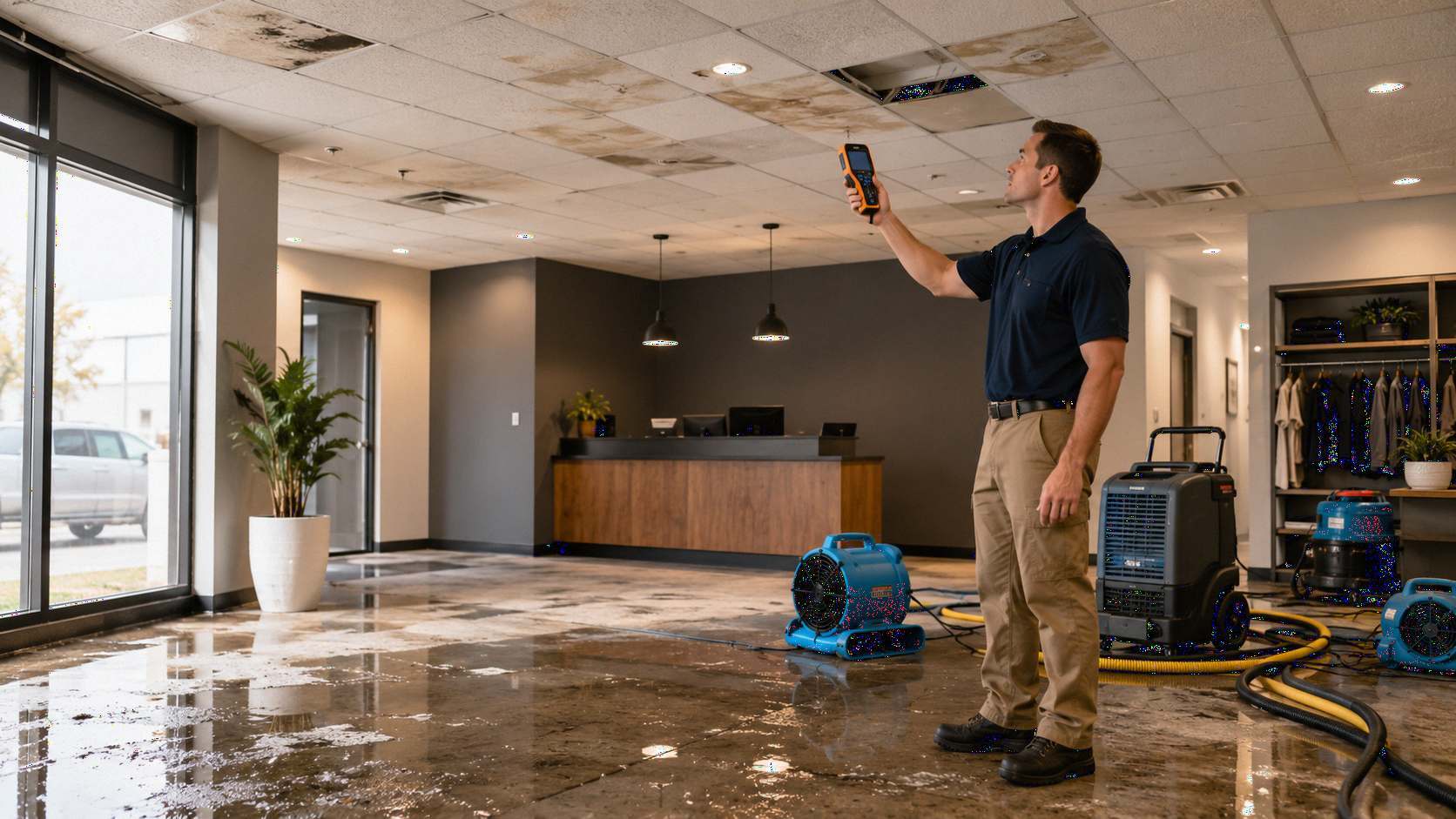
Quick Answer: Commercial Water Damage Restoration Virginia
Commercial water damage restoration Virginia is the process of stabilizing a business property after a pipe burst, roof leak, sprinkler discharge, HVAC drain backup, appliance leak, sewer backup, storm intrusion, or flooding event. For a business owner, the goal is not only to remove water. The real goal is to protect employees and customers, reduce downtime, document damage, dry affected materials, protect inventory and equipment, and prepare the space for repairs or reopening.
Office water damage can affect workstations, ceiling tiles, carpet tiles, file storage, IT rooms, conference rooms, tenant improvements, and shared building areas. Retail flooding cleanup can involve customer safety, damaged inventory, product packaging, shelving, point-of-sale systems, display fixtures, stockrooms, and sales floor access. Business interruption water damage can also affect revenue, appointments, deliveries, payroll, operations, and customer access.
Ready.gov recommends that business emergency plans address continuity, communications, IT support, and recovery planning. After commercial water damage, that means the response should focus on safety, documentation, mitigation, business continuity, insurance coordination, and reopening planning.
For first-day water damage steps, see first 24 hours water damage checklist
Commercial water damage restoration Virginia helps business owners respond to office water damage, retail flooding cleanup, warehouse leaks, plumbing failures, sprinkler discharge, roof leaks, HVAC drain backups, and business interruption water damage. The process usually includes safety review, source control, water extraction, moisture inspection, contents protection, drying equipment, removal of unsalvageable materials when needed, cleaning, documentation, insurance coordination, and repair planning. Business owners should protect employees and customers, document damage, move inventory and records when safe, notify the landlord or property manager if applicable, contact insurance, and begin mitigation quickly to reduce downtime and secondary damage.
Why Commercial Water Damage Is Different From Residential Water Damage
Commercial water damage is different because the property is tied directly to operations. A residential water loss disrupts one household. A commercial water loss can disrupt employees, customers, tenants, vendors, inventory, income, access, appointments, production, and lease responsibilities.
A commercial water loss may happen in:
- Office suites
- Retail stores
- Restaurants
- Medical offices
- Dental offices
- Warehouses
- Salons
- Gyms
- Professional buildings
- Mixed-use properties
- Property management spaces
- Storage rooms
- Utility rooms
- Common areas
The first priority is safety. Wet floors can create slip hazards. Ceiling leaks may affect ceiling tiles, lights, wiring, insulation, and work zones. Water can travel under flooring, behind baseboards, into wall cavities, below cabinets, across carpet tiles, and into shared building spaces.
EPA’s commercial building guidance includes response strategies for water-damaged materials within 24–48 hours and notes that professional assistance may be needed depending on the size of the affected area and available resources. For business owners, visible water is only part of the problem. Hidden moisture, occupant safety, documentation, and downtime matter too.
For structural drying guidance, see structural drying after water damage
Common Causes of Commercial Water Damage in Virginia
Commercial properties in Virginia can experience water damage from plumbing failures, storms, roof leaks, sprinkler systems, HVAC issues, drain backups, appliance leaks, shared plumbing, and neighboring unit leaks. In Northern Virginia and the DMV area, business spaces may also be affected by heavy rain, older building systems, multi-story leaks, utility room problems, and tenant build-outs.
Common sources include:
- Burst pipes
- Toilet supply line failures
- Water heater leaks
- Roof leaks
- HVAC condensation drain backups
- Fire sprinkler discharge
- Sink and drain overflows
- Sewer or drain backups
- Heavy rain intrusion
- Foundation seepage
- Leaks from upstairs tenants
- Refrigerator or ice maker line leaks
- Utility room leaks
- Plumbing failures inside walls or ceilings
- Mop sink or janitorial closet leaks
The water source matters because cleanup, drying, documentation, and insurance review can change depending on whether the water came from a clean plumbing line, exterior flooding, roof entry, sewage backup, sprinkler discharge, or a long-term leak.
For burst pipe guidance, see burst pipe water damage
For appliance leaks, see appliance leak water damage
Office Water Damage: What Business Owners Should Watch For
Office water damage often looks minor at first. A wet carpet tile, ceiling stain, dripping vent, or puddle near a wall may not look like a major loss. The problem is that office buildings often have layered materials and hidden moisture paths.
Water can move through:
- Carpet tile seams
- Carpet pad
- Drywall bottoms
- Baseboards
- Wall cavities
- Ceiling tiles
- Insulation
- Office partitions
- Built-in cabinets
- Electrical rooms
- IT closets
- Copy rooms
- Shared hallways
- Storage rooms
Business owners should protect electronics, file storage, desks, product samples, employee records, tenant files, and furniture. Even when the surface looks dry, moisture may remain inside materials. If staff return too quickly without proper drying, odor, staining, swelling, and mold concern can follow.
EPA’s water damage table for schools and commercial buildings provides guidance for response to clean water damage within 24–48 hours to help prevent mold growth. This does not mean every office leak becomes mold at exactly 48 hours. It means office water damage should be inspected, dried, and verified instead of ignored.
For wet drywall decisions, see wet drywall after water leak
Retail Flooding Cleanup: Protecting Customers and Inventory
Retail flooding cleanup requires a customer-safety mindset. A retail store may have merchandise, shelving, display racks, POS systems, packaging, dressing rooms, customer walkways, signage, stockrooms, and employee areas.
The first step is to keep customers and staff out of affected zones. Customers should not walk through wet floors, active leak areas, or aisles below ceiling damage. If outlets, fixtures, extension cords, ceiling systems, or lighting are involved, the area should be treated carefully until conditions are checked.
Retail water damage can affect:
- Inventory
- Product packaging
- Shelving
- Display fixtures
- Checkout areas
- POS equipment
- Flooring
- Wall finishes
- Storage rooms
- Dressing rooms
- Customer walkways
- Back-office records
- Employee areas
Inventory should be documented separately from building damage. Photos, videos, item counts, vendor invoices, product cost records, packaging notes, and disposal records may help support the claim file. If contaminated water is involved, inventory decisions may need to be more cautious.
For water under flooring, see water damage under flooring
Warehouse, Restaurant, and Medical Office Priorities
Not every commercial water loss has the same priorities. An office, retail store, warehouse, restaurant, and medical office may all need water extraction and drying, but the operational risk is different.
A warehouse may prioritize:
- Stored materials
- Pallets
- Product contamination
- Loading areas
- Floor safety
- Equipment access
- Shipping delays
- Inventory documentation
A restaurant or food-related business may prioritize:
- Sanitation concerns
- Kitchen flooring
- Wall surfaces
- Equipment access
- Odor control
- Storage areas
- Reopening requirements
- Customer perception
A medical or dental office may prioritize:
- Patient safety
- Records
- Equipment
- Treatment rooms
- Controlled areas
- Scheduling disruption
- Moisture behind cabinets
- Tenant improvement damage
The restoration scope should match the business type, water source, affected materials, customer exposure, employee safety, and reopening plan.
Business Interruption Water Damage
Business interruption water damage can become more expensive than visible building damage. A company may lose revenue if it cannot receive customers, use equipment, access inventory, complete appointments, meet deliveries, or keep employees working safely.
NAIC explains that business interruption insurance, also called business income insurance, helps small businesses protect against monetary losses during suspended operations when a covered event causes physical property damage. Coverage depends on the policy, cause of loss, exclusions, waiting periods, limits, and carrier review. A contractor should not promise that business interruption will be covered.
Business interruption water damage may involve:
- Lost sales
- Canceled appointments
- Temporary closure
- Payroll pressure
- Missed deliveries
- Damaged inventory
- Extra operating expenses
- Temporary relocation
- Lost customer traffic
- Delayed production
- Limited access to rooms or equipment
Business owners should document downtime from day one. Track closure dates, partial reopening, affected rooms, employee limitations, customer cancellations, delivery issues, sales changes, extra expenses, and temporary operating changes.
For claim documentation help, see water damage insurance claim help
What to Do First After Commercial Water Damage
The first response can affect safety, drying success, insurance documentation, downtime, and reopening. Business owners should act quickly but avoid creating additional hazards.
Start with these steps:
- Stop the water source if it is safe
- Shut off affected plumbing if needed
- Keep employees and customers away from wet areas
- Avoid electrical hazards
- Take photos and videos before cleanup when safe
- Notify the landlord or property manager if leased
- Contact the insurance carrier or agent
- Move inventory, files, and equipment when safe
- Begin extraction and drying
- Keep receipts and invoices
- Track closure time and lost operations
- Save damaged materials if inspection is needed
Do not rely only on small fans. Commercial water damage often requires moisture inspection, extraction, dehumidification, controlled airflow, and monitoring. Water can remain under flooring, behind baseboards, inside walls, and above ceilings even when the surface looks dry.
Ready.gov says an emergency plan should account for critical operations, employees, customers, suppliers, communications, IT, and continuity. During a water damage event, the cleanup plan should support both building recovery and business continuity.
For mitigation details, see water mitigation process
Emergency Response
Emergency response focuses on safety, source control, water removal, documentation, and preventing the loss from spreading.
Moisture Inspection
Moisture inspection helps identify affected drywall, flooring, ceilings, cabinets, partitions, insulation, and hidden spaces.
Drying Plan
A drying plan should match the water source, material type, building use, humidity level, and business operations.
Simple Rule
Protect people first, document the damage second, and begin mitigation quickly.
Commercial Water Damage Restoration Process
A professional commercial water damage restoration Virginia process usually follows a structured sequence. The exact scope depends on the water source, affected materials, contamination level, business type, building layout, and insurance documentation needs.
Typical steps include:
- Site safety review
- Source identification
- Water extraction
- Moisture mapping
- Contents protection
- Equipment setup
- Removal of unsalvageable materials when needed
- Cleaning and drying
- Moisture monitoring
- Documentation for the claim file
- Repair planning
- Final checks before rebuild or reopening
Commercial restoration is not only about drying materials. It is also about coordination. Business owners may need to work with landlords, property managers, building engineers, insurance adjusters, plumbers, electricians, employees, vendors, and customers.
If water damage involves sewage, contaminated water, or biological pollutants, the cleanup should be treated differently from a clean water leak. EPA’s commercial mold guide notes that if the water source is contaminated with sewage or chemical or biological pollutants, OSHA-required personal protective equipment and containment may be required.
For choosing a contractor, see how to choose water damage restoration company
Tenant, Landlord, and Property Manager Coordination
Many commercial water losses happen in leased spaces. That makes communication important. The tenant may operate the business, but the landlord or property manager may control building systems, roof access, common areas, main plumbing, electrical rooms, or building engineers.
Business owners should clarify:
- Who is responsible for the source repair
- Who contacts the building engineer
- Who notifies insurance
- Who documents tenant improvements
- Who protects inventory and business personal property
- Who approves emergency mitigation
- Who coordinates access after hours
- Who communicates with neighboring tenants
- Who approves repairs and reopening work
A lease may affect responsibilities, but a restoration contractor should not interpret lease obligations or guarantee coverage. The safest approach is to document everything, notify all required parties, and keep written communication.
Insurance and Commercial Water Damage
Commercial water damage insurance can be more complex than residential insurance because multiple parties may be involved. A tenant may have business personal property coverage, tenant improvements and betterments coverage, business income coverage, or contents coverage. A building owner may have a separate commercial property policy. A landlord, tenant, property manager, or neighboring unit may each have different responsibilities depending on the lease and cause of loss.
Coverage may depend on:
- Cause of water
- Policy language
- Exclusions
- Endorsements
- Deductibles
- Tenant lease terms
- Building ownership
- Business personal property coverage
- Business income coverage
- Maintenance history
- Documentation
- Timely reporting
Virginia SCC’s commercial insurance guide states that flood insurance covers losses to buildings and contents from flooding caused by rising water, and that this peril is generally not covered under most property insurance policies. Virginia SCC also states that standard homeowners, renters, and commercial insurance policies issued in Virginia typically do not cover damage caused by floods, surface water, or storm surge.
For denied claim guidance, see water damage claim denied reasons
For coverage questions, see does insurance cover water damage restoration
Mold Concern After Commercial Water Damage
Mold concern can become a business problem quickly. Odor, visible growth, employee concerns, tenant complaints, customer perception, and delayed repairs can all affect operations. Commercial spaces should not be rebuilt or fully reopened before wet materials are evaluated and drying is complete.
Mold concern may increase when:
- Water sat for hours or days
- Drywall stayed wet
- Carpet or carpet pad absorbed water
- Ceiling tiles were affected
- HVAC areas were involved
- Humidity remained high
- Inventory blocked airflow
- Cabinets or built-ins trapped moisture
- The source was sewage or contaminated water
- The same area had prior leaks
EPA’s commercial guidance says hidden mold may be suspected when a building smells moldy but the source is not visible, or when there has been water damage and occupants report health concerns. For business owners, the practical point is direct: dry the building properly before cosmetic repairs.
For mold after water damage, see mold after water damage Virginia
For commercial mold service information, see mold remediation
Local Water Damage and Mold Resources
Commercial water damage often connects with mitigation, emergency response, drying, insurance documentation, flooring damage, wet drywall, mold prevention, and disputed claims.
FAQ: Commercial Water Damage Restoration Virginia
1. What should a business owner do first after commercial water damage?
The first step is to protect people. Keep employees, customers, tenants, and vendors away from wet floors, ceiling leaks, electrical hazards, and unstable materials. If it is safe, stop the water source or shut off the affected plumbing. Then document the damage with photos and videos before cleanup begins.
Next, notify the landlord, property manager, insurance carrier, or building engineer depending on the property setup. Start mitigation quickly so water does not continue spreading into flooring, walls, ceilings, storage areas, equipment, or inventory. Keep every invoice, photo, video, communication note, drying log, and equipment record.
2. How is commercial water damage restoration different from residential restoration?
Commercial water damage restoration Virginia is different because the property may involve employees, customers, lease responsibilities, inventory, business records, tenant improvements, business income, and reopening pressure. A residential loss usually affects living space. A commercial loss can affect operations, revenue, customer access, tenant responsibilities, and business continuity.
Commercial projects may also require more coordination. The restoration team may need to work with the business owner, landlord, property manager, insurance adjuster, plumber, electrician, and building engineer. Documentation is especially important because commercial claims may involve building damage, contents, income loss, and extra expenses.
3. Can a business stay open during office water damage cleanup?
A business may be able to stay partially open if the affected area is isolated, safe, and not interfering with operations. However, this depends on the water source, electrical conditions, slip hazards, affected materials, odor, humidity, and whether customers or employees can safely occupy the space.
For office water damage, a business may move staff to another area, work remotely, or close only affected rooms. For retail or customer-facing businesses, the decision is more sensitive because wet floors, odors, damaged ceilings, and equipment cords can create customer safety concerns. Safety and documentation should come before reopening.
4. What documents help with business interruption water damage?
For business interruption water damage, useful documents may include profit and loss statements, sales records, tax records, payroll records, rent records, vendor invoices, canceled appointment logs, point-of-sale reports, inventory reports, utility bills, and documentation showing the dates and extent of the closure.
Business owners should also keep restoration invoices, plumber reports, photos, videos, drying records, equipment records, and communications with insurance. Coverage depends on the policy, cause of loss, exclusions, endorsements, waiting periods, limits, and carrier review, so no contractor should promise that business interruption will be covered.
5. How fast should commercial water damage be dried?
Commercial water damage should be addressed as quickly as practical. EPA’s water damage table for schools and commercial buildings provides cleanup and mold prevention guidance for clean water damage within 24–48 hours. In a commercial space, fast drying can also help reduce odor, material damage, downtime, and business disruption.
The drying timeline depends on the source, size of the loss, affected materials, humidity, airflow, flooring type, wall construction, and whether water entered hidden spaces. A proper drying plan should include moisture inspection, extraction, equipment placement, monitoring, and documentation.
Final Takeaway
Commercial water damage restoration Virginia is about more than removing water. For business owners, the key concerns are safety, documentation, business continuity, drying, insurance coordination, inventory protection, and reopening with confidence.
Whether the problem is office water damage, retail flooding cleanup, warehouse leakage, or business interruption water damage, the best response is to act quickly and document everything. Protect people first. Stop the source when safe. Notify the proper parties. Start mitigation. Track affected materials, inventory, equipment, and downtime. Then move into drying, cleanup, and repair planning based on the actual scope of damage.

